




The global financial markets began the week under a dark cloud of renewed geopolitical anxiety, as reports confirmed Israeli airstrikes had targeted sites within central and western Iran. The sound of explosions in cities like Isfahan and Tehran, broadcast by Iranian state media, immediately sent shockwaves through trading desks worldwide. This escalation, coming despite a fragile and still-unfinalized ceasefire extension tentatively agreed upon by American and Iranian negotiators just days prior, starkly highlighted the volatile tinderbox that the Middle East remains. The direct and immediate casualty of this fresh hostility was oil market stability. Fears of a significant disruption to supply from a major oil-producing region, or a full-blown regional war that could close critical shipping chokepoints, triggered a sharp panic-buying spree. At the time of reporting, Brent crude, the international benchmark, had vaulted by $3.50 to approach $97 a barrel, while U.S. crude followed closely behind, surging a similar amount. This violent price jump served as a blunt reminder of how intimately connected global energy security is to the political stability of the Persian Gulf.
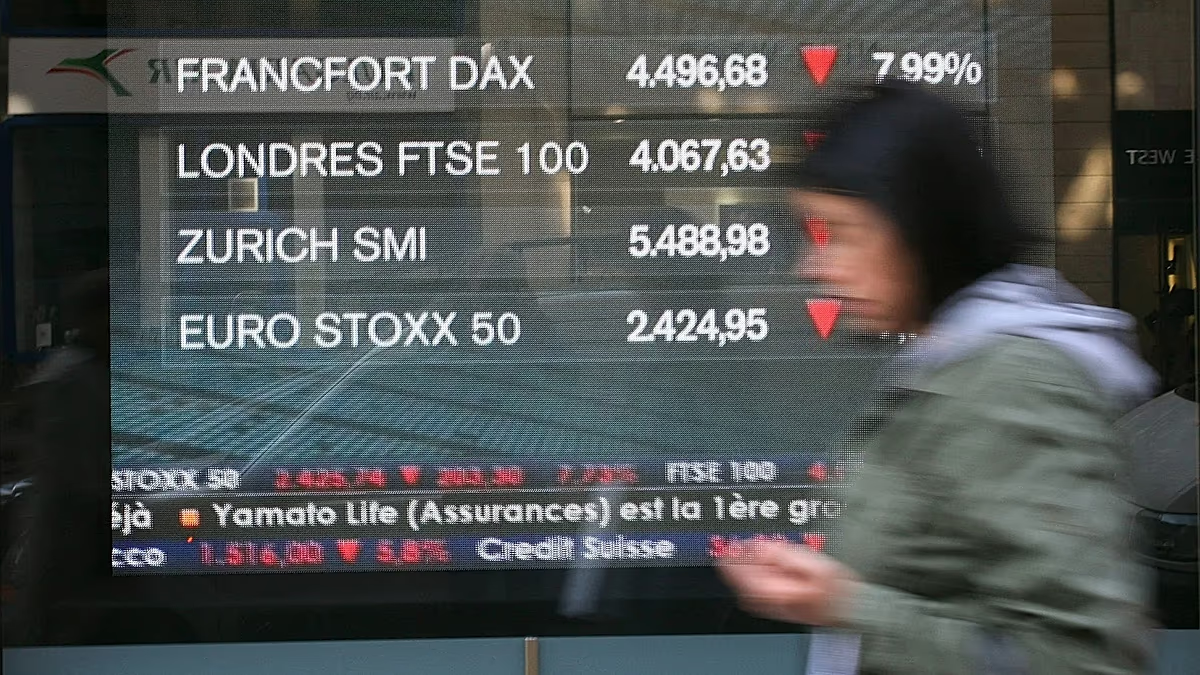
The tremors from this geopolitical quake were felt instantly and acutely across Asian equity markets, which were the first major trading hubs to open following the news. Investor sentiment, already delicate, crumbled under the dual pressures of soaring oil prices—a universal input cost that threatens corporate profits and consumer spending—and the fear of an uncontrolled conflict. South Korea’s Kospi index led the regional decline, plunging nearly 7%, heavily weighed down by a 7% drop in its corporate titan, Samsung Electronics. Japan’s Nikkei 225 wasn’t far behind, sinking over 4%, a sell-off that overshadowed a modest downward revision to the country’s first-quarter economic growth figures. Markets in Taiwan, Hong Kong, and Shanghai also fell sharply, painting a broad picture of risk aversion sweeping across the continent. The collective plunge demonstrated that in our interconnected global economy, a conflict thousands of miles away can instantly erase shareholder value and derail economic confidence worldwide.
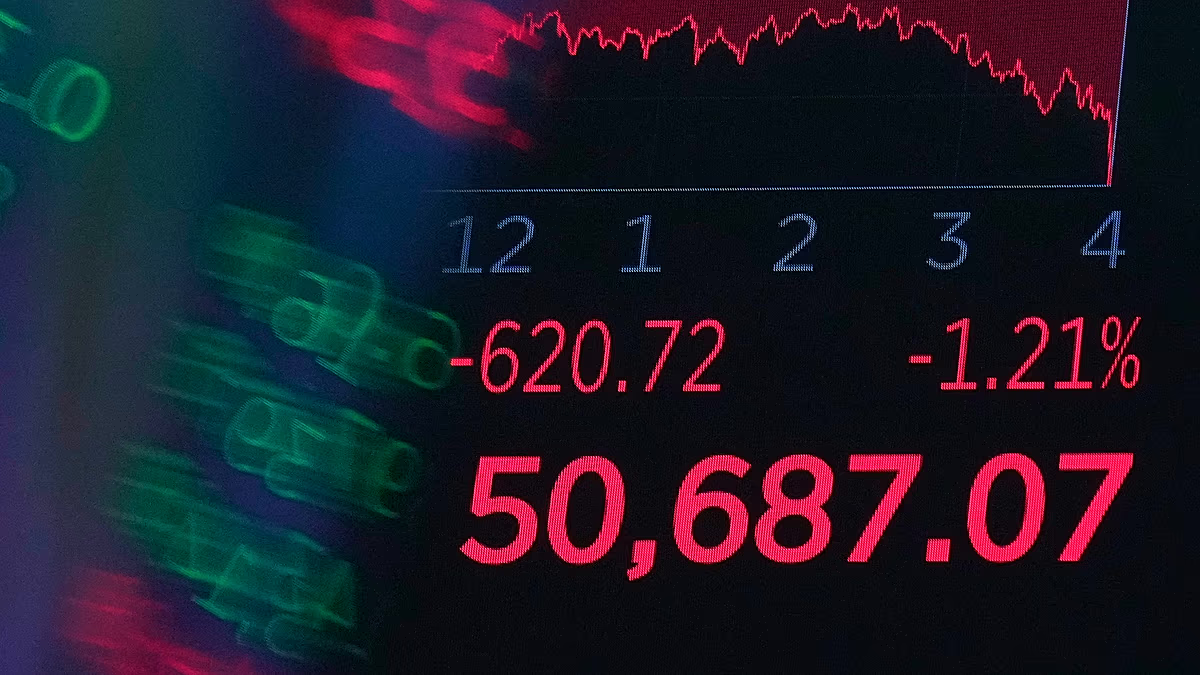
This turbulent Monday in Asia was, in part, a continuation of a sharp downturn that had already taken hold on Wall Street at the end of the previous week. However, the catalyst then was not geopolitics, but economics. A surprisingly robust U.S. jobs report, showing the addition of 172,000 positions in May, had paradoxically spooked investors. The strong data signaled a resilient U.S. economy, but it also fueled concerns that persistent strength could allow inflation to remain stubbornly high. This, in turn, led markets to dramatically reassess the likelihood of the Federal Reserve intervening with interest rate hikes later in the year to cool the economy down. The reaction was severe: the S&P 500 logged its worst day in months, plunging 2.6%, while the technology-heavy Nasdaq composite collapsed over 4%. Bond yields, which move opposite to prices, jumped as traders priced in this new expectation of the Fed holding rates higher for longer.
The connection between these two seemingly separate events—the strong U.S. jobs data and the Middle East strikes—creates a perfect storm for economic uncertainty. On one hand, the Fed is grappling with the domestic challenge of inflation, which is already being pressured by existing trade policies and could now be supercharged by a sustained spike in oil prices. Warfare in the Persian Gulf threatens the Strait of Hormuz, a passageway for a massive portion of the world’s seaborne oil, potentially creating a physical supply shock that central bankers have no direct tool to fix. This places the Fed in an incredibly difficult position, caught between the need to combat price increases and the risk of choking economic growth. The jump in key Treasury yields following the jobs report shows the market bracing for a tougher policy stance, but the oil price surge introduces a volatile, external variable that complicates every calculation.
The ripple effects extended into the currency markets, where the U.S. dollar found some strength, inching higher against the Japanese yen. This “flight to safety” dynamic is common in times of global stress, as investors seek the relative security of the world’s primary reserve currency. However, a stronger dollar can create its own set of problems, making it more expensive for other countries to import dollar-denominated commodities like oil, thereby amplifying inflationary pressures abroad. The euro also saw modest movement. These subtle shifts in foreign exchange are critical threads in the global fabric, influencing everything from international trade costs to the debt burdens of emerging markets, and they too are being rewoven by the current climate of fear.
In summary, the financial world started the week navigating a treacherous convergence of forces. The immediate trigger was a dangerous military escalation between Israel and Iran, which sent energy prices soaring and shattered confidence in Asian markets. This crisis erupted atop an already fragile market psychology, still reeling from a dramatic reassessment of U.S. interest rate policy prompted by strong economic data. Together, these events create a feedback loop of peril: war threatens oil supply, which fuels inflation, which pressures central banks to raise rates, which could slow the global economy, all while geopolitical instability makes every investment a riskier bet. The tentative ceasefire on the ground remains just that—tentative. Until a durable peace is achieved, the markets will likely remain hostage to every headline, reminding us that in the modern age, the pathways of conflict are inexorably linked to the fortunes of economies and the livelihoods of people everywhere.