


The Unsung Heart of Europe: Why Brussels and Belgium Deserve Your Attention
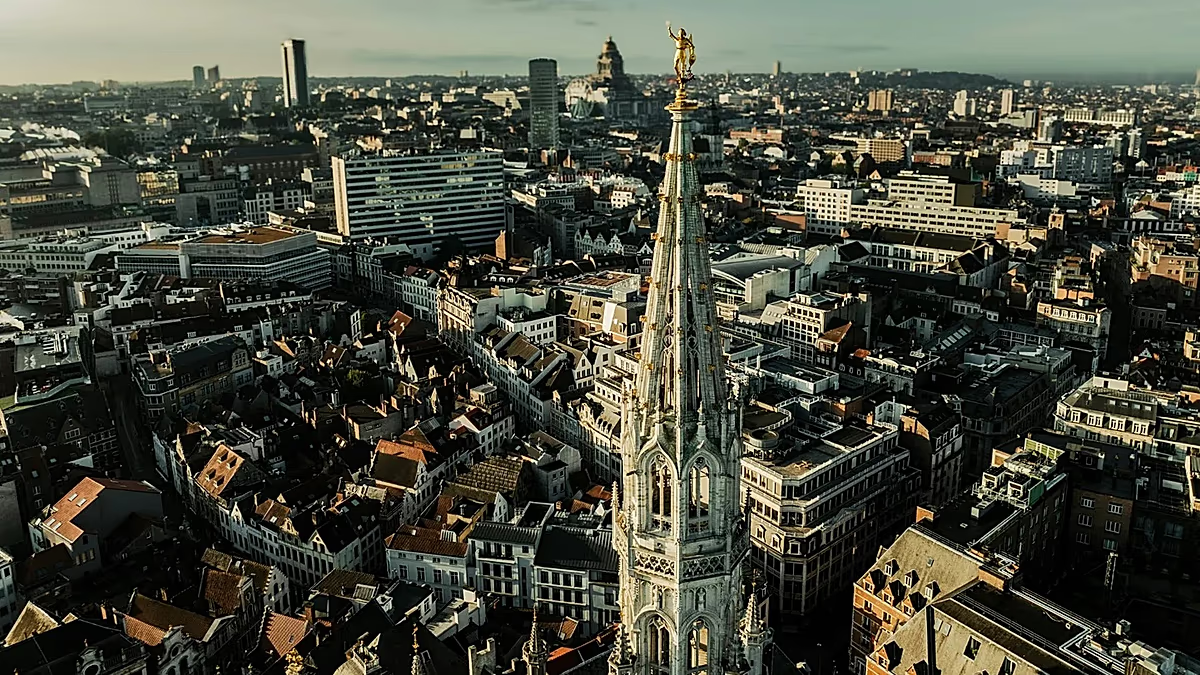
Amid the well-trodden paths to Paris, Rome, and Barcelona, the Belgian capital of Brussels often registers as a mere political hub or a quick stop for a glimpse of the Manneken Pis. Yet, those who call the city home believe its true value is consistently overlooked. In a revealing survey, nearly 75% of Brussels residents described their city as an “underrated” destination, with 79% affirming that tourism is vital for supporting local businesses and the economy. This sentiment is shared by travel writer Angela Dansby, an American expatriate who arrived for a one-year work assignment in 2015 and never left, ultimately becoming a dual citizen and author of a comprehensive Belgian travel guide. Her experience underscores a common refrain: visitors are consistently and pleasantly surprised by the depth of charm, culture, and cosmopolitan energy they discover in Brussels and across Belgium.
One of the nation’s most compelling draws is its incredible diversity, both in its people and its landscapes. As the de facto capital of Europe, Brussels is a mosaic of cultures, home to individuals from about 180 different nationalities. Dansby’s foremost advice is to embrace this by meeting people from around the world right in the city’s cafes and squares. Beyond its urban centres, Belgium offers a storybook setting, boasting the most castles per square kilometre in the world. Dansby recommends seeking out the majestic castles of Bouillon, Beloeil, and Vêves in the Wallonia region. For a truly unique cultural experience, she points to the UNESCO-listed tradition in Oostduinkerke, where shrimp fishermen venture into the sea on horseback, preserving a practice that is half a millennium old.
Belgium’s reputation as a gastronomic powerhouse is well-founded but often narrowly associated with chocolates and waffles. The reality is a spectacularly rich culinary scene. The country holds the third-highest density of Michelin-starred restaurants in the world. Dansby suggests splurging on fine dining in Brussels, Antwerp, Bruges, and Knokke-Heist, but also encourages exploring regional specialties. This includes German classics in Eupen, Liègeoise meatballs and coffee in Liège, the creamy chicken stew known as waterzooi in Ghent, and fresh seafood in Ostend. Adventurous eaters might even try the Petit-Gris de Namur snails, a Walloon delicacy. And in a crucial tip for any visitor, Dansby advises ordering “frîtes” (not “French fries”) and enjoying them with mayonnaise, the authentic Belgian way.
The true magic of Belgium, however, often lies beyond the capital. Dansby encourages travellers to venture off the standard tourist trail to discover lesser-known gems. The Flemish city of Hasselt, for instance, boasts a vibrant food scene with its own Michelin-listed restaurants. The coastal town of De Haan charms with its elegant villas, including one once occupied by Albert Einstein. For history enthusiasts, the village of Ploegsteert marks the site of the legendary 1914 Christmas Truce football match during World War I. These locations offer rich narratives and authentic experiences without the crowds, providing a deeper understanding of the country’s multifaceted character.
Exploring this diversity is wonderfully convenient thanks to Belgium’s compact size and excellent public transport network, divided into efficient regional systems. Dansby highly recommends using trains and buses to journey between cities and regions. Furthermore, the country is a hiker’s paradise, offering dramatically varied topography within short distances. She highlights walks through the rugged Ardennes Forest, the unique German-speaking community of Ostbelgien, and the breathtaking “purple carpets” of bluebells that bloom each spring in the Hallebos forest. Integrating visits to weekly outdoor markets and local festivals into an itinerary, she notes, provides invaluable insights into the living traditions and contemporary life of Belgian communities.
Ultimately, the greatest resource for any visitor is the Belgian people themselves. Dansby’s final and most heartfelt piece of advice is simple: don’t hesitate to ask locals for recommendations. From the best casual fry stand to the most scenic village walk, their guidance will unlock the authentic Belgium. The nation, with Brussels as its captivating and cosmopolitan heart, offers a blend of medieval history, world-class cuisine, stunning natural beauty, and profound human warmth that is indeed underrated. It is a place where a short visit can spark a lifelong fascination, as it did for Dansby, who arrived for work and stayed for love—both of a person and of a country that endlessly surprises and delights.