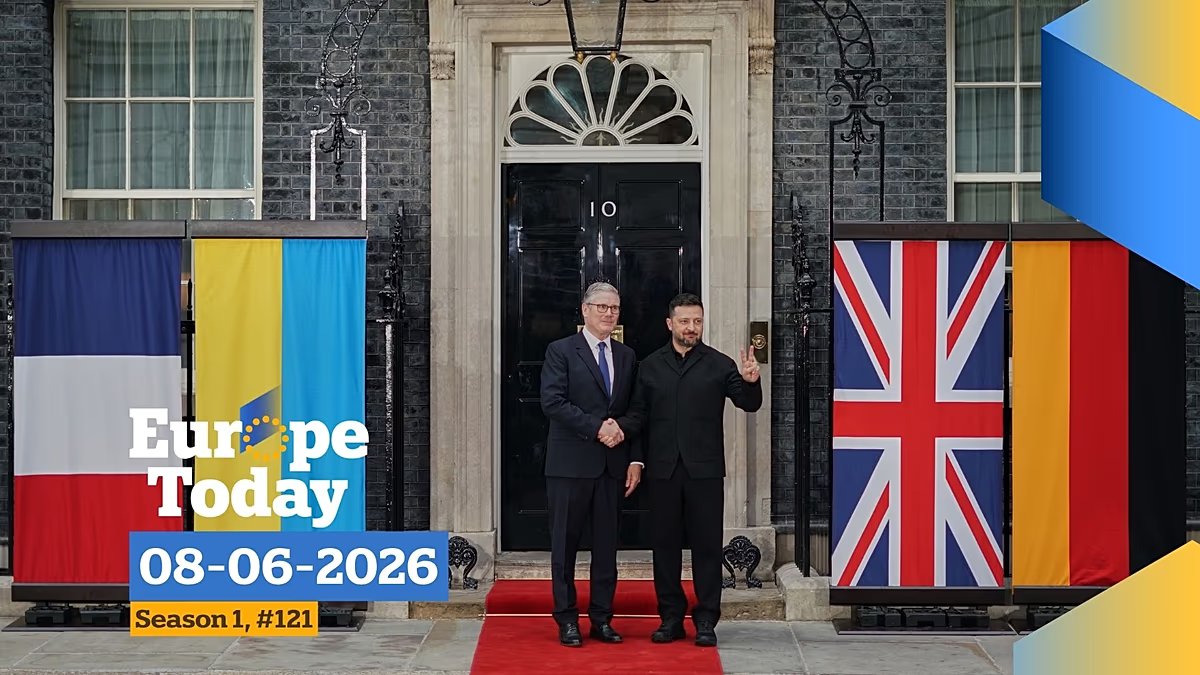



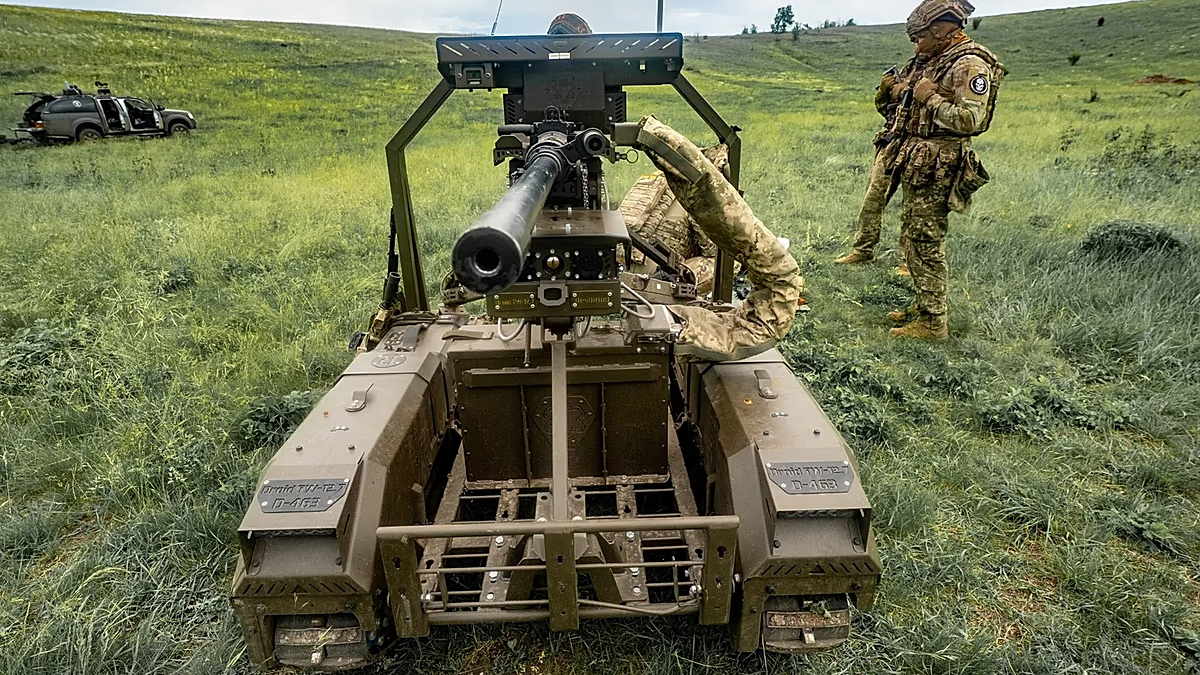
A substantial lifeline from the European Union, a €90 billion loan package for Ukraine, is poised to begin disbursement in mid-June. This critical financial infusion is designed to bolster a nation entrenched in its fifth year of a grueling, full-scale defensive war against Russian aggression. While the overarching purpose is clear—to ensure Ukraine’s survival and fortify its defenses—the precise allocation of these vast funds remains shrouded in necessary secrecy. President Volodymyr Zelenskyy has indicated that approximately €60 billion will be dedicated to military needs, focusing on domestic arms production and the procurement of vital weapons systems, with the remainder stabilizing the national budget. However, the specific shopping list is a closely guarded state secret, a prudent measure for any nation’s security, leaving allied nations and observers to parse the complexities and compromises that shaped this essential deal.
The agreement itself was forged not without internal debate within the EU. A central tension emerged between the urgent need to arm Ukraine rapidly and the strategic desire to rejuvenate Europe’s own defense industrial base. Nations like France argued forcefully that “European money” should stimulate European factories, placing orders that would scale up continental production capacity. Conversely, countries such as Poland, Sweden, and the Netherlands emphasized maximum flexibility to ensure Kyiv gets what it needs, when it needs it, regardless of origin. The final framework represents a delicate compromise between these positions, establishing a tiered system for procurement. Priority is given to equipment made in Ukraine, the EU, or partner nations like Norway. If unavailable there, Ukraine can turn to a list of key security partners, including the UK and Canada. Only as a last resort, and with strict justification, can purchases be made outside these boundaries.
This rulebook comes with a powerful, unspoken expectation: buy European where possible. As one EU diplomatic source bluntly put it, “You buy European, unless the purchase fits into one of the agreed exemptions, such as lack of product in the EU or long delivery time.” The imperative is twofold. Firstly, there is a growing alarm across European capitals about the continent’s own defensive readiness, with intelligence warnings of a potential Russian threat to a member state within this decade. Secondly, years of underinvestment and fragmentation have left Europe’s defense industry struggling to meet the demands of a high-intensity war. The EU’s first-ever Defense Commissioner, Andrius Kubilius, has captured this need for a paradigm shift, urging the industry to produce “good enough” systems—effective, scalable, and affordable weapons—rather than perfecting “haute couture” equipment over decades.
The initial disbursement offers a telling case study of these principles and pressures in action. The first €5.9 billion tranche for defense, approved for mid-June, is widely reported to be destined for a massive purchase of drones—an estimated 3 million units. Significantly, this order will primarily benefit Ukrainian manufacturers, acknowledging both Ukraine’s battlefield-driven expertise in this domain and the EU’s current inability to match its scale. However, even here, global supply chains intrude; the order required and received a special exemption because certain components, like essential microchips, originate from outside the approved zones, reportedly from China. This minor derogation highlights a major reality: in a globalized technological landscape, complete autarky is nearly impossible, and wartime pragmatism must sometimes override ideal supply chains.
Looking ahead, subsequent funding is expected to target even more complex and scarce systems: ammunition, missiles, and advanced air defense. Here, the gap between European ambition and industrial capacity becomes starkly apparent. The U.S.-made Patriot system, a gold standard in air defense, is effectively sold out for years, with backlogs extending to 2029. Europe’s alternative, the Franco-Italian SAMP/T system, represents a strategic opportunity to build sovereign capability. Yet, as experts note, orders are not materializing at the needed pace because the production lines simply cannot yet accelerate to wartime speed. This creates a painful bottleneck: Ukraine’s most urgent needs cannot be met by European industry in time, while the very orders that could catalyze that industrial expansion are stalled by the same lack of capacity.
Ultimately, the €90 billion loan is more than a financial transaction; it is a high-stakes test for European unity, strategic autonomy, and bureaucratic agility. It balances Ukraine’s immediate existential needs with Europe’s longer-term security imperative. The path forward, as argued by analysts like Guntram Wolff of the European Policy Centre, requires a conscious and sustained political decision to leverage this moment. “Everybody just automatically buys in the US. I think it’s high time that we start buying from these domestic suppliers,” he states. For the loan to achieve its full potential, it must not only flow to Kyiv but also trigger the profound transformation of Europe’s defense industry, turning a vicious cycle of shortage into a virtuous cycle of investment, production, and strengthened deterrence for both Ukraine and the European Union itself.