




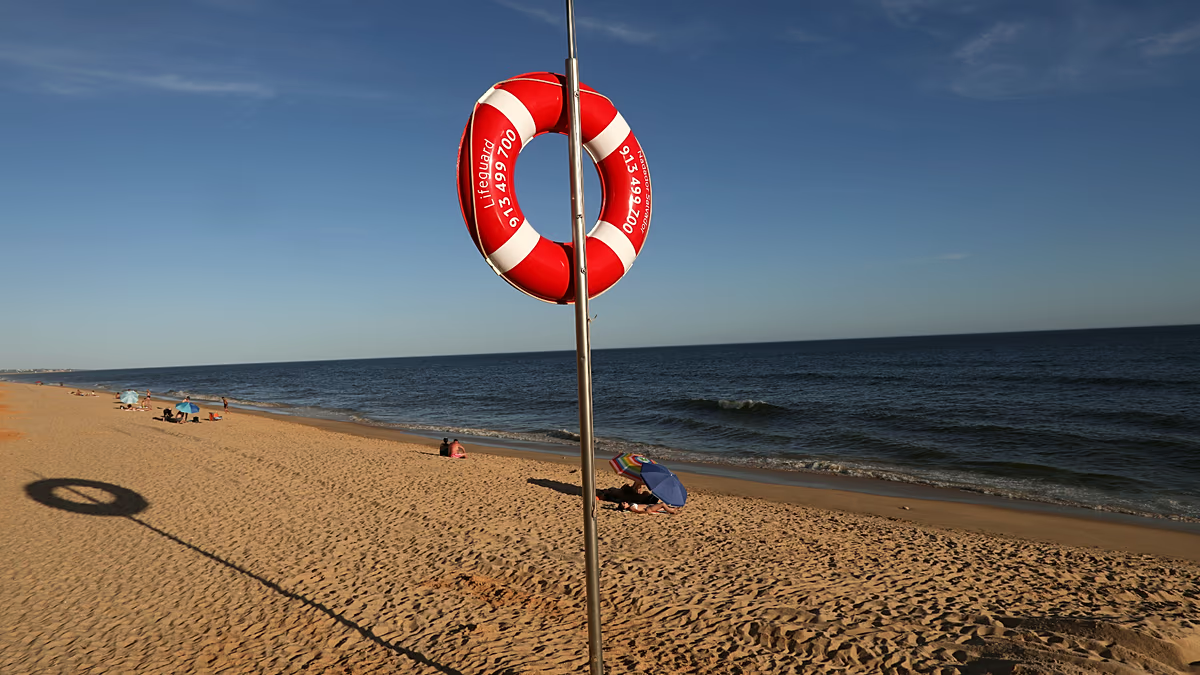
The idyllic image of Portugal’s sun-drenched coastline, a magnet for tourists and locals alike, is shadowed by a pressing and potentially dangerous question: are its beaches and bathers truly safe? According to Alexandre Tadeia, president of the Portuguese Lifeguards Federation (FEPONS), there is no clear answer. The core of the uncertainty lies in a severe and systemic shortage of lifeguards. While the country would need an estimated 6,000 to 6,500 professionals working a standard week to adequately cover its shores, the reality is starkly different. Only about 5,000 individuals hold certification, and of those, perhaps just two-thirds will actually take up the role each season. This means Portugal is operating with roughly half the lifeguarding force it requires, a deficit that stretches an already thin line of defense to its limits at the very time millions flock to the water.
This critical shortage is not due to a lack of training. The system actually qualifies around 1,500 new lifeguards annually. The crisis is one of retention, described by Tadeia as a “hemorrhage” of talent. A staggering 49% of lifeguards choose not to return the following year, and the number renewing their mandatory triennial certification is dismally low. This constant churn results in a net loss of at least a thousand professionals each year, leaving overall numbers stagnant despite continuous training efforts. The reasons for this exodus are deeply rooted in the profession’s poor conditions. Lifeguarding in Portugal is largely viewed as a transient, seasonal summer job, characterized by low pay, precarious contracts, and a lack of long-term prospects. This seasonal framing is, however, a “false truth,” as Tadeia points out, given the country’s 700 public swimming pools, which alone could provide year-round employment for about 1,500 lifeguards.
Compounding the problem is a structural failure that particularly affects the profession’s backbone: young students. Many lifeguards are students who rely on government study grants and social benefits. The current hiring models often force an impossible choice. A formal, above-board contract with social security contributions can cause these students to lose their crucial financial aid, effectively penalizing them for stable employment. Consequently, many are pushed into informal or short-term arrangements that offer no security or career progression. This creates a perverse incentive where the very people best positioned to fill these roles—the young, fit, and trained—are financially discouraged from doing so properly, undermining the stability and professionalism of the entire service.
At the heart of these issues, Tadeia argues, is a profound failure of vision at the highest levels. There is no national strategy to valorize or secure the lifeguarding profession. Instead, a purely commercial approach prevails, where the safety of bathers is treated as a line item to be minimized. Public tenders for beach surveillance are often awarded to the lowest bidder, prioritizing cost over competence, equipment, and morale. “It is a commercial approach to a humanitarian area, which is completely surreal,” Tadeia states. This system fails to ensure that those on the towers are well-equipped, well-coordinated, and not overworked through excessive overtime. In essence, the market logic applied endangers the humanitarian mission of preventing loss of life.
The solution advocated by FEPONS is clear and fundamental: the state must recognize lifeguarding as the vital public safety profession it is. This begins with creating a special career track within the civil service. Currently, lifeguards employed by municipalities are often classified as “operational assistants,” the lowest rung in public administration. This classification is an absurd mismatch for individuals who undergo specific and demanding training, make split-second, life-or-death decisions, and endure intense physical and emotional stress. A dedicated career path would provide dignity, a clear salary scale, job security, and a reason for skilled individuals to build a lifelong vocation in aquatic rescue. It would signal a shift from treating beach safety as a summer commodity to treating it as an essential, year-round public service.
Ultimately, while the Portuguese Environment Agency rightly notes that safety “depends first and foremost on each bather,” this personal responsibility must be underpinned by a robust, reliable safety infrastructure. The agency identifies 671 official bathing waters across the mainland, Azores, and Madeira, with seasons stretching from April to October. Bathers can and should check water quality flags and heed lifeguard instructions, but they must also be able to trust that the lifeguard presence is sufficient, professional, and sustainably resourced. Until Portugal develops a coherent national strategy that moves beyond commercial tendering, establishes a dignified career, and resolves the contractual pitfalls for young workers, the question of beach safety will remain troublingly unanswered. The nation’s beautiful coastline, a source of immense pride and joy, deserves a guardianship system that matches its importance.