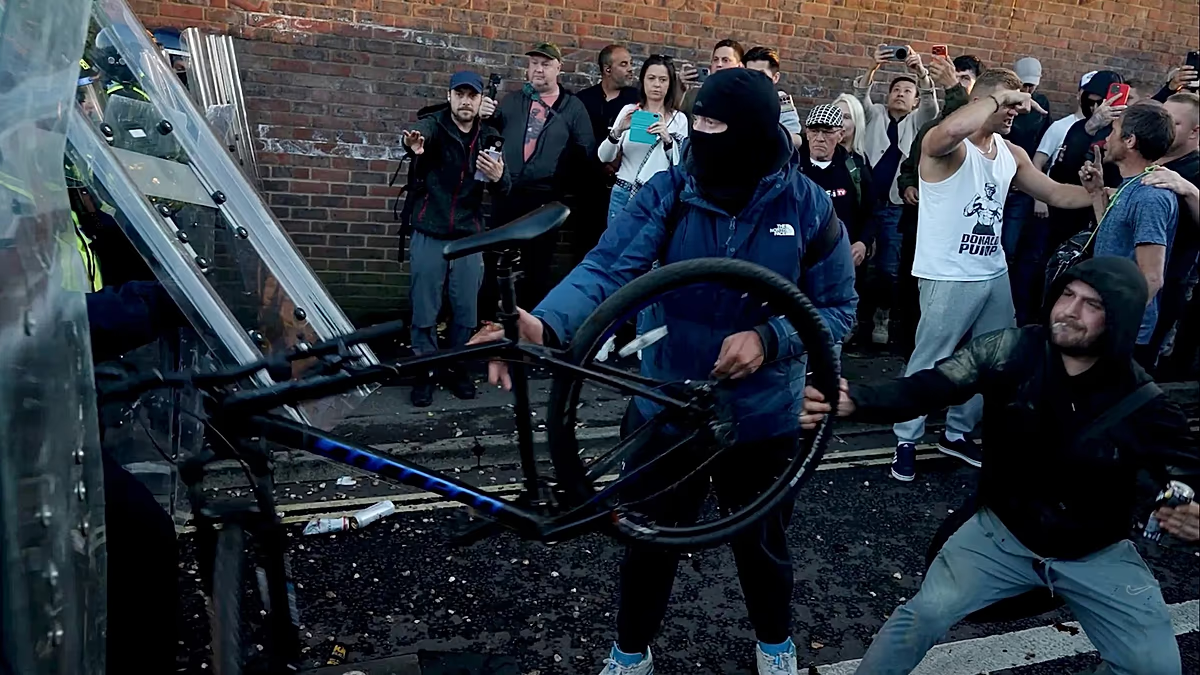


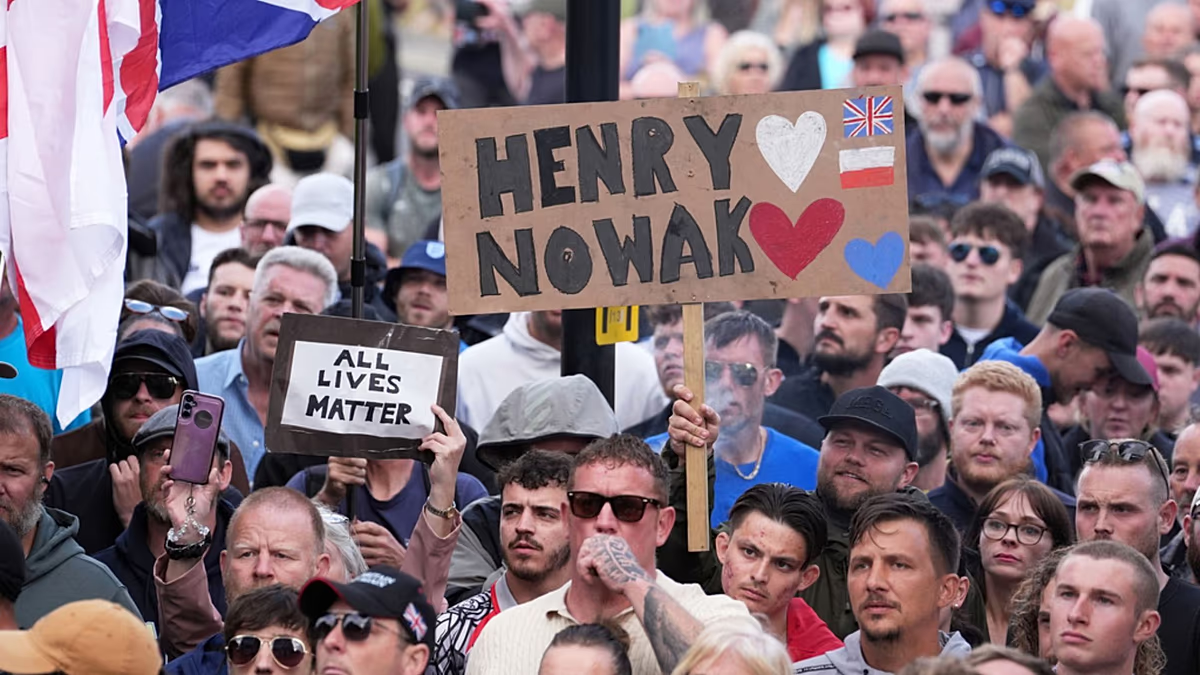
The tragic killing of 18-year-old university student Henry Nowak in Southampton in December 2025, and the subsequent life sentence for his attacker, 23-year-old Vickrum Digwa, has become a flashpoint for intense societal debates in the UK and beyond. While the case rightly raises grave questions about knife violence and policing protocols, it has also been engulfed in a destructive tsunami of online misinformation. This false narrative has shifted focus from the victim and the failings of that night, instead fueling division, endangering innocent people, and distorting a complex legal and religious discussion. The human consequences have been severe and immediate, demonstrating how digital falsehoods can rapidly spill over into real-world harm.
This harm is most starkly illustrated in the terrifying ordeal faced by police officers wholly unconnected to the incident. In the wake of public outrage over the handling of the crime scene—where bodycam footage showed officers initially handcuffing the fatally wounded Nowak and treating him as a suspect—social media users began a witch hunt. Former officer Christi Hill, who had left the force over a year before the murder, found her image, taken from an old bravery award announcement, circulating on multiple platforms with claims she was present that night. The misinformation was even amplified by an AI chatbot. Another misidentified officer received death threats, forcing him and his family to relocate for their safety. This dangerous harassment of innocent individuals, based entirely on falsehoods, compounds the tragedy and obstructs meaningful accountability for the actual events.
The misinformation spread further with a manipulated image, shared even by a British MP, which falsely purported to show an officer with sharpened nails at the scene. More consequentially, the case became a lightning rod for debates on knife laws and religious rights, often based on confused or weaponized facts. Digwa, who is Sikh, committed the murder with a large blade. This ignited a contentious political campaign, led by figures like Nigel Farage’s Reform UK party, to revoke the legal exemption that allows initiated Sikhs to carry the kirpan, a much smaller religious article of faith, in public. Politicians across Europe, particularly from far-right factions, seized upon the case to make inflammatory claims about civilizational decay, blatantly exploiting a family’s loss for ideological gain.
This political rhetoric, however, rests on a critical misconception actively fuelled by online falsehoods. Legal and Sikh scholarly experts clarify a vital distinction: the weapon used to kill Henry Nowak was not the kirpan of the Five Ks, a mandatory religious symbol for initiated Sikhs that is typically small and worn discreetly. At trial, it was described as a larger ceremonial dagger or pesh-kabz, associated with a specific Sikh martial tradition but not a required article of faith for all Sikhs. The judge explicitly stated Digwa had “abused the privilege” extended to Sikhs, bringing dishonor to his religion. The Sikh Federation UK and scholars stress that conflating the murder weapon with the common kirpan is factually wrong and unfairly tars an entire community. This conflation has already led to increased hostility and safety fears among British Sikhs, as the sentencing judge noted.
Amid this storm of hate and confusion, the voices of those most directly affected call for reason and constructive action. Henry Nowak’s father, Mark, has made a heartfelt plea for “real solutions” and stronger action on knife sales and ownership, stating people should not be able to carry large blades openly. Crucially, he also pleaded that his son’s death not be used to create further hatred and division. His call is echoed by the Sikh community itself, which has overwhelmingly condemned the murder. Educators like Amandeep Singh point out that the kirpan was never used in the crime and express deep concern about the backlash faced by ordinary Sikhs, who are now fearful due to actions they abhor.
In the end, the story of this case has become two-fold: a grievous crime and a monumental failure in its aftermath. The first failure was procedural, in the police response that night. The second, and ongoing, failure is societal—the rampant spread of misinformation that has endangered innocents, stoked religious and racial tension, and distracted from a sober discussion on preventing violence. Honoring Henry Nowak’s memory, and respecting the safety of the Sikh community, requires navigating this tragedy with facts, nuance, and compassion, rejecting the simplistic and inflammatory narratives that only serve to deepen societal wounds. The path forward must be lit by clarity and a unified desire for safety, not dimmed by hatred and lies.