

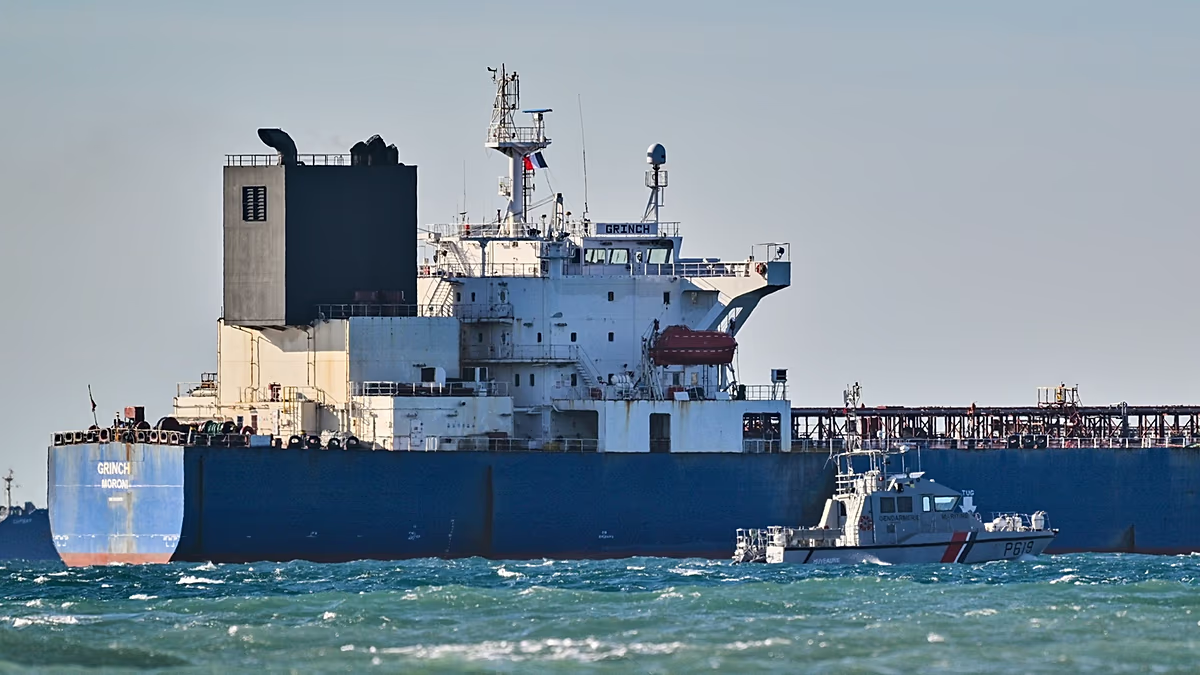
Officials and diplomats in Brussels are grappling with a sobering realization: a once-promising plan to completely ban maritime services for Russian oil tankers is now on the verge of collapse. Approved in late April as a centerpiece of the EU’s latest sanctions package, the measure was designed to deliver a severe blow to Moscow’s war economy by cutting off access to essential services like insurance, shipping, banking, and flagging for vessels carrying Russian oil. However, this ambitious tool was paused indefinitely from the start, officially to align with international partners in the G7, mirroring the collaborative approach that established the price cap on Russian oil. Behind this diplomatic reasoning lies a growing consensus that the geopolitical and economic winds have shifted decisively against the ban, with one diplomat summarizing the mood in a blunt, three-word assessment: “It’s not happening.”
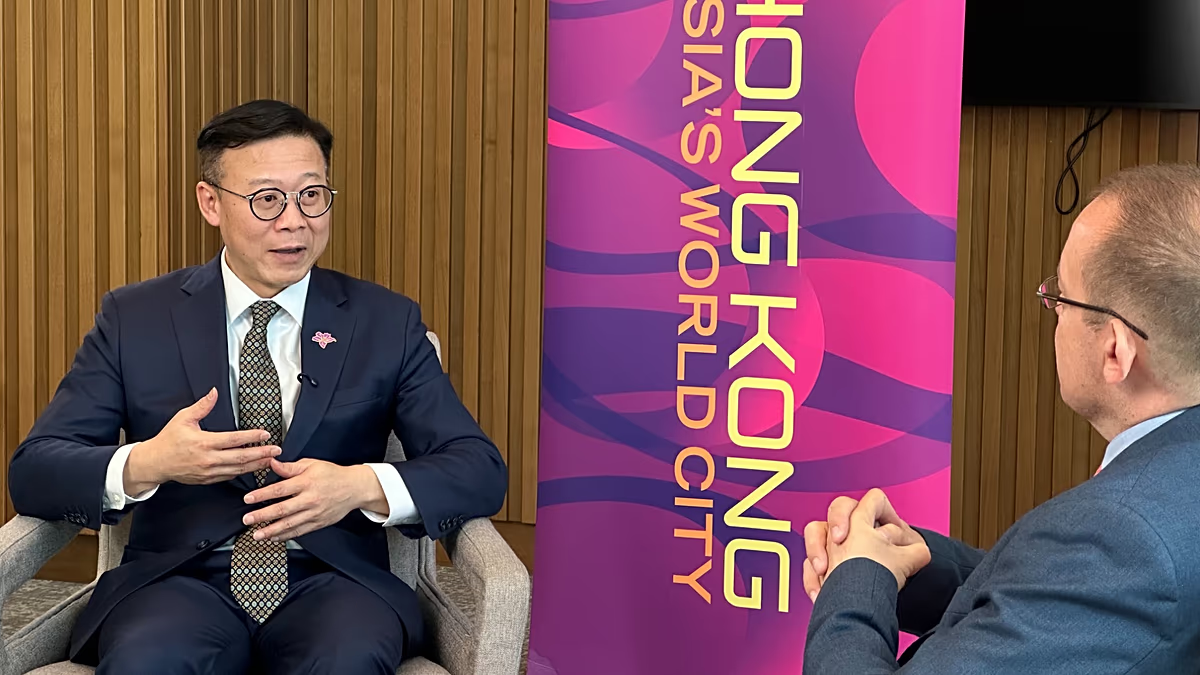
The core issue is a stark lack of international unity. The European Commission, along with Baltic and Nordic states, continues to publicly advocate for the ban, arguing it is necessary to raise the material costs of Russia’s energy exports. Yet, key allies have shown little enthusiasm. The United States has moved in the opposite direction, issuing successive sanctions waivers on Russian oil to manage market turmoil following disruptions in the Strait of Hormuz. Similarly, recent moves by the United Kingdom have caused concern in Brussels. This fragmentation has left the EU in a precarious position, as enacting the ban alone would disproportionately burden European companies while allowing global competitors to fill the void. As the EU’s sanctions envoy, David O’Sullivan, noted, recent events in the Gulf have fundamentally altered the calculus, with Western economies now prioritizing energy access and price stability over imposing new, untested measures that could further disrupt fragile markets.
Compounding the external challenges are significant internal divisions within the European Union itself. Two member states with major maritime interests—Greece, home to a powerful shipping industry, and Malta, which controls Europe’s largest ship registry—remain unconvinced. They argue that a unilateral EU ban would be self-defeating, leading to substantial economic losses for their sectors, empowering Russia’s so-called “shadow fleet” of uninsured tankers, and primarily benefiting Chinese and Indian competitors. A Maltese government spokesperson warned that without full G7 coordination, the sanctions regime would develop dangerous “loopholes,” as business would simply shift between jurisdictions within the same coalition, rendering the measures ineffective. This internal dissent underscores a critical truth: for sanctions to be effective, they must work in practice, not just in principle, and currently, the practical consensus for a full services ban does not exist.
With the comprehensive ban fading, attention is turning to reinforcing an existing mechanism: the G7 price cap on Russian oil. This policy, which aims to limit Kremlin revenues while keeping oil on the global market, now faces its own test. According to its rules, the cap must be periodically adjusted to remain significantly below the average market price. However, the recent surge in the price of Russia’s Urals crude, driven by the same Middle Eastern tensions that scuttled the services ban, presents a dilemma. The next scheduled revision in mid-July is now expected to raise the price cap, a move that could inadvertently provide Moscow with greater revenue. Diplomatic efforts are therefore focused on finding a novel way to “lock in” the cap’s restrictive intent to avoid handing Russia an economic windfall, making this technical adjustment a new frontline in the sanctions battle.
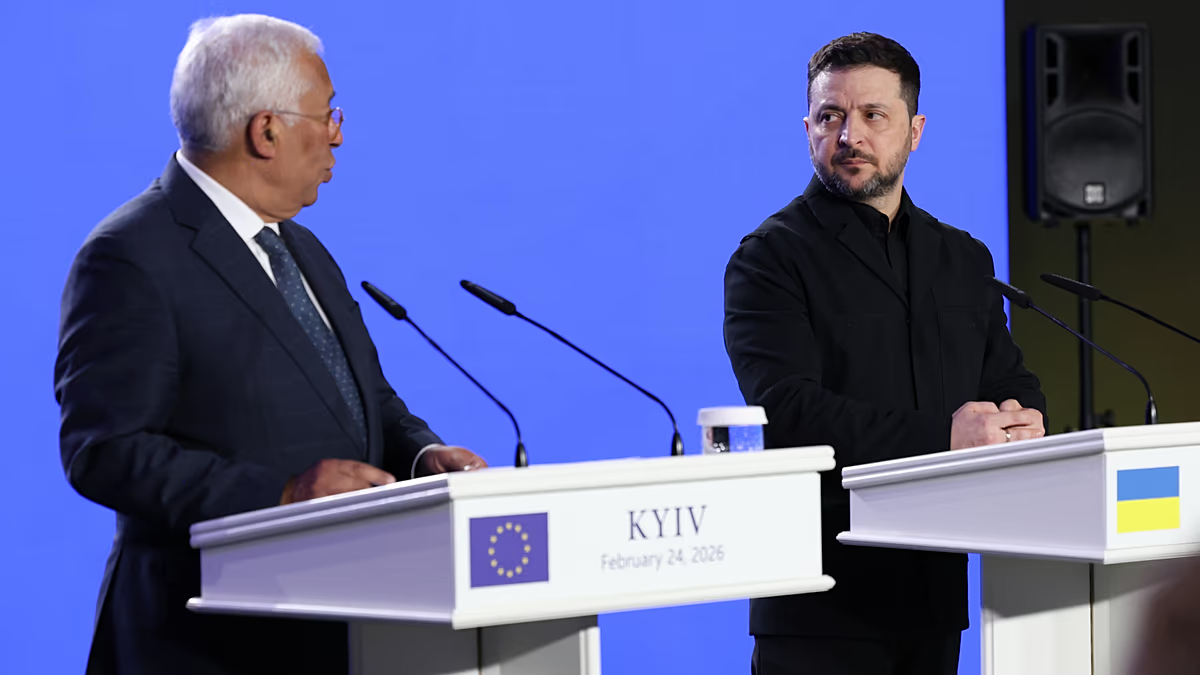
The broader context is an upcoming G7 summit in mid-June and the European Commission’s work on a new sanctions package. Ukrainian President Volodymyr Zelenskyy, a constant advocate for stronger measures, is expected to attend the G7 meeting, keeping pressure on Western leaders. Yet, the prevailing mood among officials is one of pragmatic containment rather than aggressive escalation. The ideal of a watertight, full-scale embargo on Russian oil services has collided with the realities of a volatile global energy market, divergent national interests, and the relentless logic of global capital flows. The EU finds itself balancing the moral and strategic imperative to pressure Moscow against the economic imperatives of its own members and allies.
Ultimately, the saga of the maritime services ban highlights the inherent complexities and limitations of economic statecraft in a interconnected world. It reveals how sanctions, no matter how well-intentioned, can be undermined by lack of coalition solidarity, market forces, and unforeseen geopolitical events. The EU’s path forward now appears to be one of fortifying existing tools like the price cap and seeking targeted, coordinated measures, rather than pursuing sweeping, unilateral bans that risk fracturing the very alliances needed to sustain pressure on the Kremlin. The initial ambition to cripple Russia’s energy logistics has been tempered into a strategy of managed constraint, reflecting a world where economic weapons are powerful but difficult to wield alone.