

The relationship between Europe and its visitors is at a critical juncture. For generations, tourism has been a cornerstone of economic vitality for many EU nations, celebrated as a dynamic industry that fuels local businesses and cultural exchange. However, a profound and growing undercurrent of local discontent is challenging this status quo. In cities and regions that once proudly opened their doors, residents are now voicing a powerful grievance: the very success of tourism is eroding their quality of life. The symptoms are stark—soaring housing costs, congested public spaces, and a sense of cultural displacement. This tension marks a shift from a story of pure economic benefit to a complex narrative of community rights, sustainability, and the search for balance, signaling that the era of unfettered mass tourism may be reaching its limit.
The epicenters of this backlash are clearly defined. According to recent analyses, Spain, Italy, and France stand as the top three European nations where resident frustration has boiled over into organized protest. The reasons are evident in the numbers; Spain, for instance, continues to see steady growth in tourist arrivals and flight passengers, a trend mirrored, if more modestly, in France. In contrast to these strained destinations, countries like Cyprus and Albania represent the other end of the spectrum, where tourism growth is met with minimal local resistance and regulatory pressure, offering a picture of a more harmonious, or perhaps less saturated, visitor economy. This divergence highlights that the issue is not tourism itself, but its scale, management, and impact on daily life.
The Spanish experience provides the most vivid illustration of the crisis. Ranking highest in studies measuring anti-tourism sentiment, the country has witnessed a wave of demonstrations in over 40 cities, from its iconic urban centers to its idyllic island chains. In Catalonia, home to Barcelona, the arrival of over 20 million tourists in a single year has pushed residents to their limit. The scene of protesters marching through the heart of Barcelona with signs declaring “Tourism is killing Barcelona,” even using symbolic water pistols to douse visitors, captures a deep-seated frustration that transcends mere annoyance. It is a plea for survival from communities who feel their homes are being transformed into open-air museums, where the needs of transient guests eclipse those of permanent inhabitants.
Italy’s storied cities tell a similar tale of resistance. From the canals of Venice to the historic streets of Rome, Florence, and Naples, activism has taken both public and covert forms. Beyond public marches, some locals have resorted to sabotaging the lockboxes used by short-term rental landlords—a direct, disruptive action targeting what many see as the root cause of their housing woes. The response from authorities has begun to shift, moving from passive observation to active intervention. Venice’s pioneering, if controversial, day-tripper tax on specific summer dates is a prime example of an attempt to manage the sheer volume of visitors and generate revenue to offset their impact, representing one of the most concrete regulatory tools yet deployed in the battle against overtourism.
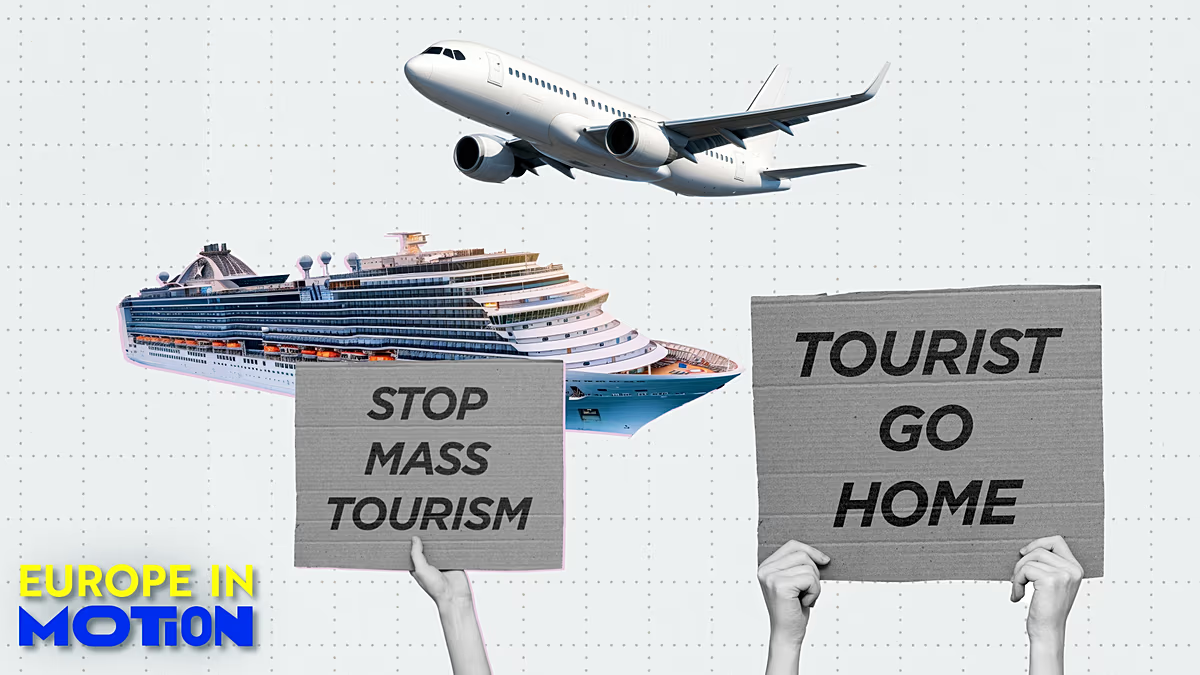
In France, the protest movement carries a distinct character, uniting mainland urban centers with coastal communities. Cities like Marseille and Nice have seen significant demonstrations, while the activism in Paris remains a constant undercurrent. Notably, the French backlash has crystallized around a specific symbol: the cruise ship. These floating behemoths, which disgorge thousands of passengers into port cities for mere hours, have become a focal point for anger over environmental damage and cultural commodification. This nationwide scope, linking inland and maritime grievances, reflects a comprehensive critique of a tourism model that prioritizes volume over value, challenging the industry to consider its broader footprint on both cityscapes and coastlines.
This continental reckoning presents a pivotal challenge for Europe’s future. The protests are not a call to end tourism, but a demand for its evolution. They underscore an urgent need for policies that protect housing as a home first and a commodity second, that manage visitor flows to preserve cultural heritage and local sanity, and that ensure tourism revenues genuinely reinvest in strained public infrastructure. The path forward requires a fundamental renegotiation—one that balances economic necessity with social sustainability. The message from the streets of Barcelona, Venice, and Marseille is clear: for tourism to remain a viable pillar of the European economy, it must first learn to respect the lives and limits of the communities that form its very foundation. The success of this transition will determine whether these world-renowned destinations can thrive as living cities, not just as postcard backdrops.