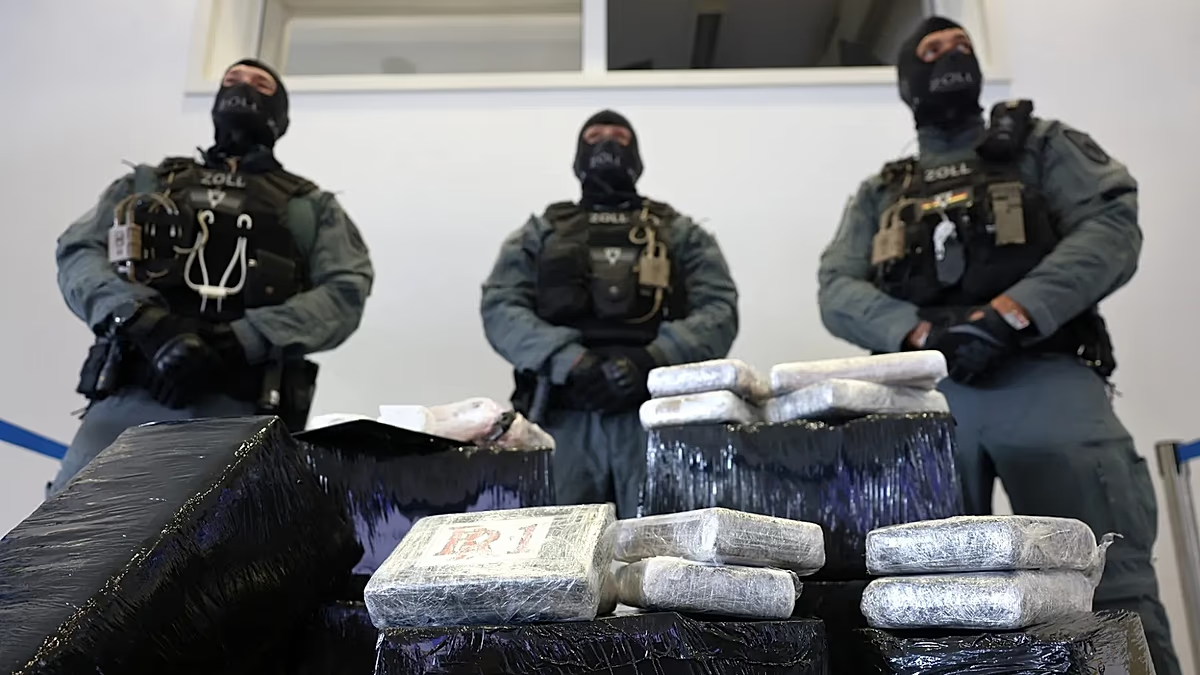


In a stark reminder of the vast scale and ingenuity of the international drug trade, German authorities revealed a major interdiction this week, uncovering more than eight metric tonnes of cocaine hidden within a shipping container. The container, which arrived at the North Sea port of Wilhelmshaven from West Africa and was ostensibly carrying a cargo of cacao beans, was instead found to be packed with over 400 parcels wrapped in black foil. Each parcel contained approximately 20 blocks of highly compressed cocaine, representing a staggering street value estimated at around €500 million. This seizure, executed on February 9th, underscores the critical role of port security and international cooperation, as the shipment was intercepted before it could reach its intended destination in Spain.
The investigation did not stop at the seizure. German and Spanish authorities worked in tandem to track the criminal network behind this colossal shipment. In a coordinated operation on May 14th, two suspected organizers were arrested in the Spanish town of El Ejido, in the province of Almería. Investigators revealed that the pair were apprehended during the handover of the now-empty container, which had been stripped of its illicit cargo and destroyed in Germany before being sent onward to Barcelona as a decoy. Notably, one of those arrested, identified as the manager of an import company, has already been linked by Spanish customs to a previous cocaine shipment, suggesting the involvement of sophisticated, recurring criminal enterprises. If tried and convicted in Spain, the suspects face substantial prison sentences.
This enormous bust in Wilhelmshaven is not an isolated incident but part of a disturbing, continent-wide trend. As highlighted by the European Union Drugs Agency (EUDA), 2023 marked the seventh consecutive year in which EU member states reported a record amount of seized cocaine, totalling 419 tonnes. Germany itself seized 43 tonnes in 2023, with the port of Hamburg alone intercepting 25 tonnes—double the amount reported the previous year. Spain, a primary entry point for South American cocaine, reported its largest-ever single shipment seizure in 2024: 13 tonnes of cocaine concealed within a shipment of bananas from Ecuador. These figures paint a picture of a flood of cocaine reaching European shores, challenging law enforcement agencies to an unprecedented degree.
The human cost of this supply was underscored at the end of last year by the outgoing head of the EUDA, Alexis Goosdeel, who warned, “Today, drugs are everywhere.” He emphasized that addictive substances and behaviors now permeate all layers of society, meaning that “everybody can face personally or indirectly someone who has a problem of acute or chronic addiction.” This statement moves the discussion beyond mere tonnage and street value, framing the drug trade as a pervasive social and public health crisis. The sheer volume of available cocaine fuels not only organized crime but also widespread consumption, affecting individuals and communities across the economic and social spectrum.
Compounding this challenge is the evolving nature of the drug market itself. Beyond traditional substances like cocaine, the EUDA has reported the continuous emergence of new psychoactive substances in Europe. These synthetic drugs are designed to target a wide range of consumers, from occasional, socially integrated users to those with severe, problematic consumption patterns who often suffer from social marginalization. This diversification creates a dual threat: the well-established, high-volume traffic of drugs like cocaine, and a constantly shifting landscape of synthetic alternatives that are difficult to regulate and monitor, placing additional strain on public health systems.
Ultimately, the Wilhelmshaven seizure represents both a significant victory and a sobering reality check. The collaboration between German and Spanish authorities demonstrates effective cross-border law enforcement, capable of tracking a shipment from interception to arrest. However, the context provided by the EUDA—the record-breaking seizure totals, the warning of ubiquitous availability, and the rise of new substances—reveals a problem of daunting scale and complexity. It illustrates a relentless cycle where each successful interdiction is a counterpoint to a seemingly inexhaustible flow of drugs, driven by powerful criminal networks and sustained by deep-rooted demand. The fight, therefore, remains a multifaceted one, requiring relentless vigilance at ports, intelligence-sharing across nations, and robust efforts to address the underlying social and health dimensions of drug addiction.