

1. The Calm Waters of Douarnenez, Disrupted
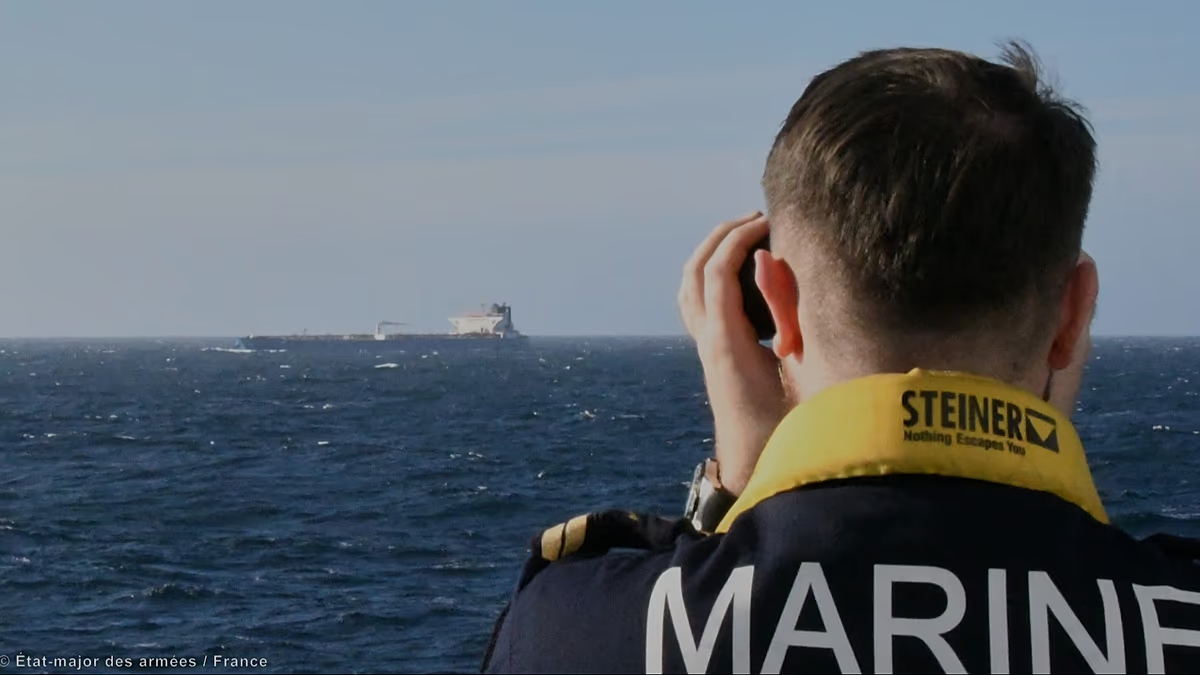
On a Tuesday in early June 2026, the tranquil Bay of Douarnenez on France’s rugged Brittany coast became the unlikely stage for a high-stakes international drama. Under the watchful escort of the French Navy, the oil tanker Tagor entered the bay, not as a routine visitor, but as a detained vessel at the center of a global sanctions enforcement operation. Its arrival capped a tense maritime pursuit that began days earlier in international waters, where French forces, with support from the United Kingdom, had intercepted and boarded the ship. According to the French presidency, the Tagor had embarked from the Russian Arctic port of Murmansk and was sailing under a false flag—claiming Cameroonian registry—when authorities moved to stop it. The Kremlin’s furious response, labeling the operation “international piracy,” highlighted the deepening tensions between Western nations and Russia over the flow of oil amidst ongoing sanctions.
2. Unmasking the “Shadow Fleet”
The Tagor is not an isolated case but rather the latest piece in a complex and shadowy puzzle. It represents the fourth such tanker detained by France since late 2024, all linked to what officials term Russia’s “shadow fleet.” This clandestine network consists of vessels operating through deliberately opaque systems: they frequently change ownership and flag registries, conduct risky ship-to-ship transfers of cargo on the open sea, and often carry minimal or dubious insurance. For Western governments, this fleet has evolved into a critical, if illicit, mechanism for Moscow to continue exporting its oil despite international price caps and embargoes. The Tagor’s specific transgression—flying a false flag—is a serious maritime violation, universally recognized as a hallmark of sanctions evasion, as it allows a vessel to obscure its true origins and destination.
3. The Global Web of a Sanctions Evasion Architect
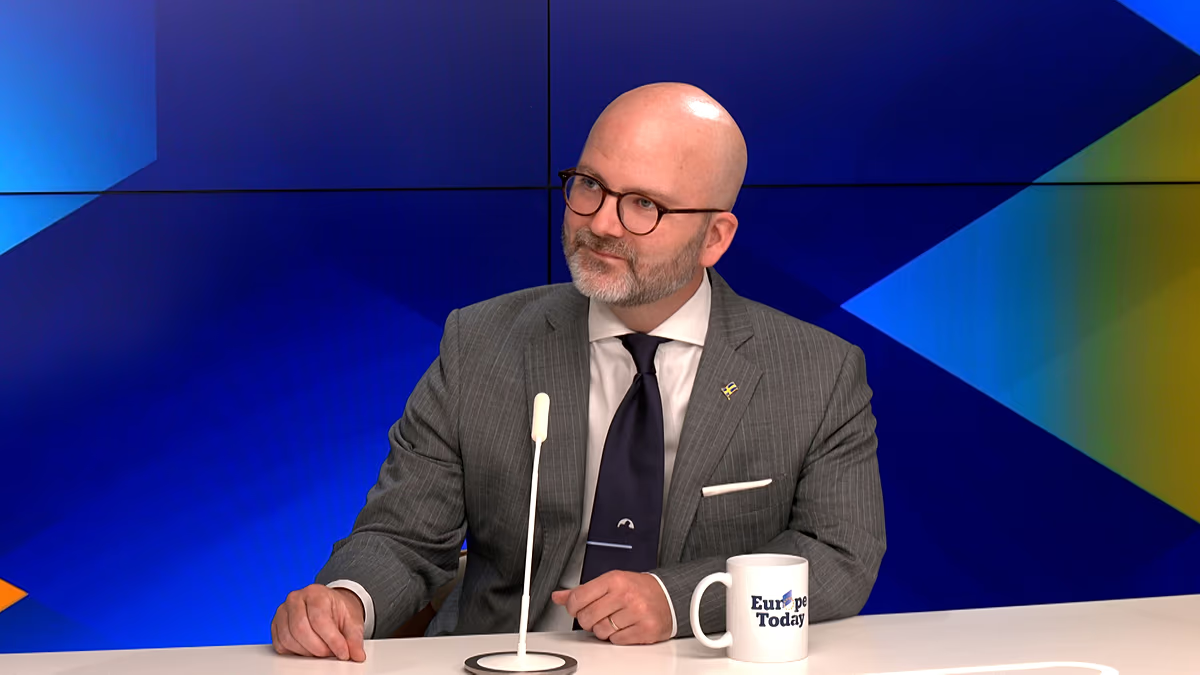
This particular seizure drew heightened scrutiny because of the tanker’s alleged connections to a much wider and more influential network. Maritime databases have linked the Tagor to the sprawling business empire of Mohammad Hossein Shamkhani, an Iranian shipping magnate and the son of a former top Iranian security official. Based primarily in the United Arab Emirates, Shamkhani has built a vast web of logistics and shipping companies. By mid-2025, both the European Union and the United States had formally sanctioned him and his associated firms, identifying him as a central figure in orchestrating the transport of both Russian and Iranian oil. The EU accused him of being a key facilitator for Russian crude exports, helping to generate significant revenue for the Kremlin’s war chest. While French authorities have not explicitly stated Shamkhani owns the Tagor, its association with his network underscores the globalized, sophisticated nature of modern sanctions evasion.
4. France’s Hardening Stance on the High Seas
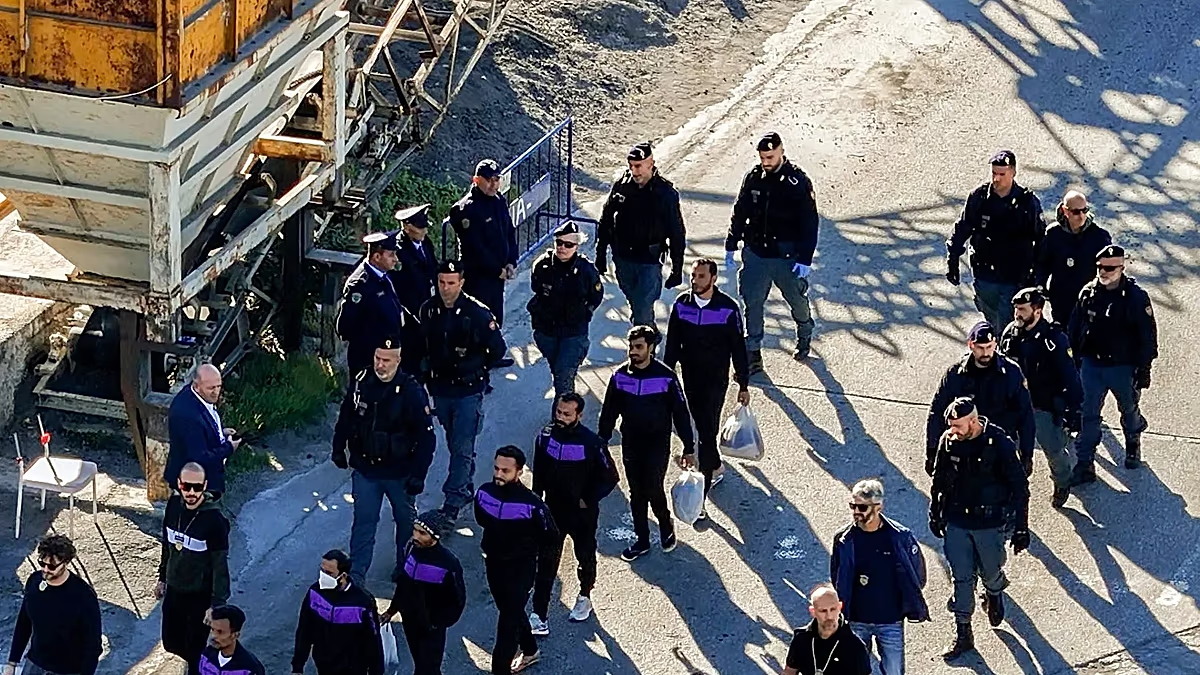
France’s action against the Tagor signals a deliberate and escalating campaign to enforce maritime law and economic restrictions. In recent cases, France has detained other shadow fleet tankers like the Deyna and Grinch in the Mediterranean, releasing them only after the payment of substantial fines. The French judicial system has also shown its willingness to pursue criminal penalties; in one notable instance, a Chinese captain of the tanker Boracay was convicted in absentia and sentenced to prison for refusing to stop for inspection. This muscular approach is backed by a political commitment to strengthen laws. In April 2026, the French government announced plans to impose harsher penalties on vessels operating without valid flags or refusing inspections, reflecting a broader European consensus on the need to combat both sanctions breaches and the severe environmental and safety risks posed by these often poorly maintained “ghost” tankers.
5. The Scale of the Challenge and the Broader Conflict
The detention of the Tagor is a single event in a sprawling, ongoing contest. The European Union estimates that nearly 600 vessels linked to Russia are now under various sanctions, illustrating the immense scale of the shadow fleet operation. Each interception represents a tactical victory for Western enforcement, but it also highlights the adaptive and resilient nature of the networks they are trying to dismantle. For Russia, these oil revenues are vital to sustaining its economy amid wartime pressures. For nations like France and the UK, enforcing these restrictions is a matter of upholding international law, supporting Ukraine by constraining Russian finances, and maintaining the credibility of the global sanctions regime. The dramatic boarding operation off the coast of Brittany is thus more than a police action; it is a front-line engagement in an economic conflict being waged across the world’s oceans.
6. A Signal from the Bay
The image of the Tagor, now idle under guard in a serene French bay, serves as a powerful symbol. It is a testament to the increasing vigilance and coordination of Western powers in tracking and challenging illicit maritime activities. However, it also stands as a reminder of the complexities of globalized trade and the lucrative incentives that drive sanctions evasion. The involvement of figures like Shamkhani reveals how geopolitical alliances, notably between Russia and Iran, are being cemented through shared economic circumvention strategies. As France prepares to levy consequences under its strengthened laws, the world watches to see if such enforcements can meaningfully disrupt the shadow fleet’s operations or if new, even more elusive methods will emerge. The quiet waters of Douarnenez now hold a story of high-seas pursuit, international intrigue, and the ongoing struggle to control the flow of resources that fuel both economies and conflicts.