

Paragraph 1: A Plea from Kyiv Amid the Storm
In the wake of another devastating Russian assault, Ukrainian President Volodymyr Zelenskyy issued a stark and urgent call to his international allies. Speaking on Tuesday, February 6, 2026, Zelenskyy framed the relentless missile and drone attacks not merely as acts of terror, but as a clear strategic signal from Moscow. He argued that as long as Ukraine remains vulnerable to ballistic missiles, these brutal barrages will continue unabated. His solution was a dual appeal: for Europe to finally develop its own independent air defense shield, and for the United States to provide the crucial munitions needed for existing systems like the Patriot. In his view, this combined strength is not just aid; it is the essential pathway to ending the war. His message, delivered via social media, was unequivocal: “A large-scale attack and an absolutely clear statement from Russia: if Ukraine is not protected… these attacks will continue.”
Paragraph 2: Echoes from the Foreign Ministry: Moscow as a “Loser”
Zelenskyy’s grim assessment was immediately reinforced by his Foreign Minister, Dmytro Kuleba. In a sharply worded statement, Kuleba portrayed Russian President Vladimir Putin as a desperate leader whose only remaining tactic is terror. He asserted that despite the overwhelming firepower, Russia is fundamentally losing on the battlefield and that “no number of missiles can change this.” This narrative from Kyiv’s leadership is a deliberate effort to reshape the perception of the war, painting the Kremlin’s escalating aerial campaign as a sign of weakness, not strength. Kuleba’s conclusion was a direct challenge: the only viable exit for Putin is to immediately cease hostilities, as the political and economic cost of his regime’s brutality will only mount.
Paragraph 3: The Human Toll of the Latest Barrage
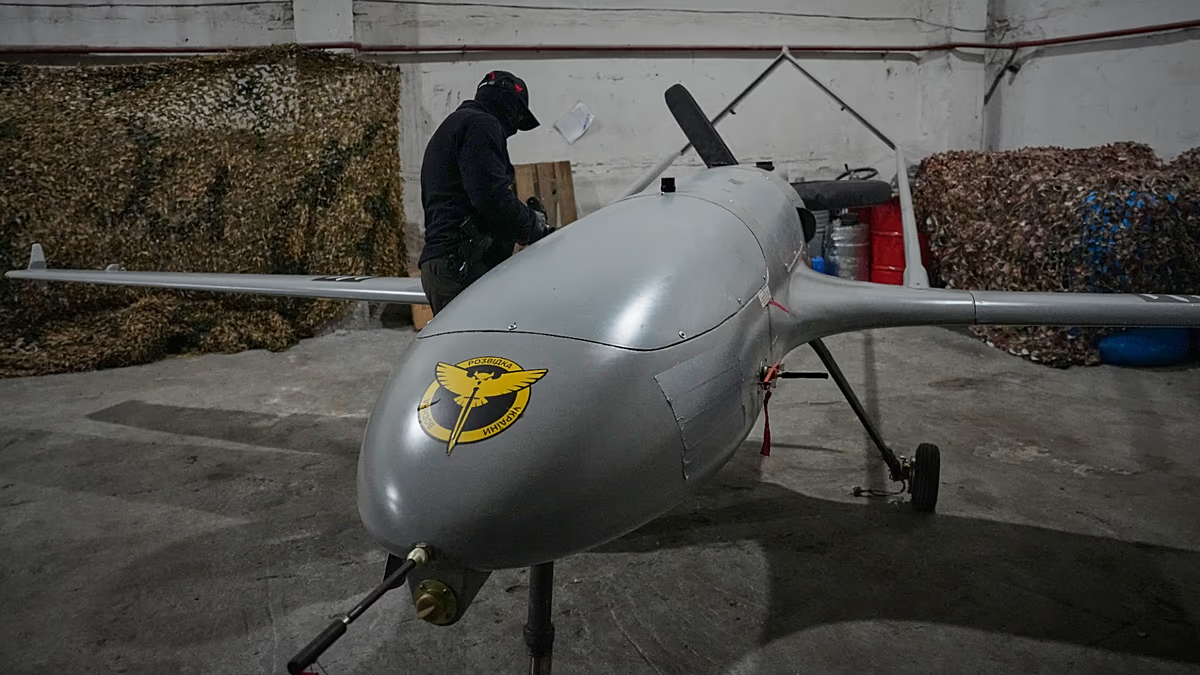
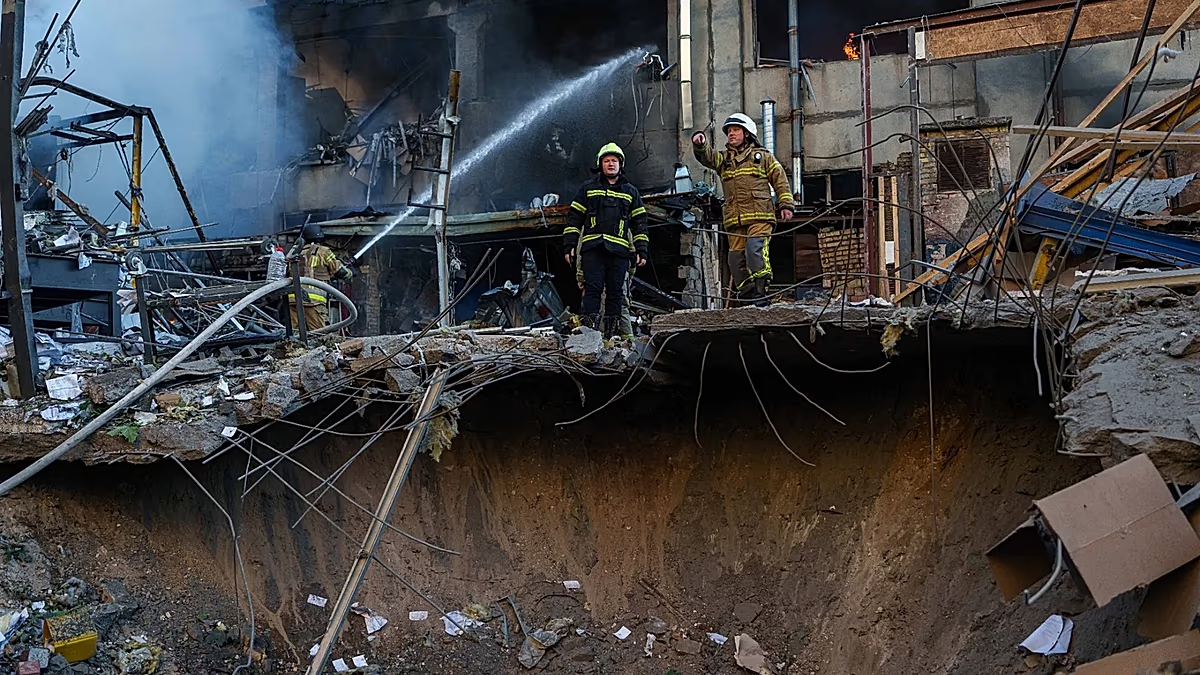
These political statements were not made in a vacuum. They came as a direct response to an early morning Russian strike that inflicted severe human suffering across Ukraine. The attack killed at least 13 people and wounded 100 others, a grim addition to the war’s colossal casualty count. Ukrainian authorities, who had warned of an impending massive assault, reported that Russia launched a staggering 73 missiles and 656 drones. While Ukrainian air defenses performed heroically, intercepting 602 drones and 40 missiles, the breach was lethal. This pattern of near-daily bombardment since the full-scale invasion began in February 2022 has solidified this conflict as Europe’s bloodiest since World War II, characterized by hundreds of thousands of deaths and millions displaced. Russia, for its part, claimed the strike targeted Ukraine’s “military-industrial complex” using advanced hypersonic missiles and continues to deny intentionally targeting civilians.
Paragraph 4: A Fragile Ceasefire Shatters Amid Wider Distractions
The intensification of strikes comes on the heels of a fragile, three-day ceasefire brokered by the United States just a month prior. Although marred by accusations of violations from both sides, that brief pause had offered a glimmer of hope for a more sustained peace process. That hope has now been thoroughly extinguished by the resumption of large-scale attacks. Complicating the diplomatic landscape is the distraction of the White House, which is simultaneously managing another international crisis involving Iran. This shift in global attention creates a dangerous opening for further escalation. Meanwhile, the war spilled across the border, as a Ukrainian drone strike killed one person in Russia’s Kursk region, and another drone set fire to an oil refinery in Krasnodar, illustrating the conflict’s expanding and reciprocal nature.
Paragraph 5: Zelenskyy’s Dire Warning and the Scale of the Threat
President Zelenskyy had foreshadowed this latest catastrophe, revealing days earlier that intelligence indicated Russia was preparing a new massive strike. His public plea was poignant and direct, urging citizens to “heed the sirens, go to shelters and protect your lives.” This warning was based on alarming data. An analysis of Ukrainian air force statistics showed that Russia had launched a record 8,150 long-range drones at Ukraine in May 2024 alone—a 24% increase from April. While Kyiv’s defenders successfully intercept about 90% of incoming threats overall, their most critical vulnerability remains ballistic missiles, which continue to penetrate defenses with devastating effect. This asymmetric challenge underscores Zelenskyy’s argument for more advanced, specialized defensive support.
Paragraph 6: The Strategic Crossroads
The events of early February 2026 represent a critical juncture in the war. From Ukraine’s perspective, Russia has thrown down a gauntlet, demonstrating that terror from the skies is its enduring strategy. The response from Kyiv is a concerted campaign to rally sustained and more sophisticated Western support, framing European air defense autonomy and American missile supplies as existential necessities, not just military aid. The shattering of the recent ceasefire and the overwhelming scale of the attacks have pushed formal peace talks even further from reach. As both sides exchange long-range strikes, the conflict settles into a brutal war of attrition, where technological superiority in defense could prove as decisive as offensive prowess. Zelenskyy’s appeal is ultimately a call to recognize that protecting Ukrainian skies is the most direct route to securing a future where such horrifying barrages—and the war itself—can finally come to an end.