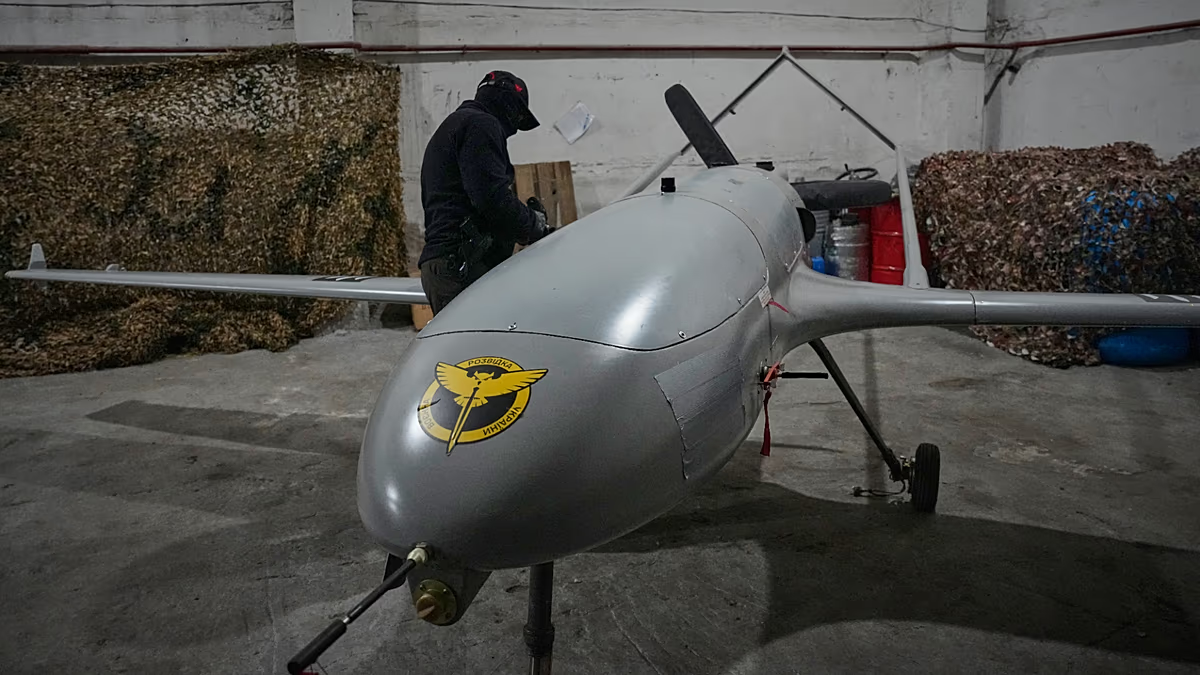



In recent weeks, a palpable sense of urgency has gripped the European Union as member states grapple with a tangible and escalating security threat: unmanned aerial incursions on the bloc’s eastern flank. A series of at least six real or suspected drone incidents in the Baltic region in May alone sent shockwaves through NATO territory, starkly exposing vulnerabilities. While many of these drones were assessed to be Ukrainian, inadvertently pushed off course by intense Russian GPS jamming, their effect was destabilizing. The political and operational fallout was immediate and severe, from the collapse of Latvia’ s government over its delayed response to Lithuanian leaders taking shelter underground. These events transformed abstract discussions about drone threats into a pressing reality, forcing a collective European reckoning with a fragmented and reactive defense posture against a rapidly evolving aerial menace.
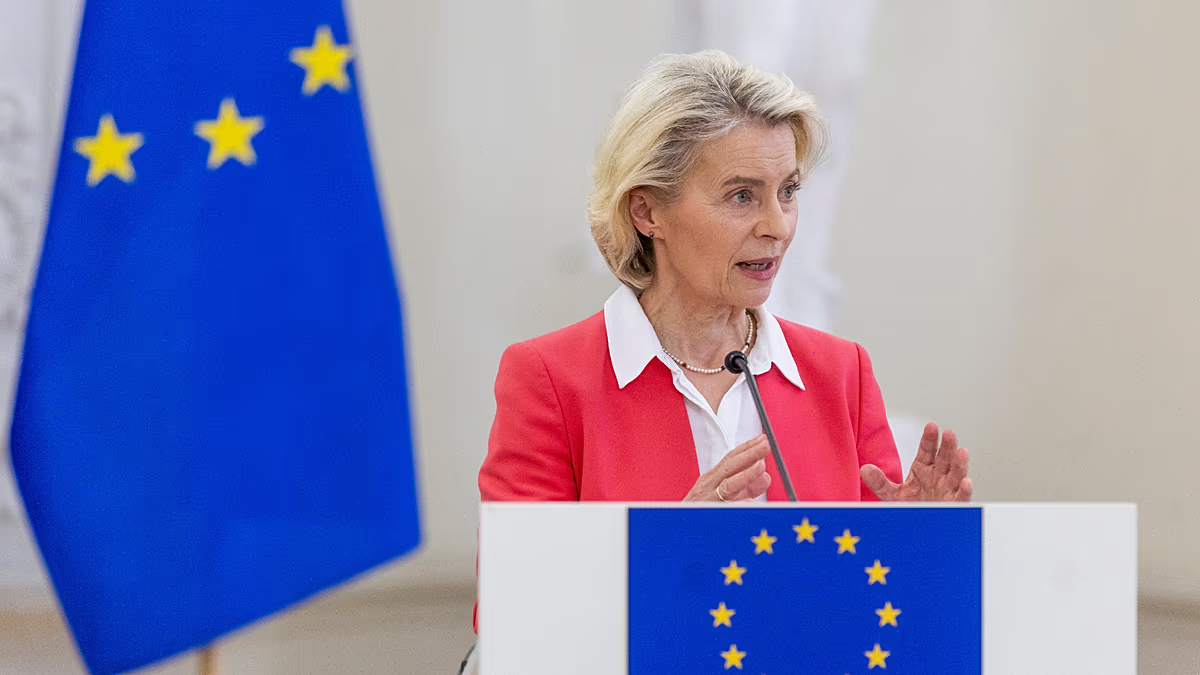
Against this tense backdrop, European governments have been engaged in intense dialogue, captured in an internal EU document dated 30 May. The report, compiled under the Cypriot presidency of the Council, synthesizes member states’ feedback on a European Commission action plan. It reveals a broad, unanimous recognition of the “growing cross-sectoral security implications of drones” and the critical need for enhanced preparedness, resilience, and cooperation. European Commission President Ursula von der Leyen’s solidarity visit to Vilnius, accompanied by an announcement of €12 billion in defense loans for Baltic states, underscored the political stakes. “When Baltic states are being tested, Europe as a whole is being tested,” she declared, echoing Lithuanian President Gitanas Nausėda’s admission that the skies above the Baltics “are not sufficiently secure.” This consensus on the nature of the threat, however, masks a more complex and familiar tension at the heart of EU defense policy.
The document lays bare the perennial challenge of translating collective alarm into cohesive action. While there is widespread agreement that information sharing and operational coordination are indispensable, national governments remain deeply protective of their sovereignty and wary of duplication. The delicate balance is between enhancing collective security and respecting national competences. Some countries advocated for improved, systematic information exchange between authorities; others insisted it must remain voluntary, with sensitive data classified. This tension was vividly illustrated by a recent incident in Romania, where the military had only four minutes to respond to an incoming drone but could not engage it with fighter jets due to its proximity to civilian housing—a stark example of the split-second, life-and-death decisions that demand seamless cross-border awareness and protocols. The prevailing view is that the EU should play a supporting role, facilitating coordination and interoperability without supplanting national command structures.
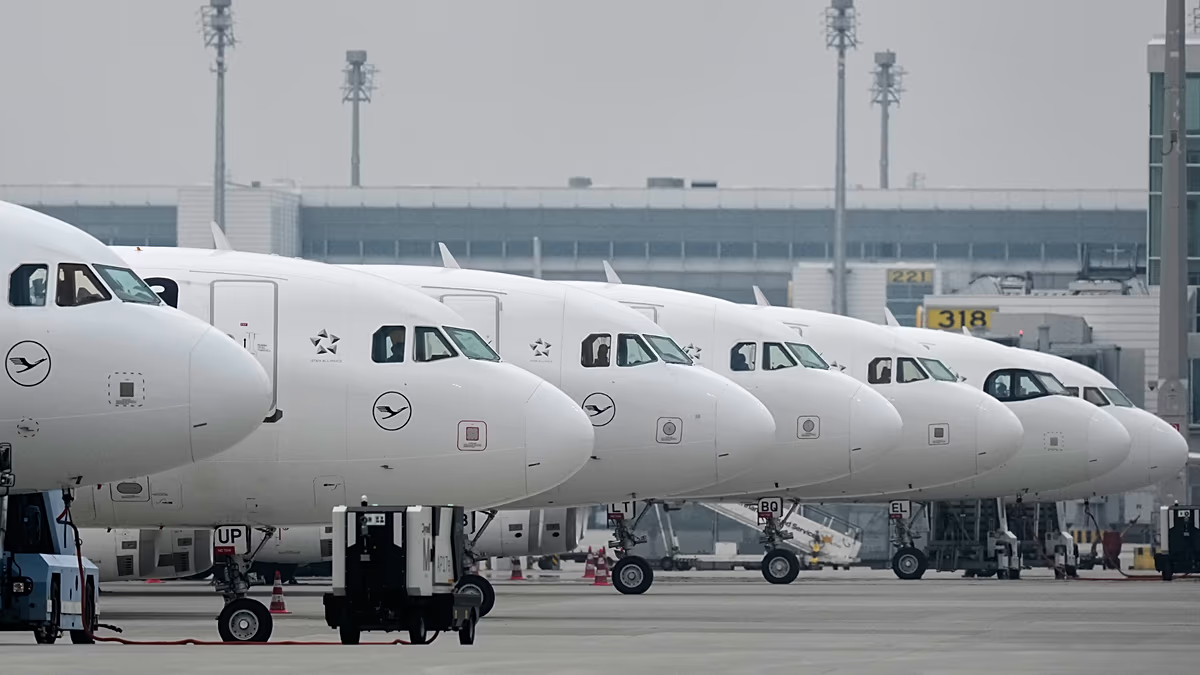
In the search for practical solutions, the discussions highlighted several priority areas where the EU can add tangible value. A key focus is on creating a more robust security framework for drone operations themselves, particularly through better registration and identification systems to distinguish friendly, authorized drones from hostile or unidentified ones. Concurrently, governments warned against overregulation that could stifle the competitiveness of the European drone industry, seeking a careful balance. Protecting critical infrastructure—from energy grids to transportation hubs—emerged as a recurring and urgent priority, alongside the need to develop detection and response capacities for public spaces, borders, and maritime domains. On the technological front, member states expressed support for advanced, integrated systems, including multi-sensor networks and artificial intelligence-powered tools, to improve detection accuracy and response times.
Notably, the dialogue extended beyond internal EU measures to include vital cooperation with Ukraine. Member states widely acknowledged the immense operational experience and rapid technological innovation in drone and counter-drone capabilities stemming from the war. Ideas for collaboration included voluntary stress-testing of critical infrastructure against simulated drone attacks and organizing annual, large-scale exercises involving both civil and military actors from across the Union and its partners. These proposals underscore a shift towards proactive, tested preparedness. The overarching goal is to move from a fragmented patchwork of national responses to a more interoperable and swiftly activated European mechanism, improving situational awareness and clarifying the division of responsibilities during a crisis.
Ultimately, the internal document paints a picture of a European Union at an inflection point. The drone incursions have acted as a catalyst, forcing a collective confrontation with a disruptive and asymmetric threat that respects no borders. There is a clear consensus that the current fragmented approach is unsustainable and that Brussels has a crucial role in knitting together a more resilient and coordinated defense tapestry. However, the fundamental principle remains unchallenged: “drone and counter-drone security remains primarily a national competence.” The path forward, therefore, is one of enhanced voluntary cooperation, built on trust and shared technology standards, rather than the creation of a centralized EU command. The coming months will test whether the bloc can overcome its institutional silos and forge a unified front, ensuring that the skies over Europe are not just watched, but collectively and effectively secured.