


Summary and Humanization of News Report
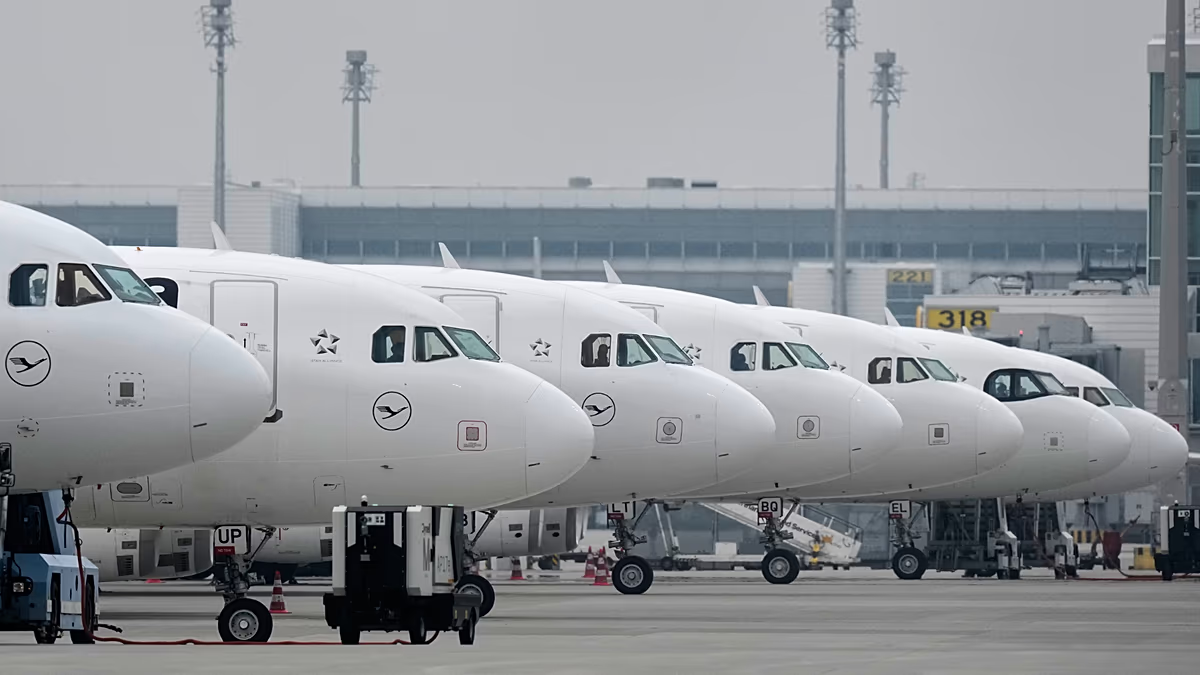
On a quiet Saturday morning in late May, the bustling activity at Munich Airport, one of Germany’s major international hubs, was brought to an abrupt and tense standstill. The cause, as reported by Diana Resnik, was a familiar yet persistently disruptive threat in modern aviation: a possible drone sighting. According to the initial report, two separate pilots independently reported seeing what they believed to be an unauthorized drone in the vicinity of the airport shortly after 9:00 AM local time. In the world of air traffic, where safety protocols are sacrosanct, such a report triggers an immediate and severe response. In coordination with German air traffic control authorities, the decision was swiftly made to suspend all flight operations and close the runways as a precautionary measure. This sudden halt left travelers in terminals and planes on tarmacs in a state of uncertainty, while a significant police presence was mobilized to investigate the potential breach of airspace.
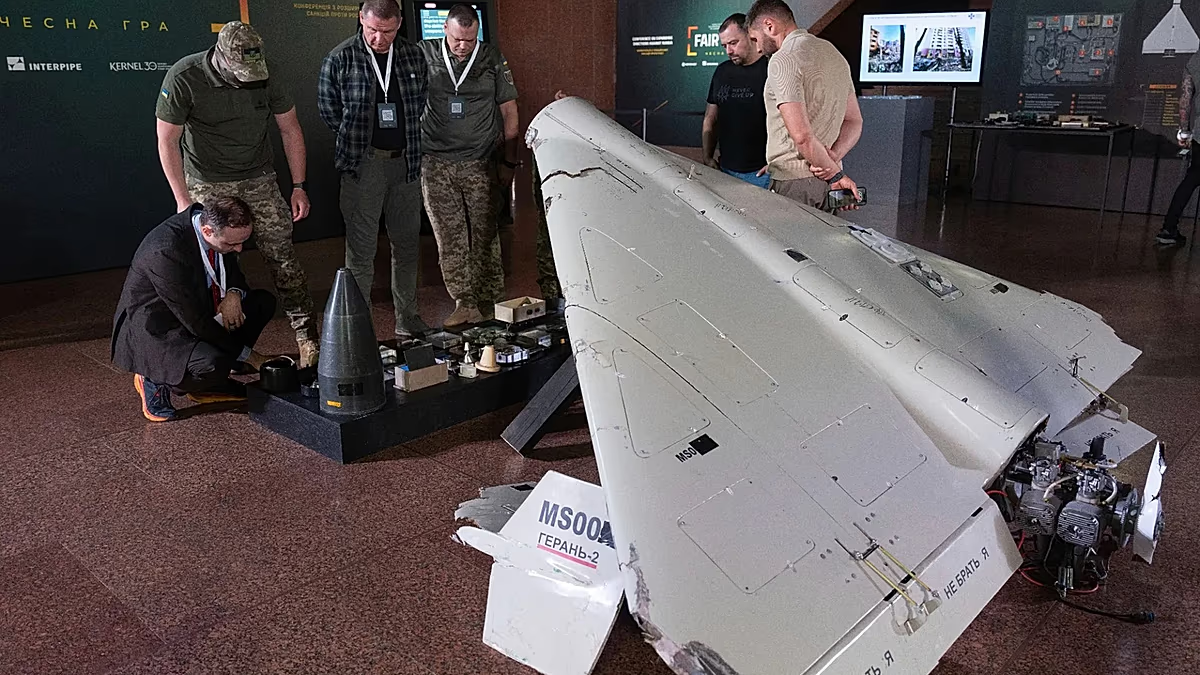
The incident underscores a growing and global challenge for aviation authorities. Drones, or Unmanned Aerial Vehicles (UAVs), while revolutionary for photography, delivery services, and numerous industrial applications, pose a severe risk when flown recklessly or maliciously near airports. A collision between a drone and a commercial aircraft, particularly during the critical phases of takeoff or landing, could have catastrophic consequences, damaging engines or windshields. Even the credible threat of such a collision is enough to paralyze an entire airport. The decision to ground flights is never taken lightly, as it causes massive logistical disruptions, financial losses for airlines, and significant inconvenience for thousands of passengers. Yet, the alternative—ignoring a potential threat—is unthinkable, placing an immense burden on airport security to err overwhelmingly on the side of caution.
This was not an isolated scare for Munich Airport. As noted in the report, the facility had experienced two similar shutdowns within a single 24-hour period just the previous October, highlighting a worrying pattern. Each event follows a now-familiar script: a pilot or ground crew sighting, an immediate security consultation, a halt to operations, and a subsequent scramble by police to locate the drone operator, who often remains elusive. These repeated disruptions reveal the vulnerabilities in current systems to detect and neutralize small, fast, and low-flying drones quickly. While regulations strictly prohibit drone flights near airports, enforcement is difficult, relying heavily on public compliance and the ability to apprehend offenders after the fact, which is often too late to prevent the disruption.
For the passengers caught in this unfolding drama, the human impact is profound. Imagine families anxiously awaiting a long-awaited holiday reunion, business travelers with critical meetings, or individuals connecting to overseas flights—all suddenly stranded with no clear information on when they might depart. Gates become crowded, information desks are swamped, and the ripple effect of delays spreads across the global network, affecting schedules worldwide. The term “developing story,” used by journalists, translates on the ground to a prolonged state of limbo. Travelers refresh flight status apps, listen for muffled terminal announcements, and try to rearrange plans, all while grappling with the low-grade anxiety that accompanies any unexplained halt to air travel.
The response from authorities, involving a large deployment of police, signifies the seriousness with which these incidents are treated. Their task is multifaceted: to attempt to visually or technically confirm the drone’s presence, to sweep the area for the operator, and to assess when the airspace can be declared safe again. However, without advanced, installed detection systems like radar specifically tuned for small drones, these searches can be like looking for a needle in a haystack. The police spokesperson’s admission that it was not known how long the suspension would last is a testament to the complex and open-ended nature of the investigation. The priority is absolute certainty regarding safety before the first engine is cleared to restart, a process that can take hours.
In conclusion, the event at Munich Airport serves as a stark reminder of the delicate balance between technological progress and public safety in the 21st century. The very gadgets that represent freedom and innovation for hobbyists can become instruments of massive disruption when used without regard for strict regulations. As such incidents become more frequent, the pressure intensifies on airports, regulators, and law enforcement to develop more proactive solutions—such as geofencing, signal-jamming technology, and faster detection networks—to protect critical airspace. Until then, the aviation world remains on high alert, where a single sighting by a vigilant pilot can silence the constant roar of engines and bring a global portal to a standstill, affecting the plans and rhythms of thousands of lives.