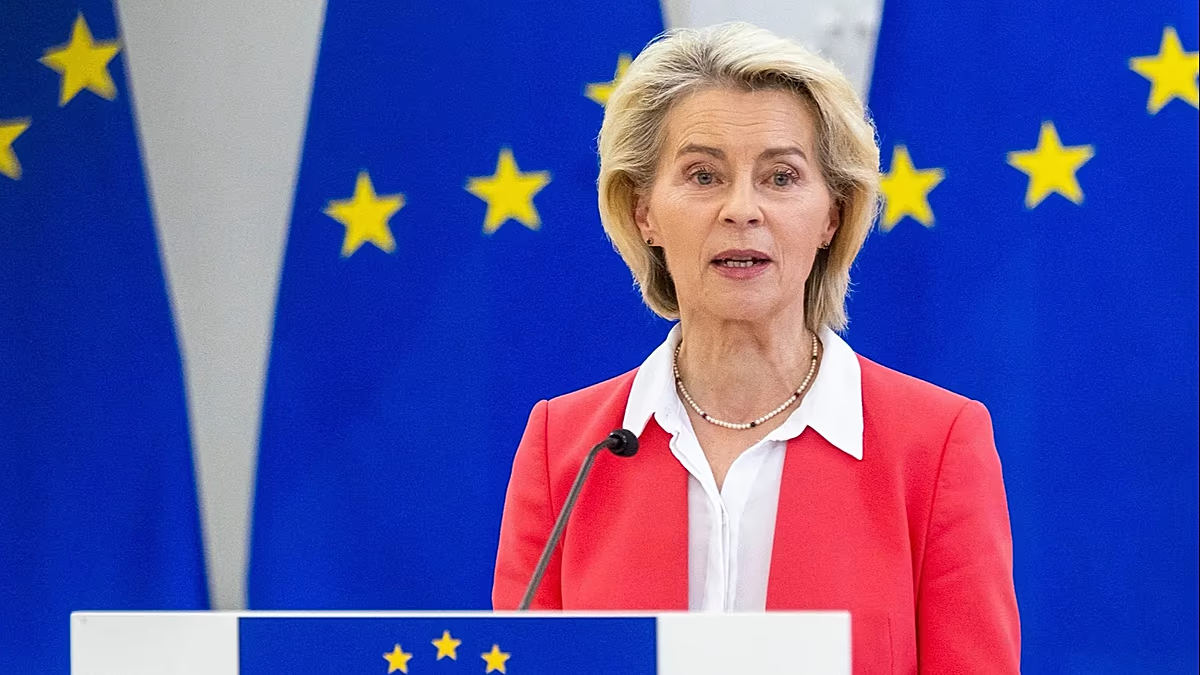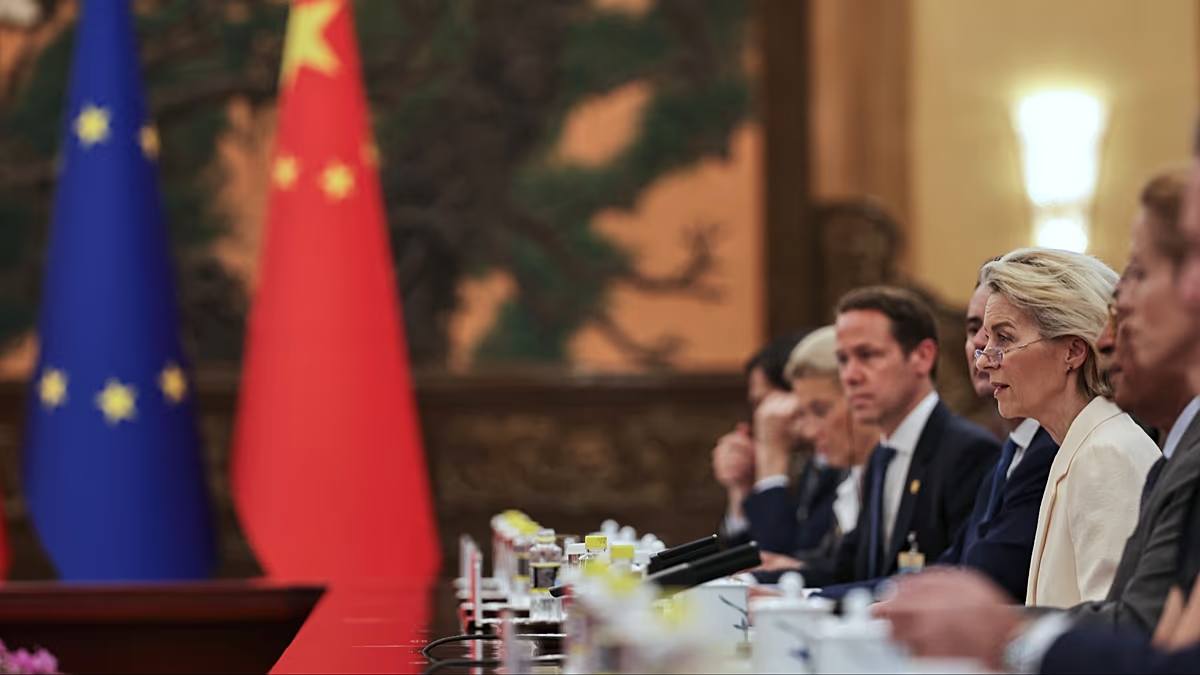
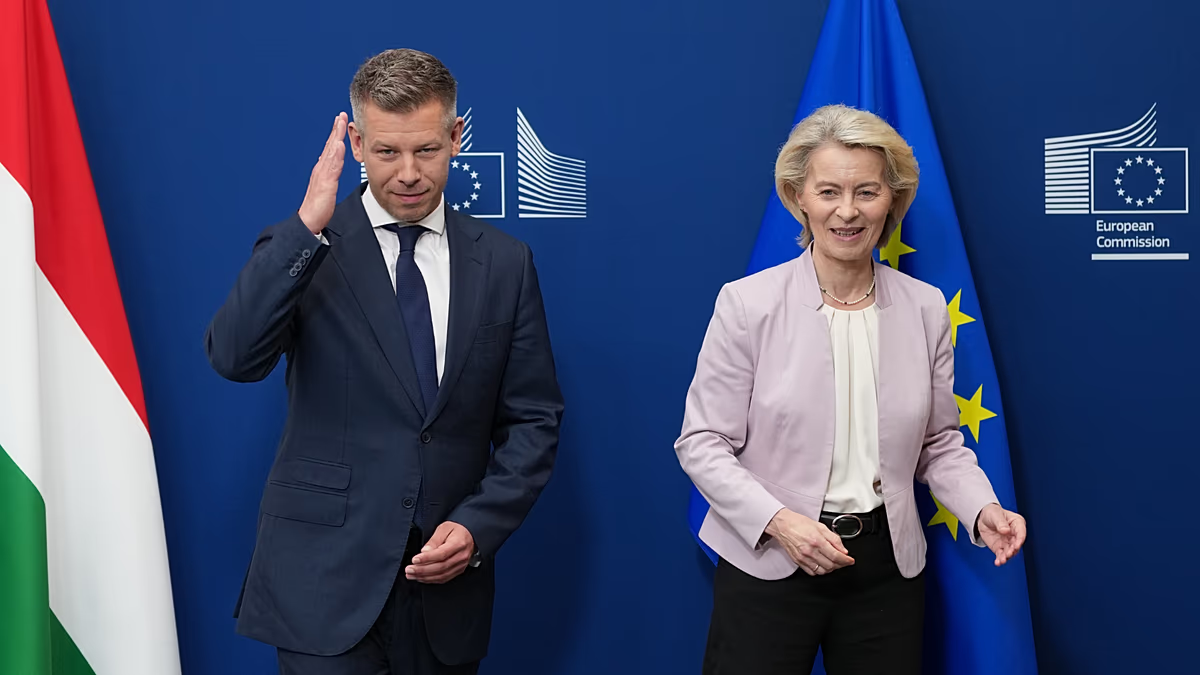



In a significant shift for Hungary and its relationship with the European Union, newly elected Prime Minister Péter Magyar has successfully negotiated the release of nearly all European funds that had been frozen under his predecessor, Viktor Orbán. Following a meeting in Brussels with European Commission President Ursula von der Leyen, an agreement was sealed to unblock a total of €16.4 billion in recovery and cohesion funds. Von der Leyen praised Magyar’s new government, formed “in record time,” for advancing what she termed “long-overdue reforms” within mere weeks of taking office. The breakthrough marks a dramatic turnaround from the years of contention under Orbán, whose 16-year rule was characterized by protracted conflicts with Brussels over issues of democratic standards and the rule of law, which had led to the suspension of these vital financial resources.
The financial package is substantial, representing about 13% of Hungary’s annual economic output, and is poised to fuel major national projects. The immediate release includes €10 billion from the EU’s post-pandemic Recovery and Resilience Facility, along with €4.2 billion in cohesion funds and a further €2.2 billion from a related envelope. Prime Minister Magyar outlined ambitious plans to channel this investment into modernizing the country’s aging energy grid, upgrading railway networks, improving rental housing, and bolstering healthcare, education, and small businesses. With a palpable sense of political victory, Magyar contrasted his administration’s swift progress with the stalemate of the past, telling reporters, “Three weeks was enough to do what Viktor Orbán could not achieve in three years.”
However, this financial injection is not without strict conditions. The funds are contingent upon Hungary meeting 27 specific “super-milestones” designed to strengthen judicial independence, combat corruption, and improve transparency. Key requirements include Hungary finally joining the European Public Prosecutor’s Office—an independent EU body Orbán long resisted—strengthening the national Integrity Authority, and overhauling public procurement rules to ensure fair competition. Magyar acknowledged the considerable work ahead, stating, “We have a great deal of work ahead of us — we need to pass a lot of legislation.” As a first positive consequence of the thawing relations, Hungarian students will regain access to the EU’s cherished Erasmus+ exchange programme starting next academic year, reconnecting them with their European peers.
Separately, Prime Minister Magyar addressed another major point of EU contention: Hungary’s previous blockage of Ukraine’s accession negotiations. He firmly denied any direct quid pro quo, stating that the unblocking of funds was not conditioned on lifting Budapest’s veto on opening the first formal chapter of talks with Kyiv. Instead, he reiterated that Hungary’s position is rooted in a longstanding demand for the protection of the Hungarian minority in western Ukraine. Magyar presented an 11-point list concerning educational and language rights, expressing hope that ongoing technical talks would soon yield Ukrainian guarantees to implement these protections into law. His remarks suggested a potential flexibility, indicating Budapest might accept formal guarantees from Ukraine as a sufficient step to move forward, rather than insisting on completed legislation.
Further signaling a pragmatic shift in governance, Magyar adopted a notably softer tone on the EU’s recently approved Migration and Asylum Pact. During the election campaign, his party had strongly opposed the new EU-wide rules. In office, however, he noted that the pact is legally binding and pointed out that it was ultimately approved by the Orbán government itself. While acknowledging past criticisms about the pact’s weaknesses, he highlighted that measures to strengthen external border protection had been incorporated. In a pointed critique of the previous administration’s record, he also revealed that due to prison overcrowding under Orbán, some 2,200 convicted people-smugglers had been released, pledging that his government would build new detention facilities to house both smugglers and those convicted of corruption.
This series of developments paints a picture of a government seeking to reset its European relationships through a blend of assertive national advocacy and pragmatic compromise. The unlocking of funds promises tangible benefits for Hungarian citizens through infrastructure and public service investments, while the attached conditions aim to fortify the country’s institutional foundations. While disputes over Ukraine and the implementation of EU rules are far from fully resolved, Magyar’s approach suggests a departure from the confrontational politics of the Orbán era toward a more transactional and dialogue-oriented engagement with Brussels. The coming months will be a critical test of his government’s ability to deliver on both its reform promises to the EU and its development pledges to the Hungarian people.