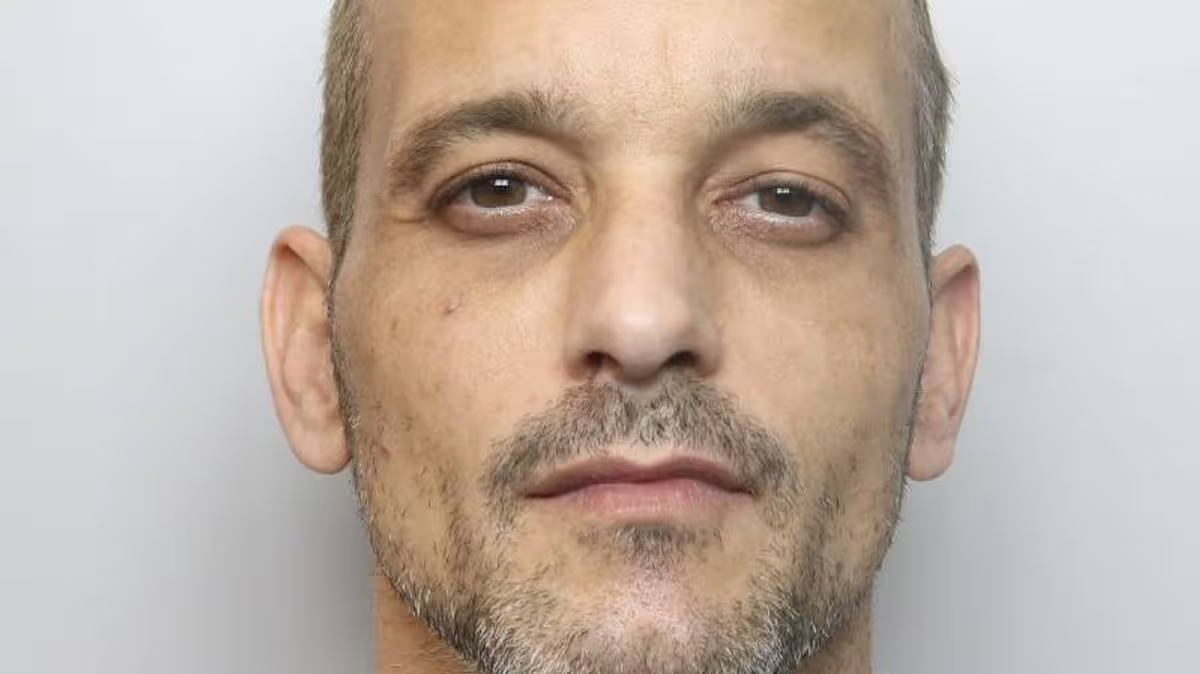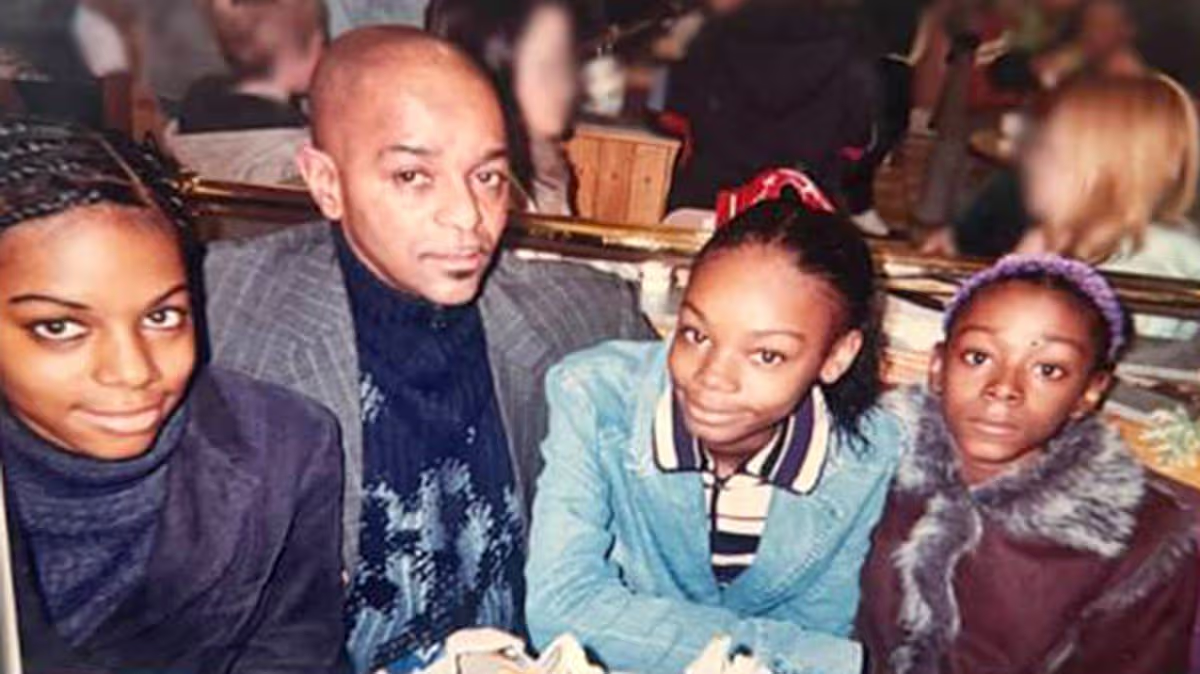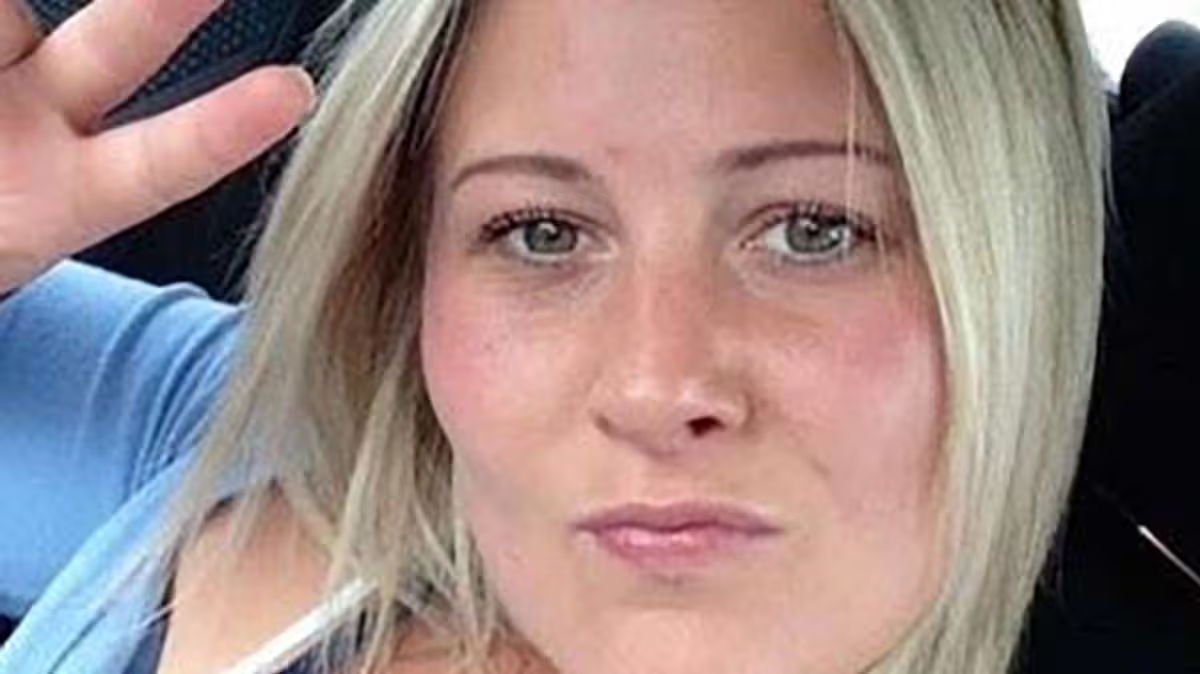




In the cold dawn of March 9, 2026, Sylvester Abayomi, a 50-year-old man described by those who loved him as kind, dedicated, and full of life, kissed his partner, Denise Doyle, and told her he loved her before leaving for work. It was a routine gesture of affection, one she would later recall with devastating clarity, stating, “I never knew this would be the last time.” His journey was tragically routine as well: driving his Volvo S40 along Kingsway in Manchester, obeying a green traffic signal. This ordinary, lawful act of commuting was met with an extraordinary and unlawful force. At approximately 4:30 am, his car was struck with catastrophic violence by a Volkswagen Golf GTI traveling at 99 miles per hour at the moment of impact. The force of the collision caused serious injuries from which Sylvester Abayomi died shortly after. The driver of the Golf, Uways Hussain, 20, and his passenger, Usmon Mahmood, 23, had, in the five seconds preceding the crash, been recorded speeding at 139 miles per hour—an astonishing 109 miles over the 30 mph speed limit for that zone.
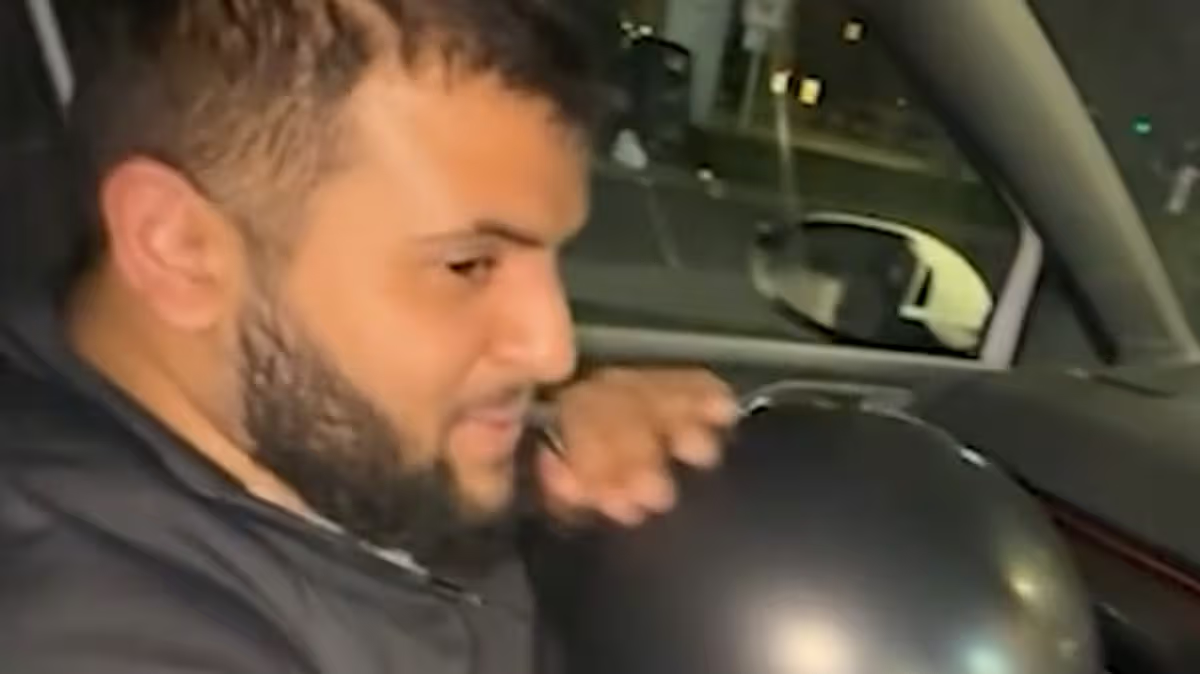
The events leading to this fatal moment were not a single, panicked error but a sustained and documented exhibition of what Greater Manchester Police called “one of the most extreme dangerous driving cases officers have encountered.” In the hours before the crash, Hussain and Mahmood filmed themselves on a horrifying joyride. Footage showed Hussain driving one-handed at speeds consistently well over 100 mph, weaving through traffic, jumping red lights, and—with a chilling disregard for safety—inhaling from nitrous oxide balloons while steering. The pair reached speeds exceeding 130 mph multiple times, their behavior, as Judge Nicholas Dean KC later noted, seemingly “for the thrill of it.” This mobile footage and CCTV evidence presented in court was described as “terrifying,” showcasing a speed “far, far in excess of any safe or lawful limit.” The court heard it was “one of the worst disregards for speeding” police had ever seen. This was not merely dangerous driving; it was a conscious, recorded embrace of lethal risk.
The immediate aftermath of the crash revealed a further depth of callousness. As Sylvester Abayomi lay fatally injured in his vehicle, neither Hussain nor Mahmood approached to check on his condition. Instead, their conversation, recorded because Hussain’s Apple Watch detected the high-speed crash and initiated an emergency call, centered entirely on evasion. Mahmood, the owner of the car, was heard saying, “You just wrapped my whip bro.” They discussed fleeing the scene, removing evidence, falsely reporting the car stolen, and booking an Uber to escape, even noting their DNA would be on the airbags. Judge Dean told them, “Rather than assist or attempt to assist, both of you fled. Not in panic as such, but discussing how in effect, how to get away with it.” When police arrived, tracing Hussain through his watch, they found him hiding in a garden and had to taser him. He initially denied being the driver, asking, “None of us were even there, what’s happened? Did someone pass away?” Mahmood was also found hiding nearby, with numerous nitrous oxide canisters scattered around the area.
At Manchester Crown Court on Friday, May 29, 2026, the full weight of the law and the profound human cost of their actions came to bear. Hussain, from Burnage, who had a previous 12-month driving ban for drug driving in 2024, admitted causing death by dangerous driving. Mahmood, from Levenshulme, admitted aiding and abetting the offense—a significant legal note, as it is one of the first times a passenger has been convicted for such a role in a death by dangerous driving case. Judge Dean sentenced them for their “flagrant disregard for the safety of other road users.” After credit for guilty pleas, Hussain was sentenced to 11 years and eight months in prison, and Mahmood to 12 years and nine months. Each must serve at least two-thirds of their sentence, face an eight-year driving ban, and pass an extended driving test before ever legally driving again.
The sentences, though substantial, cannot measure the loss inflicted. Denise Doyle’s emotional victim impact statement laid bare the human devastation. After seeing Sylvester’s body in the hospital, she described feeling trapped in a nightmare, “like I was in a box and couldn’t get out.” She spoke of him as her partner, her friend, her future. “That day my life changed forever,” she said. “It’s not just grief, it’s a constant emptiness. The life we were building together has been taken away from me.” Her words transform the statistics—139 mph, 99 mph impact, 12-year sentence—into a profound story of stolen love and a shattered future. Sylvester Abayomi was not merely a victim of a traffic collision; he was a caring man on his way to work, whose life was obliterated by a conscious choice made by others to treat a public road as a reckless playground.
This case stands as a grim testament to the catastrophic consequences of extreme dangerous driving and the legal system’s evolving response to it. The conviction of the passenger, Usmon Mahmood, underscores that encouraging, recording, and participating in such lethal behavior carries grave responsibility. The technological evidence—from the Apple Watch call to the self-recorded video—painted an irrefutable picture of premeditated thrill-seeking and post-crash calculation. Yet, beyond the legal precedents and the shocking speeds, the enduring narrative is one of a simple, loving farewell kiss that became a final goodbye, and a widow’s “constant emptiness.” The story of Sylvester Abayomi’s death is a reminder that behind every headline about a “dangerous pair jailed” lies a profound human tragedy, where a life full of promise is replaced by a void of grief, and where the thrill of a moment’s speed forever destroys the future of a family.