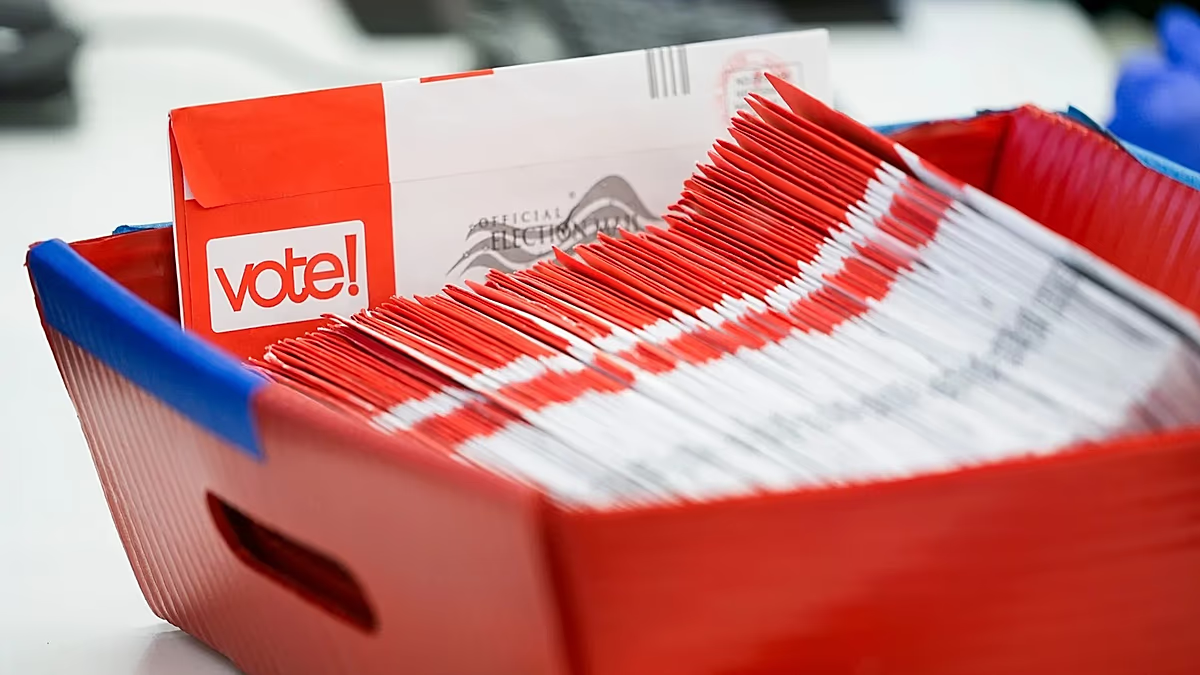


Colombians are preparing to cast their votes in a presidential election that encapsulates the intense and divisive political climate not only within their nation, but across Latin America. This Sunday’s poll arrives at a moment of significant regional flux, marked by the rise of populist right-wing movements and increasing political fragmentation. The core contest pits the incumbent left, seeking to secure a continuation of Gustavo Petro’s historic presidency, against a fractured opposition. Within that opposition, new outsider figures have gained traction by centering their campaigns on visceral issues: security, direct confrontation, and a wholesale rejection of the traditional political class. As analyst Laura Bonilla notes, this election combines a global wave of polarization with a very local Colombian phenomenon—the novel experience of true political alternation following Petro’s 2022 victory. The campaign unfolds against a backdrop of palpable public discontent, with expert Sergio Guzmán highlighting voter anxieties over security, corruption, economic stability, and the crumbling health system.
The electoral atmosphere has been charged with emotion, often eclipsing substantive policy debate. The campaign’s rhetoric has grown increasingly polarized, with fear being a primary tool for mobilizing voters. As Bonilla observes, the absence of formal candidate debates and the dominance of social media as a political arena have deprived citizens of reliable public information to guide their choices. Instead, digital echo chambers and algorithms reinforce existing biases, ensuring that people primarily engage with voices that resonate with their emotions rather than challenge their views. Guzmán concurs, noting that the success of certain candidates stems precisely from this emotional connection. In an environment where complex proposals are scarce, a candidate’s ability to channel collective frustration or hope becomes a powerful, if simplistic, currency.
A profound rejection of the established political order is a defining thread of this election. The traditional parties, long the pillars of Colombian politics, are seen as the major losers in this race. This disillusionment stems from a deep-seated belief that these structures have failed to address the country’s enduring crises. Guzmán points out that Petro’s initial victory itself signaled a shift, giving the left a concrete face and creating an ideological affinity for a segment of the population previously unrepresented. Bonilla adds that the appeal of both the governing camp and new political forces lies in their promise to represent historically excluded sectors. The public’s discontent is thus rooted in a dual craving: for systemic change and for figures who feel authentically disconnected from the failed elite.
Central to voter concerns are the intertwined issues of security and corruption, alongside a pervasive sense of national decline. Polls consistently rank these as top anxieties. Corruption, Bonilla states, is the primary frustration with the political system. On security, perceptions are complex. Guzmán explains that part of the electorate attributes the recent strengthening of armed groups and a deterioration in public safety to Petro’s “total peace” policy. The populist right has seized on this, offering seemingly straightforward, hardline solutions like militarizing cities—proposals that Bonilla critiques as ineffective yet emotionally resonant. She clarifies that the debate often conflates the long-standing armed conflict with everyday urban insecurity, both fueling calls for tougher order. Economically, perceptions are mixed; many individuals feel they have not fared poorly under Petro, yet, as Guzmán notes, parts of the business community and international investors remain wary of his policies, creating a dissonance in the economic narrative.
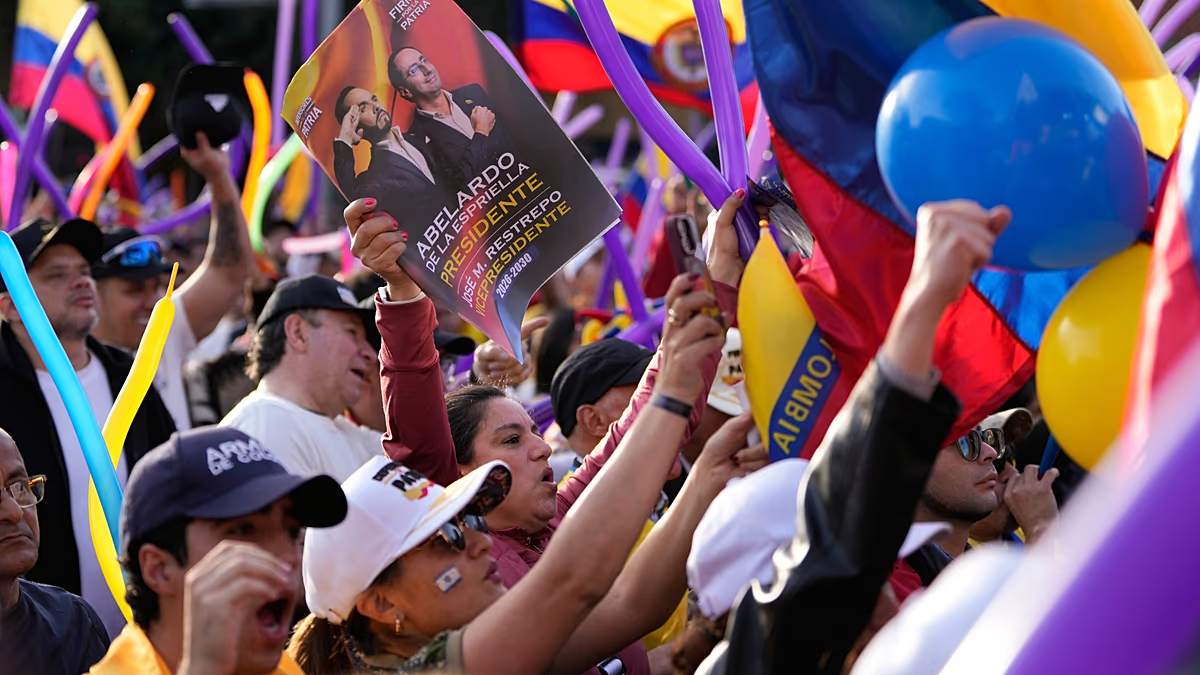
The race within the right-wing opposition highlights a striking trend: the rise of outsider, populist figures and the decline of traditional candidates. Current polling, as analyzed by Guzmán, suggests a dynamic where a more confrontational campaign style prevails. He notes that candidates like Abelardo de la Espriella have gained by being more forceful and disruptive, attracting voters away from institutional options. Bonilla describes De la Espriella as a “populist right-wing outsider” whose platform mobilizes public anger and indignation. This shift signifies a deeper crisis of political representation and a growing disconnect between society and conventional power structures. Furthermore, declining trust in traditional opinion polls has altered how citizens seek information, leading many to speculative betting markets or social media, thereby exacerbating the problem of information distortion and political speculation.
The election’s outcome will resonate far beyond Colombia’s borders, influencing the geopolitical balance in Latin America and the nation’s international relationships. Bonilla argues that certain external pressures, like statements from U.S. President Donald Trump, inadvertently strengthened Petro’s narrative of defending national sovereignty against foreign interference. Guzmán acknowledges that relations between Bogotá and Washington have seen tension, though practical understandings were often found behind closed doors. Regionally, a victory for the populist right in Colombia could disrupt the current predominance of progressive and center-left governments in Latin America. Bonilla also observes a shifting global influence in the region, with Europe’s political leverage waning due to inconsistent strategy, while actors like China and Russia expand their reach. As the campaign concludes, the international context—particularly the future relationship with the United States—may become a decisive factor, especially in a potential second round of voting, framing Colombia’s next chapter within a wider world of changing alliances and ideological battles.