

Paragraph 1: A Fragile Diplomatic Breakthrough
In a significant development that could pave a path away from open conflict, diplomatic channels between the United States and Iran appear to be bearing fruit. US Vice President JD Vance has publicly stated that talks are making “good progress,” as negotiators from the long-adversarial nations have reportedly agreed on a draft 60-day extension to their fragile ceasefire. This memorandum of understanding, if finalized, would represent the most meaningful diplomatic step since hostilities erupted on February 28th. The deal now hangs in the balance, awaiting the critical final approvals from both US President Donald Trump and Iran’s new Supreme Leader, Ayatollah Mojtaba Khamenei. This precarious moment is underscored by external mediation efforts, with Pakistan’s Foreign Minister scheduled to meet his US counterpart in Washington, potentially playing a key role in bridging the final gaps.
Paragraph 2: The Proposed Terms of the Deal
The reported terms of the draft agreement outline a delicate, step-for-step process designed to build trust and de-escalate tensions. Central to the deal is the strategically vital Strait of Hormuz, a global oil chokepoint that has been a flashpoint. Iran would commit to clearing all mines from the strait within 30 days and guarantee unrestricted shipping. In return, the US would proportionally lift its naval blockade as commercial traffic safely resumes and grant sanctions waivers to allow Iran to sell its oil—a crucial economic lifeline for Tehran. Furthermore, Iran would reaffirm a commitment not to pursue nuclear weapons, while the US would agree to discuss broader sanctions relief and the release of Iranian funds frozen abroad. A critical component is the plan to begin direct nuclear negotiations within the 60-day window, starting with the contentious issue of Iran’s stockpile of enriched uranium.
Paragraph 3: Domestic Pressures and Unresolved Issues
Both leaders face substantial political headwinds that could derail the agreement. President Trump is under intense pressure from hardline elements within his own party, who vehemently oppose any deal that does not immediately and permanently neutralize Iran’s nuclear capabilities. On the Iranian side, the situation is equally complex. The final text is reportedly not yet complete or approved, and the shadow of the powerful Islamic Revolutionary Guard Corps (IRGC) looms large over the process. Iran’s internal dynamics are further complicated by a muted leadership transition; the new Supreme Leader has remained out of public view since his father’s death in February, communicating only through written statements. These domestic pressures on both sides make the proposed 60-day extension not just a diplomatic pause, but a vital political breather, offering a window to consolidate positions without immediate, irrevocable commitments.
Paragraph 4: The Volatile Backdrop of Military Incidents
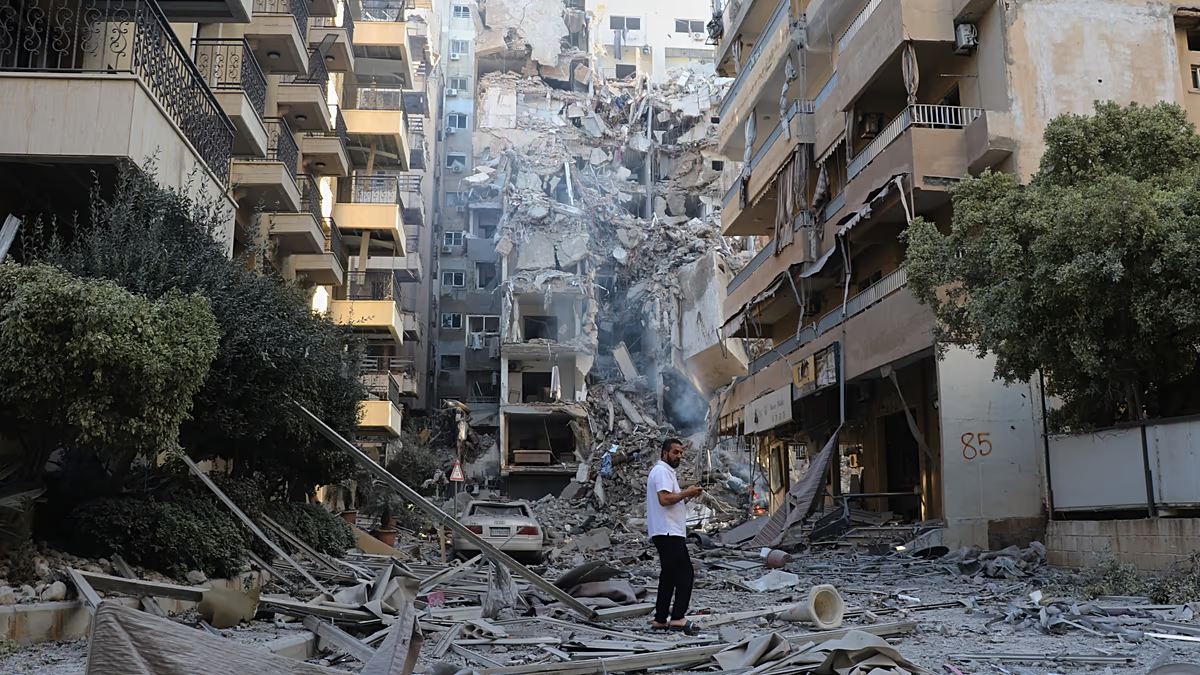
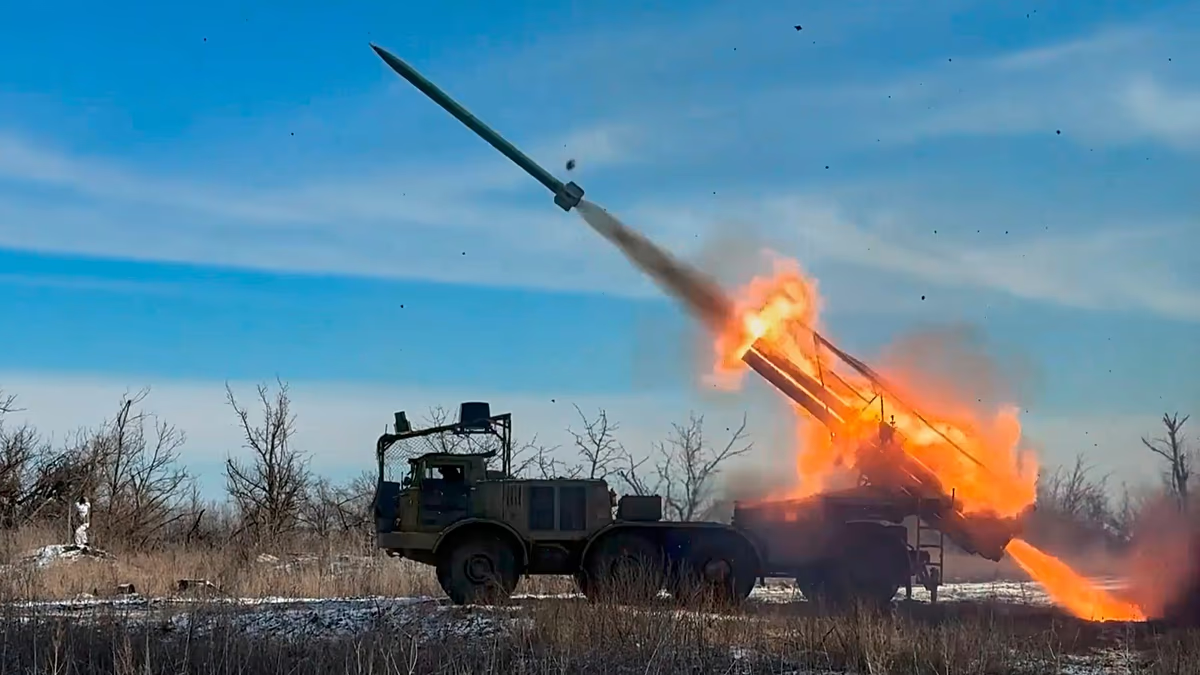
These delicate negotiations are occurring against a backdrop of continued, low-level military friction, highlighting the urgent need for a diplomatic off-ramp. The Strait of Hormuz itself has been a scene of repeated incidents, including reported warning shots by Iranian forces and a denied Iranian claim of downing a US aircraft. US forces have also reportedly conducted strikes on targets near Iranian ports, which Iranian officials have publicly denounced as violations of their sovereignty. In response, Iran’s Revolutionary Guard claims to have delivered a “firm and decisive” counter-strike, framing it as a message of enhanced deterrence. This cycle of actions and rhetoric underscores the ever-present risk of a miscalculation spiraling back into wider conflict, even as diplomats work at the table. The pathway to an agreement, championed by the Iranian negotiating team, exists in parallel with this reality of ongoing military posturing.
Paragraph 5: The Core Stumbling Block: Control of the Strait
Beneath the specific terms lies a fundamental and unresolved struggle for control and influence over the Strait of Hormuz. Analysts point to two starkly different future scenarios: formal international recognition of an Iranian management role, or a continuation of the tense status quo enforced by US military presence and threats. Iran’s leadership has explicitly stated it will never relinquish its claim to control the strait, and the IRGC is actively seeking to consolidate its authority over traffic there—a move the US is determined to prevent. Recent US sanctions against Iran’s new strait management body, and even threats against the Sultanate of Oman for potential cooperation, illustrate how this issue extends beyond bilateral relations, risking regional fissures. The core of the current draft deal—trading Iranian-guaranteed open passage for a lifted US blockade—is an attempt to sidestep this sovereignty dispute with practical arrangements, but it may prove to be only a temporary solution to a deeply entrenched strategic rivalry.
Paragraph 6: An Uncertain Road Ahead
The path forward remains fraught with uncertainty. Independent analysts suggest that any Iranian attempt to impose high transit fees in the strait is unsustainable, and warn that if negotiations ultimately fail, military options could swiftly return to the forefront. Within Iran, officials speak not of a temporary fix but of a “permanent policy of smart management” for the strait, indicating a long-term vision at odds with US strategic interests. Furthermore, a major potential deadlock awaits in the promised nuclear talks: Iran’s top parliamentary security official has already ruled out a key US demand by declaring that Iran will not transfer its enriched uranium out of the country for destruction. This sets the stage for a formidable challenge during the 60-day window. Thus, while the draft agreement offers a crucial glimpse of hope and a structured process, it merely sets the stage for even more difficult negotiations, where the fundamental issues of regional power, security, and trust will be put to their greatest test. The coming weeks will reveal whether this fragile diplomatic opening can be solidified into a lasting peace or will fracture under the weight of decades of mutual hostility.