
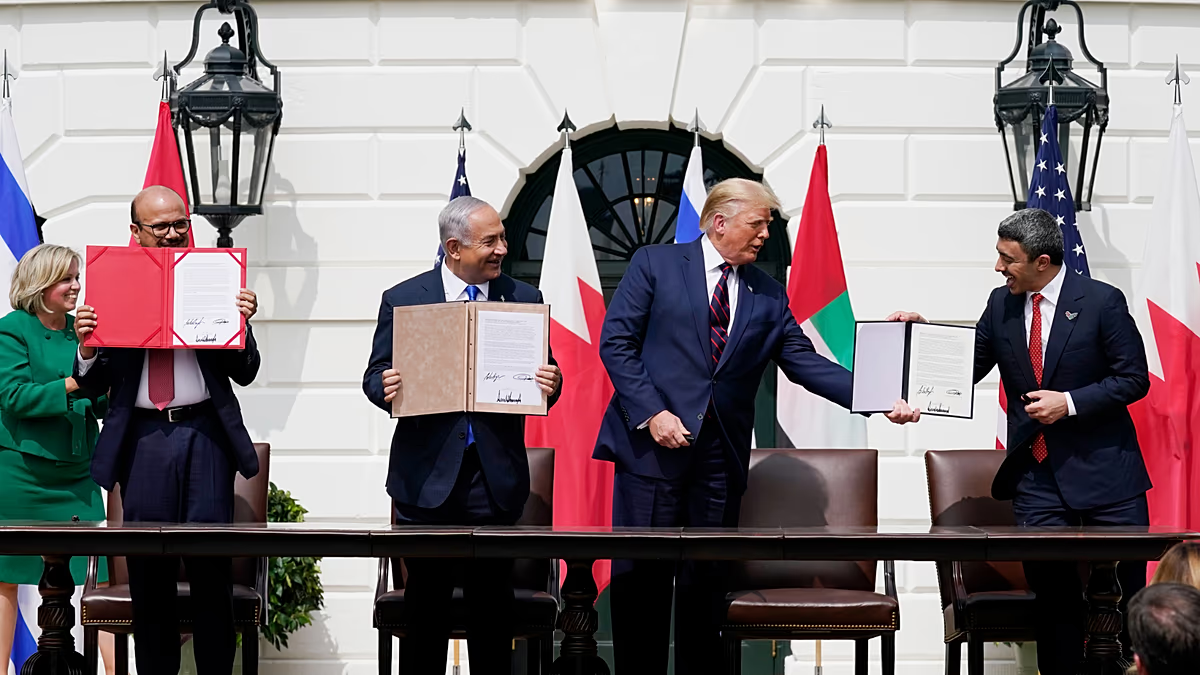



A New Chapter Forged in the Desert: The Promise and Peril of the Abraham Accords
In the shifting sands of Middle Eastern diplomacy, 2020 witnessed a historic realignment with the signing of the Abraham Accords. Brokered by the United States under the Trump administration, these agreements sought to reshape a decades-old geopolitical landscape by normalizing relations between Israel and several Arab nations. The initial signatories—the United Arab Emirates (UAE), Bahrain, and later Morocco, with Sudan agreeing to join—moved to establish formal diplomatic, economic, and security ties with the Jewish state. This breakthrough was heralded by its architects as a monumental step toward a more peaceful, integrated, and prosperous region, moving beyond the entrenched Arab-Israeli conflict that had defined the area for generations. The accords were framed not merely as peace treaties, but as a foundation for a new future built on shared technological ambition, economic interest, and common concerns about regional threats.
The Vision of Integration: Trade, Technology, and Security
Proponents of the accords point to a tangible wave of cooperation that followed the signings. Almost immediately, embassies opened, direct flights commenced, and a flurry of business deals and investment forums were launched. Collaboration blossomed in cutting-edge fields like fintech, water desalination, artificial intelligence, and cybersecurity, with the UAE and Israel at the forefront. On a security level, open channels between militaries and intelligence agencies promised a more unified front against common perceived adversaries, primarily Iran. This pragmatic alignment, supporters argued, reflected a new regional priority: forward-looking economic growth and strategic stability over the historical focus on the Palestinian struggle. The vision was one of a modern Middle East, interconnected by trade and innovation, where old animosities could be set aside for mutual gain.
The Unresolved Heart of the Matter: Palestinian Omission and Criticism
However, this very pragmatism forms the core of the most significant criticism leveled against the Abraham Accords. Detractors argue that the agreements effectively sidelined the Palestinian issue, traditionally the central obstacle to Arab-Israeli peace. By normalizing relations without first securing a comprehensive and just resolution for Palestinians—including statehood, rights for refugees, and an end to occupation—critics contend the accords undermined a long-standing Arab consensus. This consensus had held that recognition of Israel should be the reward for a fair peace with the Palestinians, not a precursor to it. Many saw the move as abandoning a moral and political commitment to Palestinian self-determination in favor of elite-driven economic and security interests, thereby deepening Palestinian feelings of isolation and betrayal.
A Vision Tested: The Gaza War and the Push for Expansion
The fragility of this new diplomatic architecture has been starkly tested by the devastating war in Gaza. The conflict has inflamed public opinion across the Arab and Muslim world, placing immense pressure on the accords’ signatories and halting the momentum for further normalization. Despite this, former President Donald Trump and some supporters continue to push for an expansion of the accords, suggesting nations like Saudi Arabia, Qatar, and Pakistan should follow suit. Most analysts view such prospects as currently unrealistic. The war has reinforced, rather than diminished, the profound public solidarity with the Palestinian cause, making it politically perilous for leaders to pursue closer ties with Israel without significant progress toward Palestinian rights. The Gaza conflict has underscored that technological and economic ties cannot be fully insulated from the unresolved political and humanitarian realities on the ground.
The Path Forward: Can Pragmatism and Principle Converge?
The future of the Abraham Accords and the broader peace process now hinges on a critical question: can the model of pragmatic regional integration be reconciled with a genuine and just resolution for the Palestinians? For the accords to achieve lasting legitimacy and to expand, they may need to evolve. This could involve leveraging the new channels of communication to actively advocate for Palestinian welfare and statehood, making economic cooperation conditional upon improvements in the Palestinian condition, or explicitly tying future normalization to concrete steps in a renewed peace process. The alternative—a permanently segregated reality where gleaming hubs of cooperation exist alongside protracted conflict and occupation—risks being unstable and morally untenable.
A Legacy in the Balance
In conclusion, the Abraham Accords represent a profound and controversial shift in Middle Eastern politics. They have undeniably opened doors to unprecedented cooperation, fostering a web of connections in business, technology, and security that will be difficult to fully unravel. Yet, by largely decoupling Arab-Israeli normalization from the Palestinian issue, they have also created a deep tension between state-level pragmatism and popular Arab sentiment. Their ultimate historical legacy remains unwritten. It will be determined by whether this new framework can be harnessed to create inclusive peace and prosperity for all peoples in the region, or if it remains an incomplete project, overshadowed by the unresolved quest for justice and a homeland that first ignited the conflict so many decades ago.