


A Nation’s Choice: Georgia’s Independence Day Marred by Protests and a Plea for Europe
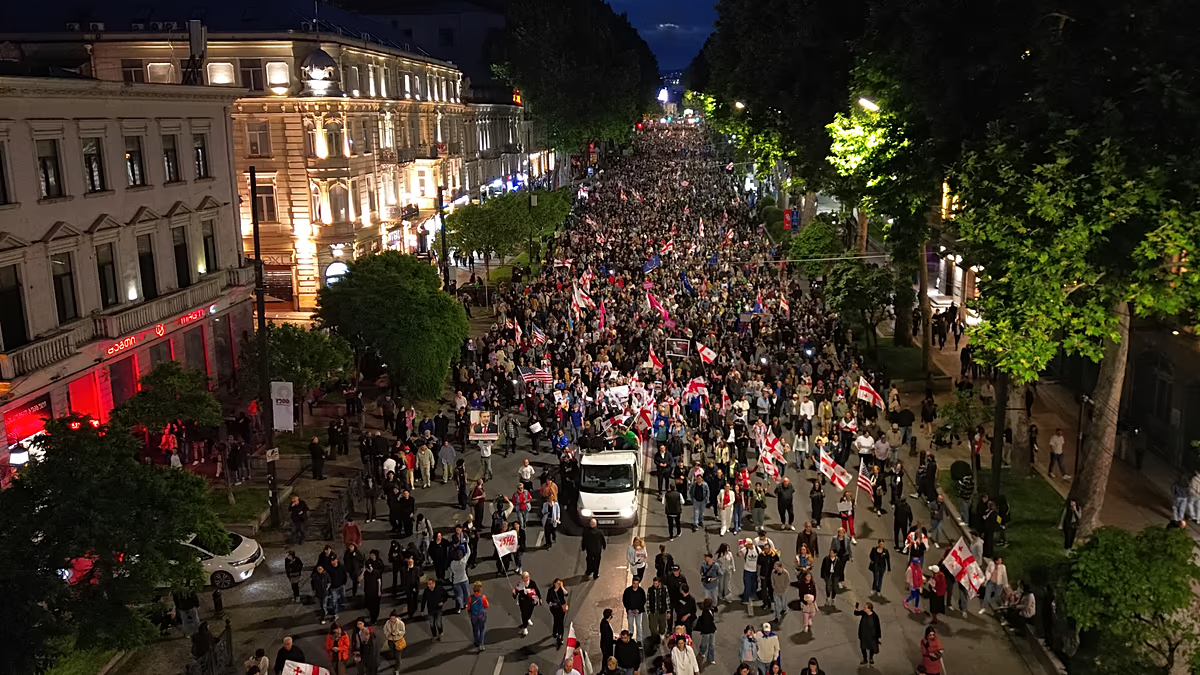
On Georgia’s Independence Day, a day traditionally meant for celebrating sovereignty and national pride, the streets of Tbilisi transformed into a platform for profound anxiety and democratic dissent. Near parliament and along the city’s main avenues, crowds gathered not in festive commemoration but in fervent protest against the ruling Georgian Dream party. The air, which might have carried patriotic songs, instead echoed with chants of “Freedom,” a poignant counterpoint to the official proceedings. This mobilization, led by opposition figures and civil society groups, aimed to reignite a protest movement that has simmered for over a year, centered on a single, powerful grievance: the perceived betrayal of Georgia’s European future. For many citizens, Independence Day underscored not just liberation from past empires, but the urgent struggle to define the nation’s current trajectory—away from democratic backsliding and toward the freedoms promised by European integration.
The roots of this sustained public anger trace back to November 2024, a pivotal moment that catalyzed the ongoing wave of demonstrations. Following disputed parliamentary elections, the Georgian government suspended formal talks on joining the European Union, a move the opposition decried as a historic “betrayal.” This decision struck at the heart of a national aspiration shared by a significant portion of the population, particularly the youth. Since that suspension, rallies in the capital have become a recurring tableau of determined civic engagement. Students, NGO activists, and members of the Georgian diaspora have repeatedly filled the streets, their message visualized in the intertwined EU and Georgian flags and on placards bearing the stark warning: “No Europe, no future.” These symbols represent more than political preference; they embody a deeply held belief that Georgia’s prosperity, security, and democratic integrity are inextricably linked to its place within the European family.
The protestors’ fears are fueled by specific governmental actions that critics argue deliberately mirror the playbook of authoritarian regimes, particularly Russia. Opposition leader Grigol Vashadze has framed the national crisis as a fundamental choice between embracing European integration or succumbing to growing Russian influence. This dichotomy feels increasingly real to many Georgians in light of recent legislation targeting foreign-funded non-governmental organizations and independent media—laws widely condemned as “Kremlin-style” tactics designed to stifle dissent and critical voices. Media expert Khatia Jinjikhadze notes the remarkable resilience of the protest movement, which persists despite a climate of intimidation involving arrests, fines, and intense pressure on independent organizations. Several critical television channels now operate under the shadow of increased regulatory scrutiny and explicit threats of license withdrawal, creating a chilling effect that makes every public demonstration an even more courageous act of defiance.
These gatherings in Tbilisi are not isolated events but a symptom of the deep and widening political fissures within Georgian society. The question of the EU path has evolved into the defining political issue, overshadowing all others and setting the stage for future electoral battles. It represents a clash of visions for the country’s identity: one looking westward toward a community of shared values, and another that protesters fear is ambivalent, if not hostile, to that prospect. The tension casts a long shadow over any potential future negotiations with Brussels, as the domestic trust required for such diplomacy has been severely eroded. The international community watches with concern; diplomats and human rights groups have consistently called upon Georgian authorities to uphold democratic standards, specifically urging respect for freedom of assembly and a commitment to avoid excessive force—appeals made with the memory of previous demonstrations dispersed by tear gas and water cannon still fresh in the public mind.
The standoff raises urgent questions about the health of Georgia’s democracy. The protesters, by exercising their right to assemble on a national holiday, are performing a powerful act of civic patriotism, asserting that true independence requires vigilant defense of liberties. Their movement highlights the precarious balance between state authority and civil society, especially when the government’s legislative and administrative tools are seen as being used to narrow the space for opposition. The targeting of NGOs and media—often the very institutions that facilitate organized dissent and informed public debate—suggests a struggle over the narrative of Georgia itself. In this environment, each rally is both a protest against current policies and a desperate safeguard for the pluralistic foundations necessary for any democratic state, whether aligned with Europe or not.
Ultimately, the scenes from Tbilisi’s Independence Day reveal a nation at a crossroads, its celebratory occasion layered with tension and its political future intensely contested. The echoed chants for “Freedom” transcend a simple anti-government slogan; they are a demand for the freedom to choose a geopolitical destiny, the freedom to speak and associate without fear, and the freedom to hold leaders accountable. As Georgia moves forward, the resilience of its protest movement and the government’s response to it will critically test the strength of its democratic institutions. The outcome will determine not only the nation’s relationship with Europe but also the very meaning of the independence its citizens gathered to both commemorate and fight for on their national day. The path ahead remains uncertain, paved equally by hope and apprehension.