


In a significant development within the ongoing conflict, the Israel Defense Forces announced on Wednesday that they had successfully targeted and killed Mohammed Odeh, the newly appointed commander of Hamas’s military wing, the Qassam Brigades. The strike, which took place in northern Gaza City, was the culmination of what the IDF described as “months of intelligence monitoring and operational tracking.” Odeh was reportedly elevated to this leading role only recently, following the death of the previous military chief, Izz al-Din al-Haddad, earlier in the month. Prior to this promotion, Odeh had been in charge of Hamas’s intelligence apparatus, a position that placed him at the very heart of the group’s strategic planning and operations. The Israeli military stated that the operation also targeted associated terrorist infrastructure sites used by Odeh and other operatives, underscoring a continued focus on degrading Hamas’s command structure.
The Israeli government was quick to frame the elimination of Odeh as a critical blow to Hamas, directly linking him to the atrocities of October 7th. Prime Minister Benjamin Netanyahu’s office explicitly labeled him as one of the “architects” of that devastating attack, holding him responsible for the “murder, abduction, and wounding of many Israeli citizens and IDF soldiers.” This narrative reinforces Israel’s stated war aim of dismantling Hamas’s capabilities and holding its leadership accountable for the events that ignited the current war. The simultaneous strike on a nearby hideout apartment, said to belong to a Hamas fighter who participated in the October 7th incursion and operated within Odeh’s network, further illustrates the intertwined nature of the planning for that day and the current military hierarchy Israel is seeking to dismantle.
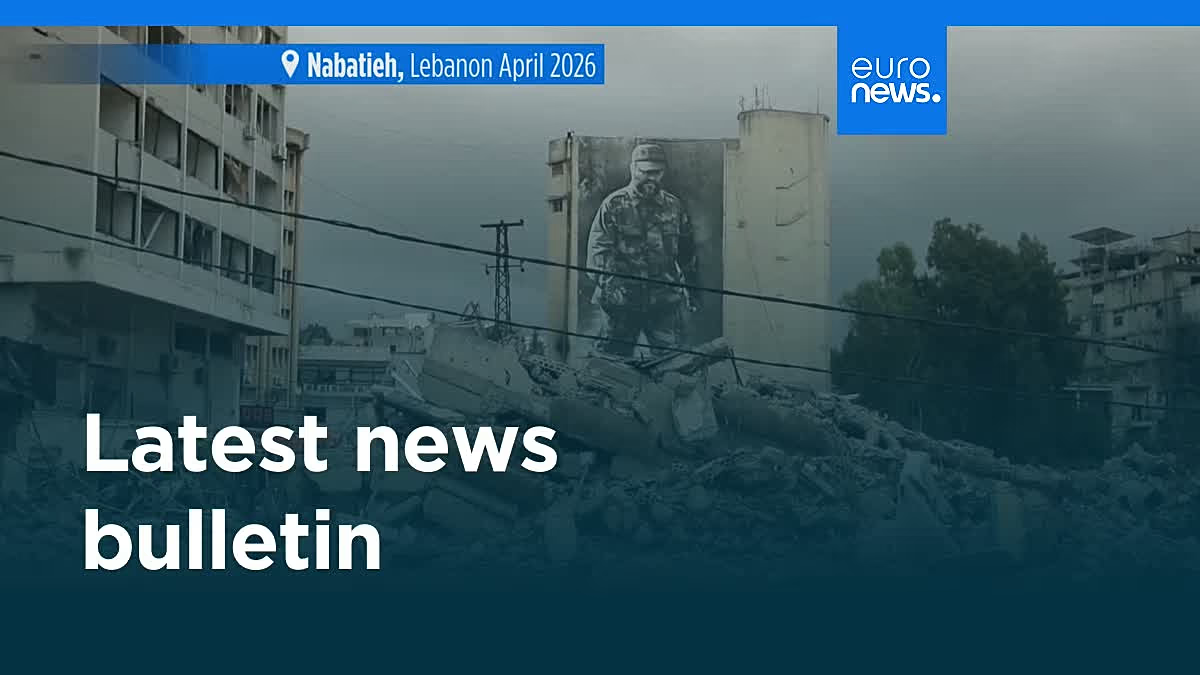
However, this targeted killing occurs against a backdrop of escalating violence on another front, signaling a concerning broadening of regional tensions. Even as operations continue in Gaza, Israel has notably ramped up its military activities in Lebanon, where intense clashes with the Iran-backed Hezbollah movement have become a daily occurrence. This northern front has seen a steady increase in cross-border rocket, drone, and anti-tank fire, prompting Israeli airstrikes deeper into Lebanese territory. The parallel intensification on two borders highlights the multifaceted nature of the security challenges facing Israel and the real risk of a wider regional conflagration. Each action in Gaza reverberates across the region, influencing the calculus of other Iranian-backed factions, with Hezbollah positioning itself as a key party in solidarity with Hamas.
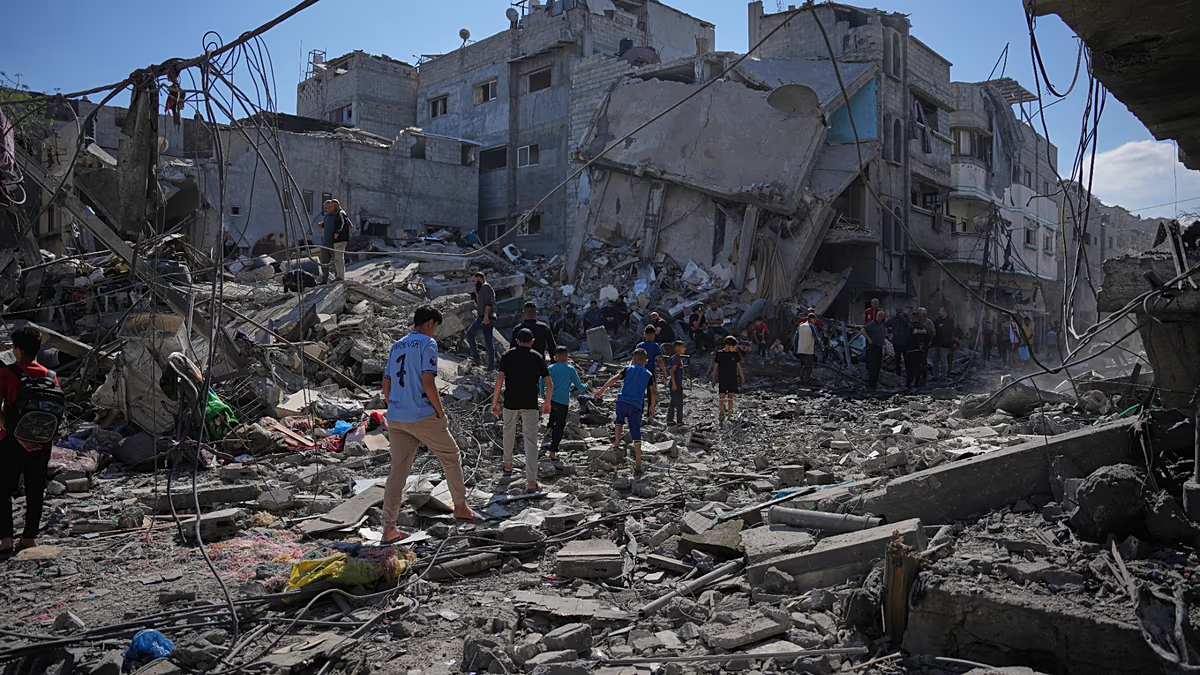
The human cost of these intertwined conflicts continues to mount in ways that numbers alone cannot capture. In Gaza, every aerial strike, regardless of its intended high-value target, takes place in densely populated urban areas that have already endured immense destruction over months of warfare. Civilians, many of whom are displaced multiple times and facing a catastrophic humanitarian crisis, remain caught in the crossfire. Similarly, in towns and villages along both sides of the Israel-Lebanon border, tens of thousands of people have been forced to evacuate their homes, living in a state of prolonged uncertainty and fear. The psychological toll on these communities, the disruption of generations of relative calm in these border regions, and the sheer loss of life and livelihood form a tragic subtext to the announcements of strategic military achievements.
From a strategic perspective, the assassination of a figure like Mohammed Odeh represents a tactical success for Israeli intelligence and military precision. It demonstrates a persistent ability to penetrate Hamas’s senior ranks, potentially disrupting its operational coordination and morale. Yet, history in this long-standing conflict suggests that the removal of individual commanders often leads to their rapid replacement, as the organizational structures of groups like Hamas and Hezbollah are designed to withstand such decapitation attempts. The deeper strategic question remains whether such actions ultimately contribute to a lasting security solution or merely perpetuate a cycle of retaliation and escalation. With fighting intensifying in Lebanon and no clear endgame in Gaza, the path toward de-escalation appears increasingly fraught.
Ultimately, the announcement of this strike is a stark reminder of a conflict with no easy resolutions in sight. It is a story of intelligence triumph and vowed vengeance, of geopolitical maneuvering and profound human suffering. While Israeli leadership will present this as a necessary step in securing its citizens and achieving its war aims, it also adds another layer of complexity to an already intractable situation. The widening of the conflict to the Lebanese front threatens to open a war on a scale not seen in decades. As the world watches, the urgent need for a diplomatic breakthrough that addresses the root causes of the violence and the immediate humanitarian catastrophe becomes ever more apparent, yet seemingly more elusive with each passing day and each new escalation.