


The Cost of Survival: Gaza’s Eid Amidst Ruin
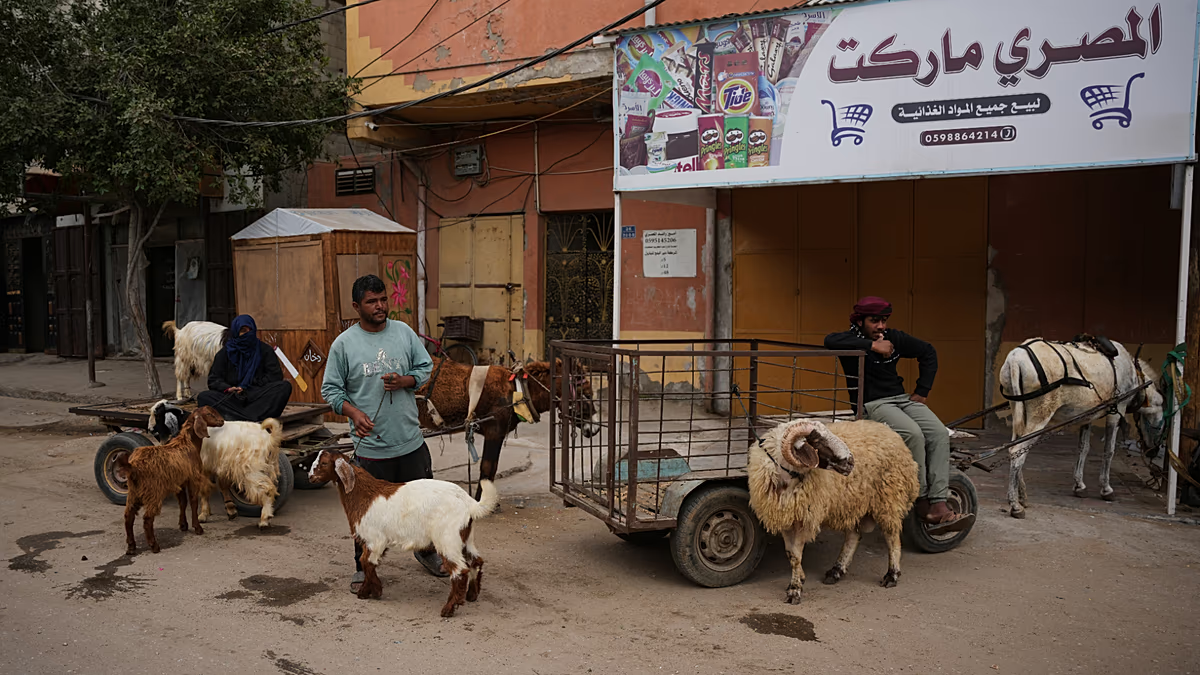
In the markets of Deir al-Balah and Khan Younis, a scene unfolds that lays bare the profound economic devastation gripping Gaza. On May 25th, crowds gathered not in festive preparation, but in a kind of stunned witness, surrounding sheep and goats that have become symbols of an impossible luxury. For Abdelrahman al-Farra, displaced from his home in Khan Younis, the numbers are both absurd and heartbreaking: a 40-kilogram sheep now carries a price tag of up to $8,000. This figure is not merely high; it is a universe away from the reality of families like his, who have spent nearly two years living in tents amid the relentless conflict between Israel and Hamas. The ritual sacrifice of Eid al-Adha, meant to symbolize faith and community sharing, has instead become a stark measure of how far basic life has slipped from reach, turning a religious cornerstone into a reminder of collective loss.
This staggering inflation is a direct symptom of a strangled and shattered economy. The war has obliterated supply lines, decimated livestock, and made the import of animal feed prohibitively expensive and logistically near-impossible. The crisis has fundamentally altered the fabric of daily survival. Near Khan Younis, the dire circumstances are visibly etched into the landscape itself, where sheep and goats are seen scavenging for sustenance in piles of rubbish, their traditional feed nowhere to be found. Nabil Bassiouny, another displaced resident, frames the catastrophe in personal terms, noting that a sheep which once cost a manageable $100 before the war can now command up to $10,000—a hundredfold increase that mirrors the collapse of normalcy.
The deprivation extends far beyond the holiday table, piercing into the most fundamental aspects of family life. With resources virtually nonexistent, parents face the anguish of being unable to provide even simple joys for their children. In the crowded, makeshift tent camps that now house much of Gaza’s population, the tradition of buying new clothes for Eid—a moment of pride and celebration for young ones—has become another lost relic. Eilat al-Othmana, surrounded by the canvas walls of her temporary shelter, sorts through torn and worn garments, trying to find the best for her children. This act of sorting through remnants is a quiet, daily heartbreak, a far cry from the vibrant gatherings of the past she recalls, when her family in northern Gaza would host feasts and share meat with neighbors, weaving a tapestry of community and warmth.
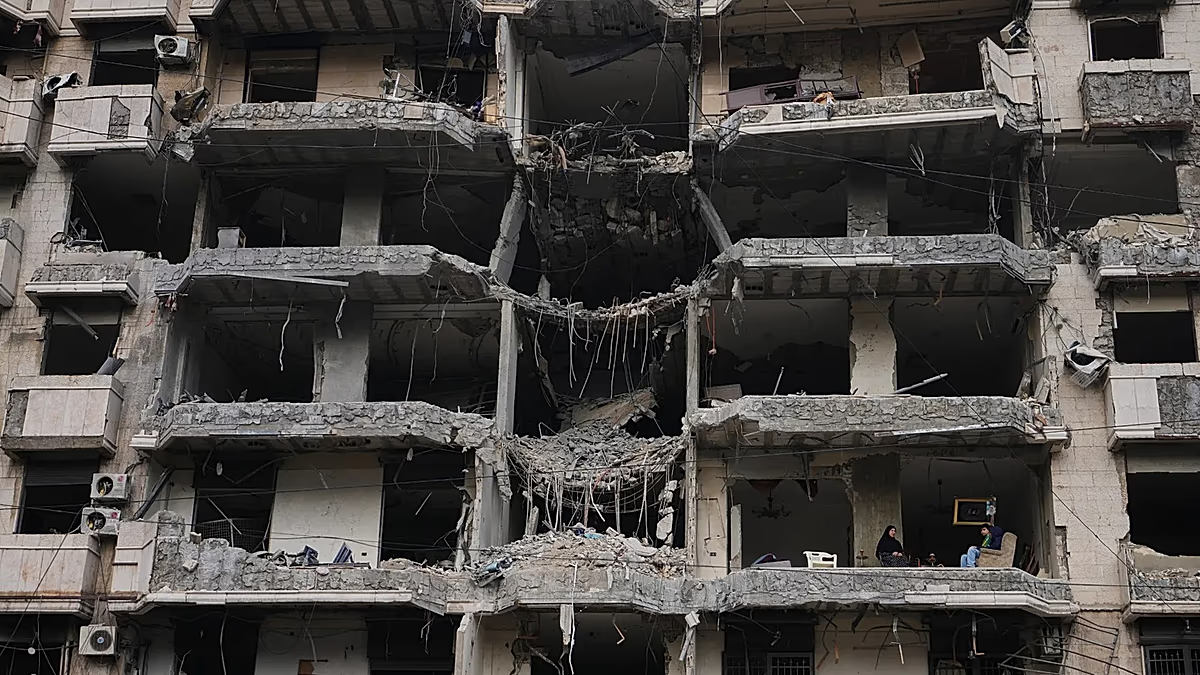
These personal stories are not isolated hardships but individual points of data in a massive humanitarian emergency. Aid agencies have issued persistent, urgent warnings about catastrophic and worsening food insecurity across the entire Gaza Strip. The exorbitant prices for livestock are merely the most visible tip of an iceberg that includes widespread malnutrition, a lack of clean water, and a healthcare system in total collapse. The market scenes, therefore, are more than just evidence of poverty; they are a powerful indicator of a man-made famine unfolding in real time, where the mechanisms for survival have been systematically dismantled, leaving 2.3 million people in a desperate fight for basics.
The psychological and social toll of this erosion is profound. Eid al-Adha, which translates to the “Festival of Sacrifice,” is intrinsically linked to concepts of generosity, remembrance, and communal care. The inability to observe its rituals strips away a key pillar of cultural identity and normalcy for a people already traumatized by displacement, loss, and constant fear. The shared meals and distribution of meat to the less fortunate were practices that reinforced social bonds and provided a sense of order and continuity. Their absence now deepens the collective trauma, replacing celebration with a pervasive sense of grief and injustice, as families are robbed not only of their present comfort but also of the cultural traditions that anchor them to their past and to each other.
Ultimately, the gatherings around unaffordable sheep in Gaza’s markets are a silent, potent protest against the totality of the devastation. They tell a story of a society where the metrics of life—the price of food, the search for clothing, the quest for animal feed—have been grotesquely distorted by war. The figures of $8,000 or $10,000 are not just prices; they are measures of a broken world. As the international community watches, the people of Gaza, enduring this unimaginable reality, are being forced to sacrifice far more than a ritual animal. They are sacrificing their livelihoods, their traditions, and the very rhythms of humane existence, all while clinging to resilience in the face of a humanitarian cataclysm that has reshaped every facet of life down to the most sacred of days.