

Paragraph 1: Ukraine’s Unwavering Goal
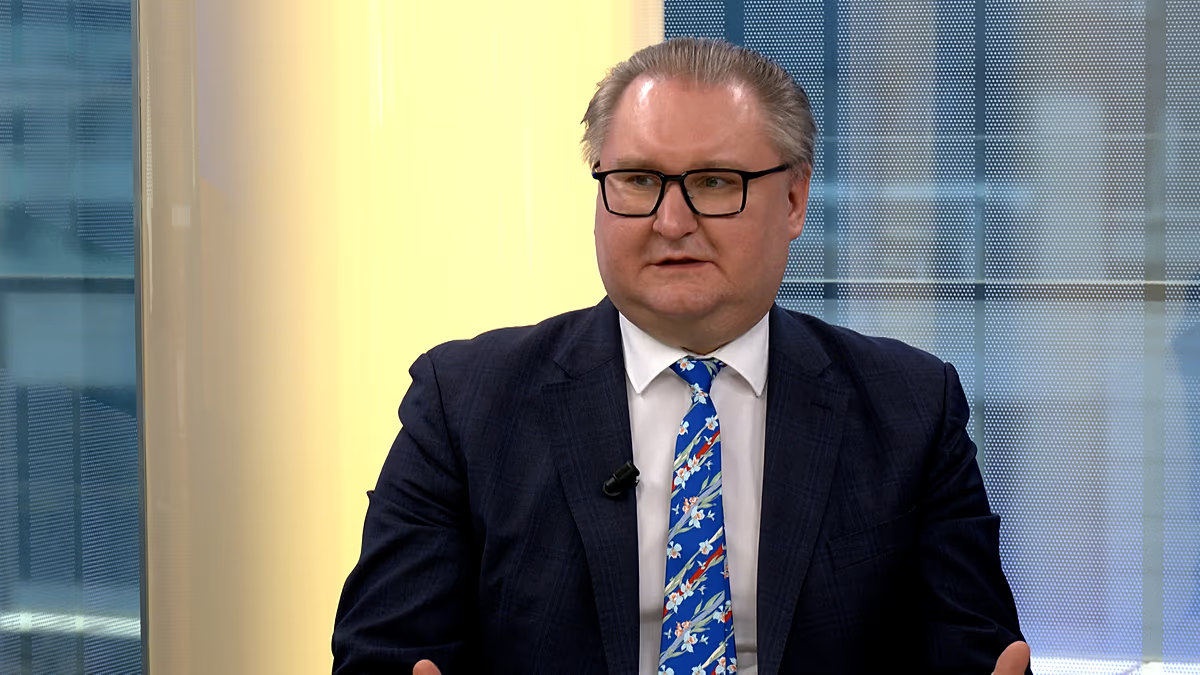
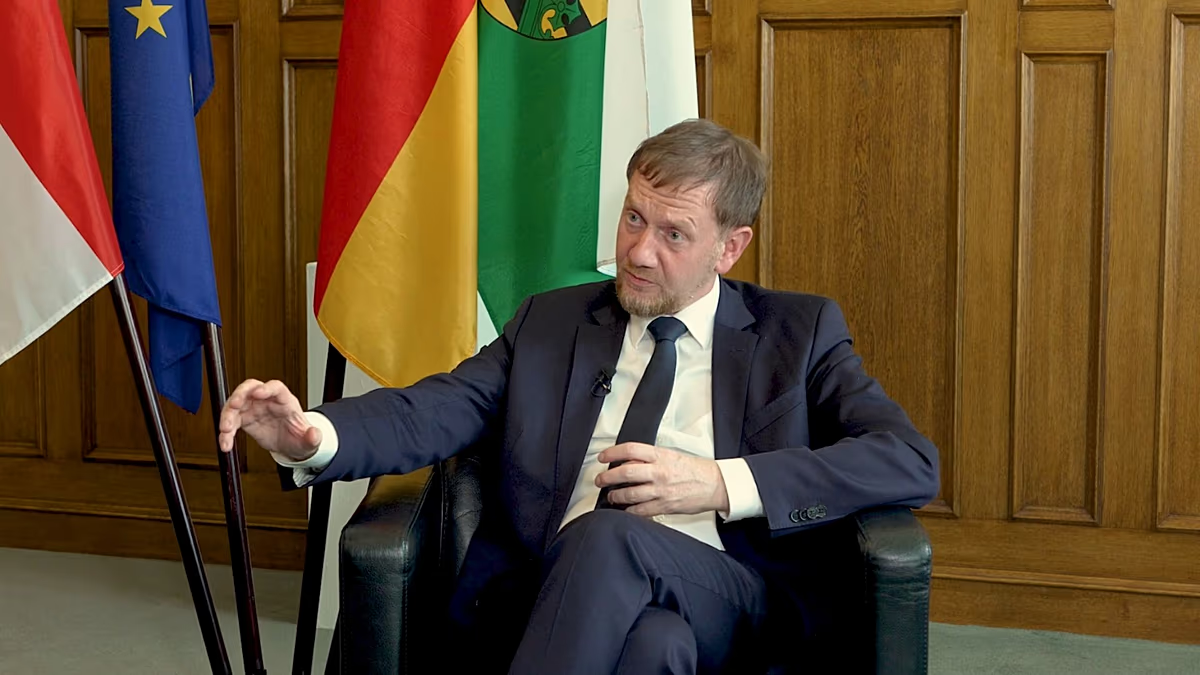
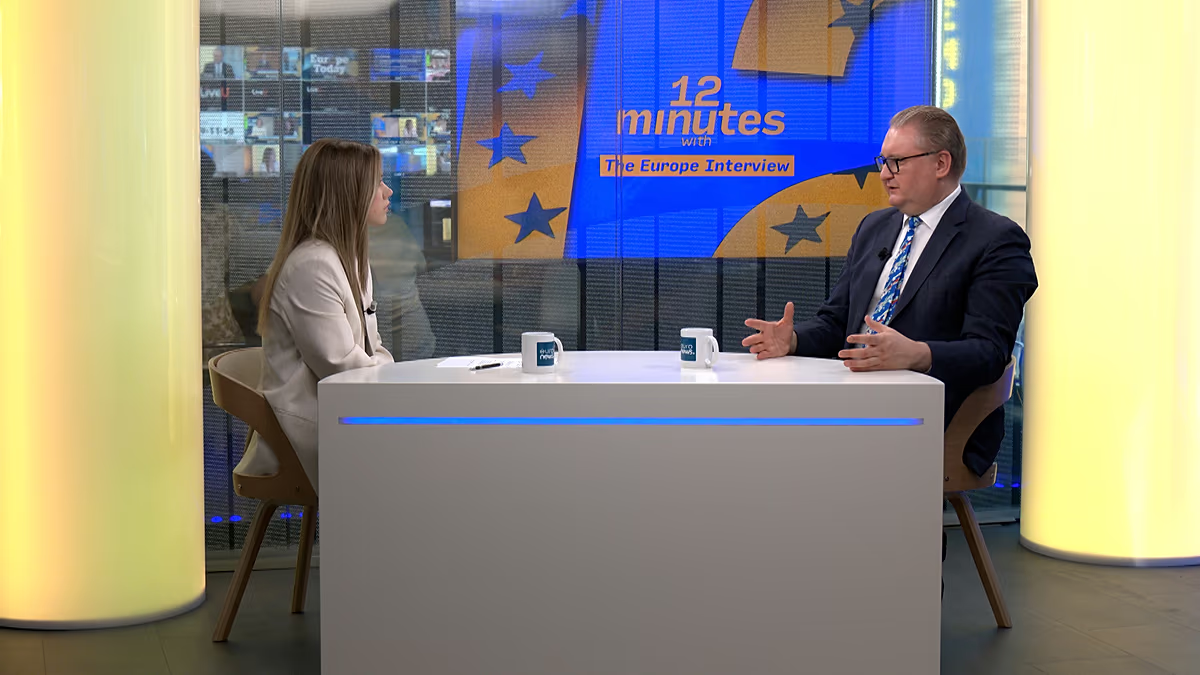
In an exclusive statement to Euronews, Ukraine’s Deputy Prime Minister for European Integration, Taras Kachka, articulated a position of resolute clarity and urgency. For his nation, there exists only one acceptable path forward: “fast, merit-based, but full membership in the European Union.” This declaration serves as a direct rebuttal to recent suggestions, such as one from German political figures, proposing interim solutions like “associate membership.” Kachka explicitly labelled such alternatives as “unacceptable,” emphasizing that the only legitimate conclusion to Ukraine’s journey must be the signing of a full accession treaty under the EU’s founding principles. This unwavering stance frames the entire conversation—it is not a plea for special treatment, but a demand for the recognition of a process Ukraine believes it has long earned, and a future it sees as non-negotiable for its survival and prosperity.
Paragraph 2: The Urgent Timeline and a Legacy of Preparation
Kyiv is not just stating its goal; it is pressing for accelerated action. The government is calling on the European Union to open all six formal negotiation clusters—which cover areas from judicial reform to economic criteria—by June 2024, ahead of the previously suggested July timeline. Kachka conveyed a sense that Ukraine is “already behind schedule,” a sentiment rooted in a profound historical perspective. He stressed that Ukraine’s accession process did not begin with the current war; its foundation was laid “15 years ago, or even earlier” with the negotiation of the Association Agreement. From Ukraine’s viewpoint, the necessary groundwork has been completed through years of reform and alignment. The formal opening of clusters is therefore not a starting point, but the next logical step in a long-standing endeavor, one that Kyiv believes can be fully realized within 12 to 18 months given the political will.
Paragraph 3: Navigating Historic Roadblocks: The Hungarian Dialogue
A significant practical hurdle in this process has been Hungary’s veto, rooted largely in disputes over the rights of the Hungarian minority in Ukraine. Kachka addressed this longstanding tension with a message of assurance and open dialogue. He outlined Ukraine’s commitment, detailing nearly 100 schools serving the Hungarian community and policies ensuring linguistic and educational rights. The offer to Budapest is to collaboratively “fine-tune the legislation” to secure these protections permanently. While expressing hope that the new Hungarian leadership will lift its block, Kachka pragmatically noted that dialogue on minority issues will “last permanently.” His tone suggests a strategic patience—Ukraine is ready to engage continuously on this specific matter, but it firmly believes this bilateral process should no longer obstruct the broader, irreversible path toward EU integration.
Paragraph 4: New Challenges on the Horizon: Economic Sensibilities
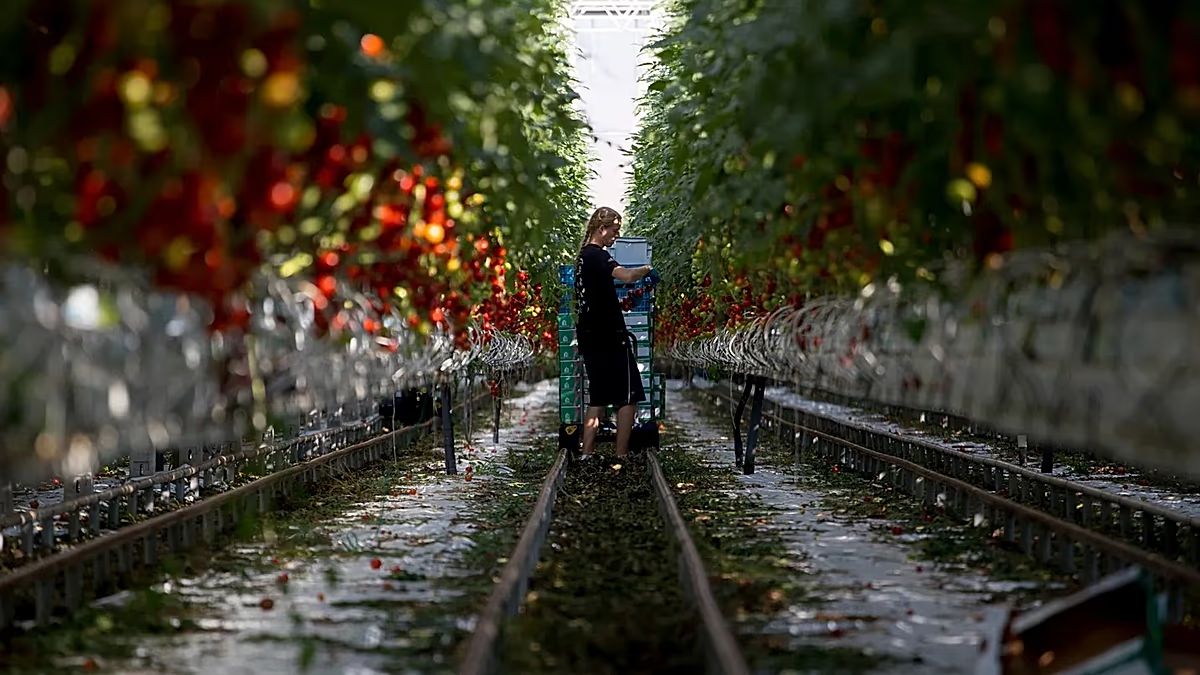
Even as the Hungarian obstacle appears potentially movable, Kachka acknowledged that new challenges may emerge from other member states, with Poland presenting a particularly “delicate” case. Here, the conflict shifts from political and cultural disputes to economic sensitivities, specifically regarding agricultural competition. Kachka did not dismiss these concerns but framed them as sector-specific issues to be resolved through good-faith consultations. He noted “no intention to block the opening of the clusters” from Warsaw, but highlighted the necessity of finding practical solutions for complex trade and market dynamics. This reflects a mature understanding that the accession process is multifaceted; it requires navigating not only grand political principles but also the tangible economic interests of current member states, with Ukraine positioning itself as a willing and cooperative partner in these negotiations.
Paragraph 5: The Human Dimension: Integration as a Necessity
Beyond the diplomatic and procedural language, the human and strategic imperative for Ukraine’s fast integration is overwhelming. For a nation enduring a brutal war of aggression, full EU membership represents far more than an institutional checkbox. It is a tangible anchor for future security, a foundation for post-war reconstruction, and a definitive affirmation of its European identity and destiny. The call for a “normal accession process” is, in essence, a plea for normalization itself—for Ukraine to be treated not as a perpetual candidate in exceptional circumstances, but as a state that has met the benchmarks and deserves its place at the European table. Every delayed month carries a cost, not just in bureaucratic timing, but in the morale and future planning of a society fighting for its existence.
Paragraph 6: A Test for European Unity and Purpose
Ultimately, Ukraine’s urgent appeal presents a profound test for the European Union itself. It challenges the bloc to reconcile its meticulous, often slow-paced enlargement procedures with a moment of historical crisis and geopolitical necessity. Kachka’s message underscores that Ukraine has done the work; it now seeks the conclusive political commitment from its European partners. The process will require unanimous agreement from 27 nations, navigating varied concerns from minority rights to economic competition. How the EU responds will signal not just its bureaucratic capacity, but its deeper solidarity and its vision for its own future borders. For Ukraine, there are no alternatives. For Europe, the decision on how swiftly and conclusively to embrace Ukraine will define its role in shaping the continent’s next chapter.