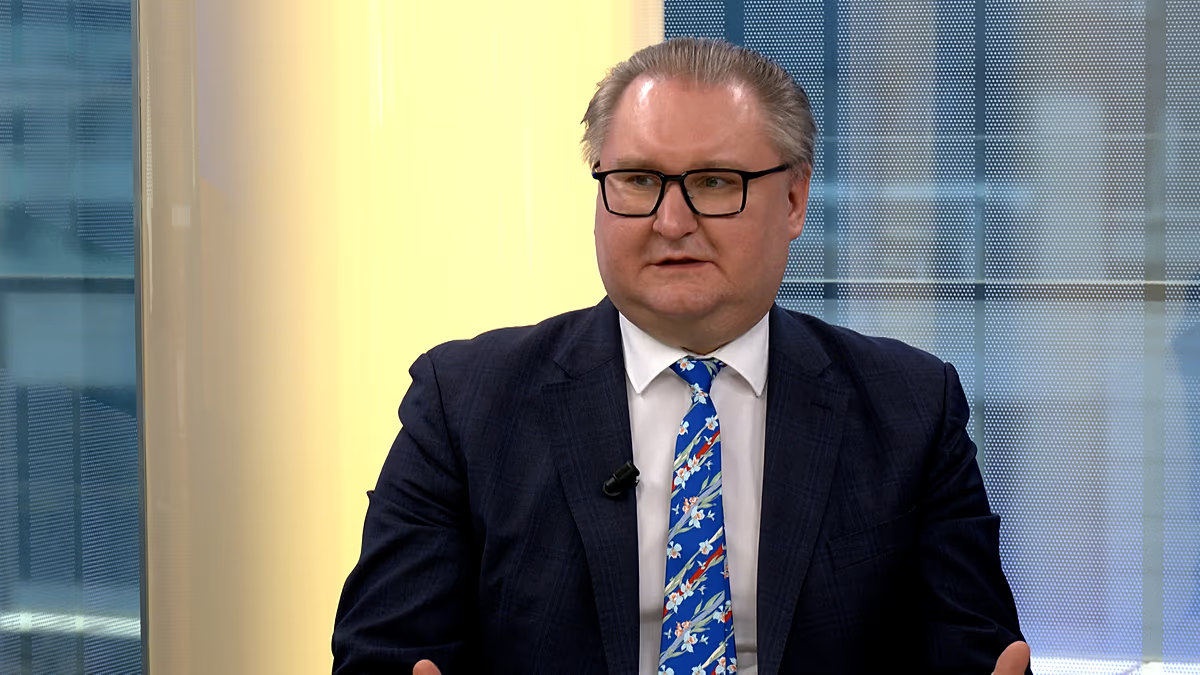



A shadow has fallen over the global fashion empire of Mango, one rooted not in market fluctuations but in a profound family tragedy and a staggering criminal accusation. Jonathan Andic, the eldest son of the company’s revered founder, Isak Andic, has formally stepped down from his role as vice-president. This move, communicated directly to Mango employees, comes in the devastating wake of his being charged with the suspected murder of his own father. The case centers on the fateful day in December 2024 when Isak Andic, the 74-year-old Turkish-Catalan businessman who built a retail giant from a single Barcelona store, died from a fall—or a push—down a 100-meter precipice near the Salnitre caves in Collbató, on the iconic Montserrat mountain range. Jonathan Andic’s resignation, however, is a carefully delineated retreat. He remains, for now, a controlling force in the corporate structure, holding his stake alongside his sisters, Sarah and Judith, in the family’s Punta Na Holding, which commands 95% of Mango’s ownership. His departure is specifically from a vice-presidency described as carrying no executive responsibilities, a distinction that underscores the delicate balance between personal legal catastrophe and corporate continuity.
In an open letter to staff, Jonathan Andic articulates a position of profound personal anguish and staunch defiance. His words paint a portrait of a man caught in a nightmare, wrestling with the collapse of his public identity. “I write these words with sincerity and humility,” he states, “from the pain, helplessness and frustration of finding myself faced with a narrative of alleged guilt that does not correspond to reality.” He describes the charge as “the gravest, most unjust and unfounded accusation that can be levelled at a person.” This communication is more than a corporate memo; it is a deeply human plea for understanding and a declaration of intent to fight. Notably, he asserts his plan to continue with his “family, social and business projects,” signaling a determination to maintain a semblance of normalcy and leadership despite the legal maelstrom. This stance creates a complex duality: the accused individual professing his innocence while the company he helps own must navigate the immense reputational fallout of the allegations against him.
The legal framework surrounding Jonathan Andic is, for the moment, one of conditional liberty under intense scrutiny. Following his arrest and testimony before the investigating judge in Martorell, Raquel Nieto, he was released on bail after posting a substantial guarantee of one million euros. This pre-trial release, while allowing him a degree of freedom, is contested. His defense team has announced an intention to appeal the judicial order that remanded him for the alleged crime of parricide—the killing of a close relative—a charge that carries severe moral and legal weight in the Spanish system. The appeal, to be lodged before a looming Thursday deadline, marks the first formal volley in what promises to be a protracted and highly publicized legal battle. Every procedural step will be magnified, as the court documents and arguments will slowly construct the official narrative of what happened on that mountainside, challenging the version of events put forth by the grieving son.
The human dimensions of this case are almost incomprehensible. It involves a family that, from the outside, represented a Catalan success story—immigrant entrepreneurship, sibling unity, and global brand-building—now fractured by the most intimate of alleged betrayals. Isak Andic was not just a corporate figurehead; he was a patriarch. The notion that his death could be linked to his own child introduces a Shakespearean layer of tragedy that transcends business news. For the employees who received Jonathan’s letter, the conflict must be visceral: the colleague and leader they have known for years now stands accused of an unimaginable act against the founder they revered. The sisters, Sarah and Judith, find themselves in an excruciating position, torn between familial loyalty, their own grief for their father, and the imperative to safeguard the future of the multinational enterprise that bears their family’s legacy.
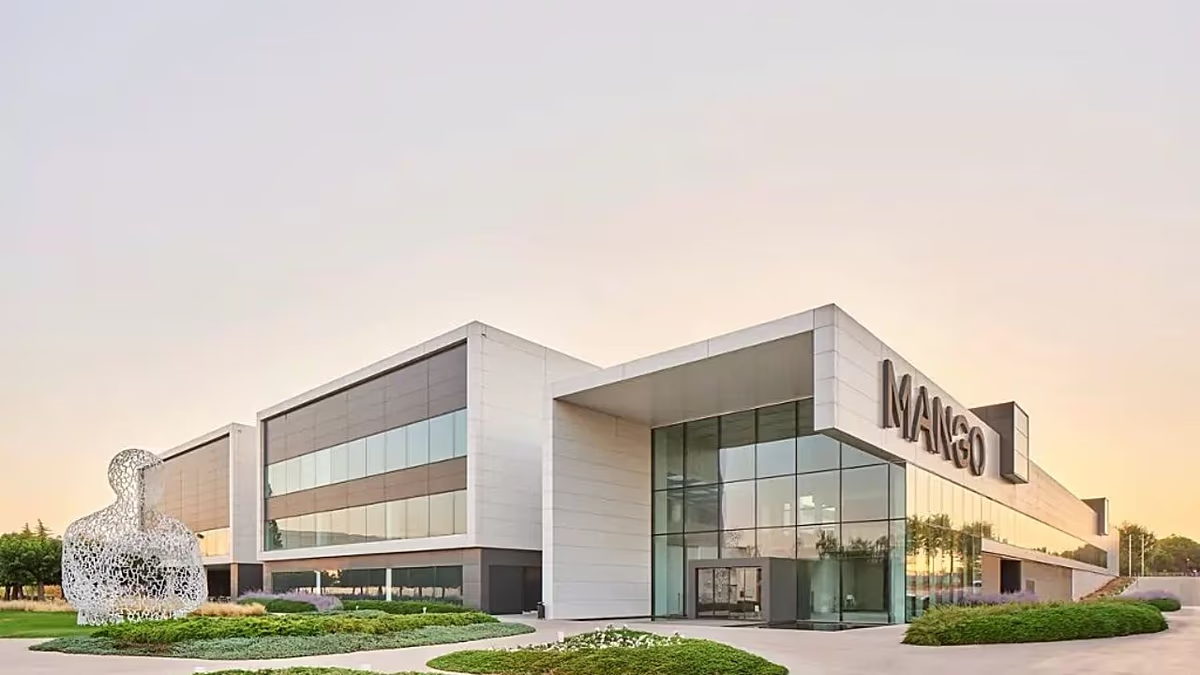
For the Mango brand itself, the challenge is of existential magnitude. The company, with over 2,600 stores worldwide, has built its image on accessible, vibrant fashion. Its identity is intertwined with Barcelona’s creative spirit, not with tabloid headlines of familial strife and alleged murder. The board and remaining executive team now face the arduous task of stabilizing the organization, assuring partners and customers, and professionally distancing the operational brand from the personal drama of its controlling shareholders. They must do so while the principal owners remain in place, creating a potentially untenable tension between corporate governance and family control. Every collection launch, every marketing campaign, and every financial report will now be viewed through the lens of this ongoing scandal, testing the resilience of the business infrastructure Isak Andic built.
Ultimately, this is a story that exists on two parallel tracks: one of law and evidence, and another of perception, legacy, and human emotion. The judicial process will methodically seek truth from the physical evidence, witness testimonies, and financial forensics. Meanwhile, the count of public opinion and corporate fate will proceed separately, influenced by each new headline, each legal filing, and each move by the Andic family. Jonathan Andic’s stepped-down vice-presidency is but the first corporate adjustment in a saga that will unfold for years. Whether he can, as he intends, maintain his roles in the family holding company and his other projects will depend not just on the courts, but on the unbearable weight of the accusation itself and its impact on the intricate web of relationships—familial, professional, and public—that now hangs in the balance. The fall on Montserrat has precipitated a different kind of descent, one where a family’s private tragedy and a global brand’s future are tumbling together into an uncertain and deeply painful void.