
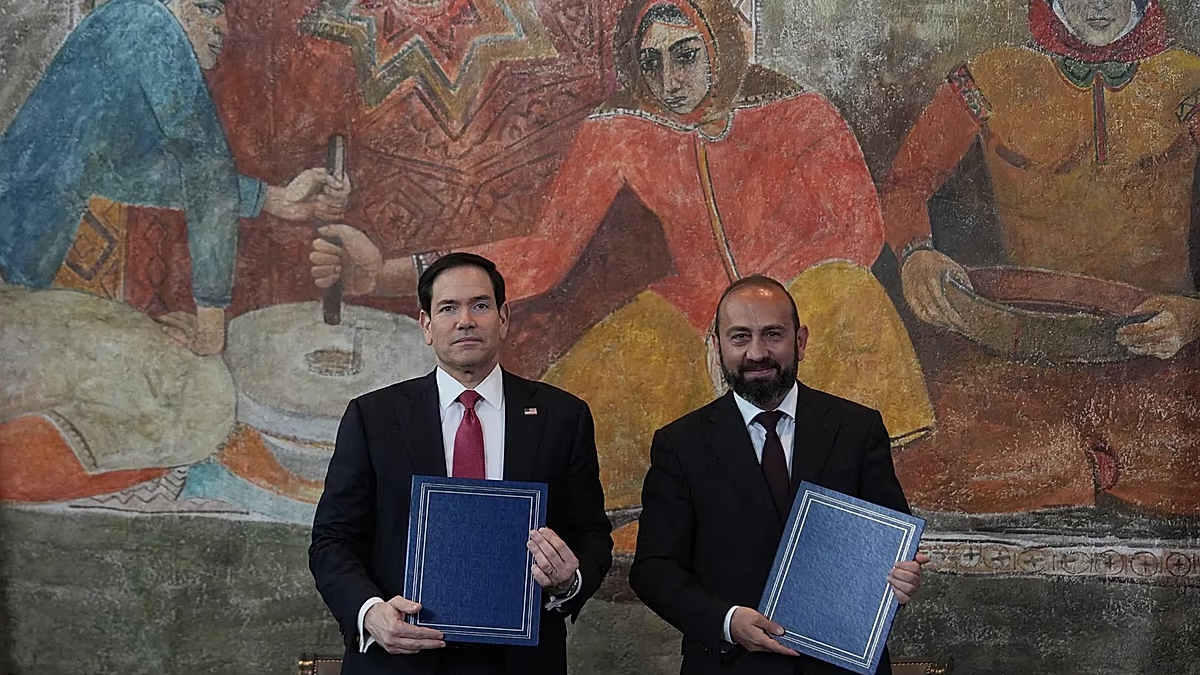


In a significant diplomatic move, the United States has reaffirmed its commitment to a major infrastructure project in the South Caucasus, signaling a potential shift in the region’s geopolitical alliances. During a brief refueling stop in Yerevan on Tuesday, U.S. Secretary of State Marco Rubio met with Armenian Foreign Minister Ararat Mirzoyan to advance the Trump Route for International Peace and Prosperity (TRIPP). This ambitious road-and-rail corridor initiative, conceived under the previous Trump administration, aims to traverse Armenian territory to connect Azerbaijan with its isolated Nakhchivan exclave. Rubio announced the initialing of a new agreement, calling it the most substantial progress to date in turning this “historic route” into a reality, one intended to foster peace and stimulate economic growth for Armenia and the wider region.
The details of this latest agreement remain undisclosed, but it builds upon a framework established earlier this year. That framework proposed granting the United States a dominant 74% stake in a newly formed “TRIPP Development Company,” with clear intentions to involve and benefit American businesses. This development occurs against a backdrop of profound change in Armenia’s foreign policy. For decades, Armenia was a staunch military and political ally of Russia, but relations have deteriorated sharply. Yerevan’s anger over Moscow’s failure to prevent Azerbaijan’s successful military offensive in 2023, which reclaimed the disputed Karabakh region, has led to a dramatic pivot. The government of Prime Minister Nikol Pashinyan has frozen Armenia’s participation in the Russian-led CSTO alliance and has openly expressed a desire to move closer to the European Union.
Armenia’s diplomatic balancing act is further complicated by its relationship with Iran. While seeking stronger ties with the West, Yerevan must also manage its cordial and economically important relationship with its southern neighbor, especially as tensions persist between the U.S., its allies, and Iran. Armenian officials have reportedly reassured Tehran that the TRIPP corridor, despite significant U.S. involvement, would remain under Armenian sovereign control. This delicate diplomacy underscores the precarious position of a small nation navigating between major powers, seeking economic opportunity without becoming a mere pawn in a broader strategic game.
Beyond the corridor, Secretary Rubio’s visit yielded additional agreements focused on deepening the U.S.-Armenia partnership. Signatures were exchanged on renewing a broad strategic partnership and on cooperation in the field of critical minerals, a top Washington priority given global competition, particularly with China, for resources essential to modern technology. Rubio framed these accords as foundational for mutual economic benefit, stating they lay the groundwork for engagement that “allows Armenians to make money and find prosperity and Americans to do the same and to do it together.” He was careful to couple this vision of shared profit with a respect for Armenian sovereignty, a likely nod to the nation’s recent history and its sensitivities regarding external influence.
The high-level engagement, though a positive sign for Yerevan, also reveals lingering complexities in U.S. policy. This visit follows a trip by Vice President JD Vance in February, which was part of a peace initiative but was overshadowed by controversy. Vance deleted a social media post referring to the early 20th-century mass killings of Armenians as a “genocide,” a term formally recognized by the Biden administration but subsequently avoided by the current Trump administration to avoid offending Turkey, a key NATO ally. This incident highlights the inconsistent and often politically charged nature of U.S. recognition of this pivotal historical event for Armenians, introducing an element of dissonance into the otherwise warm diplomatic tone.
In summary, the lightning visit by Secretary Rubio marks a tangible step in a transformative project that carries immense symbolic and practical weight. The TRIPP corridor represents not just an infrastructure plan, but a potential vector for redirecting Armenia’s economic and diplomatic future away from its traditional Russian anchor and toward the West. While Armenian officials like Foreign Minister Mirzoyan hail the agreements as “truly beneficial,” the path forward is fraught with challenges. Armenia must continue its intricate diplomatic dance between Iran, Russia, and the West, while the U.S. must navigate its own internal policy contradictions. The realization of this corridor hinges on translating these signed documents into concrete action on the ground, a process that will test the resilience of this emerging partnership and its ability to deliver on its promises of peace and prosperity.