

Paragraph 1
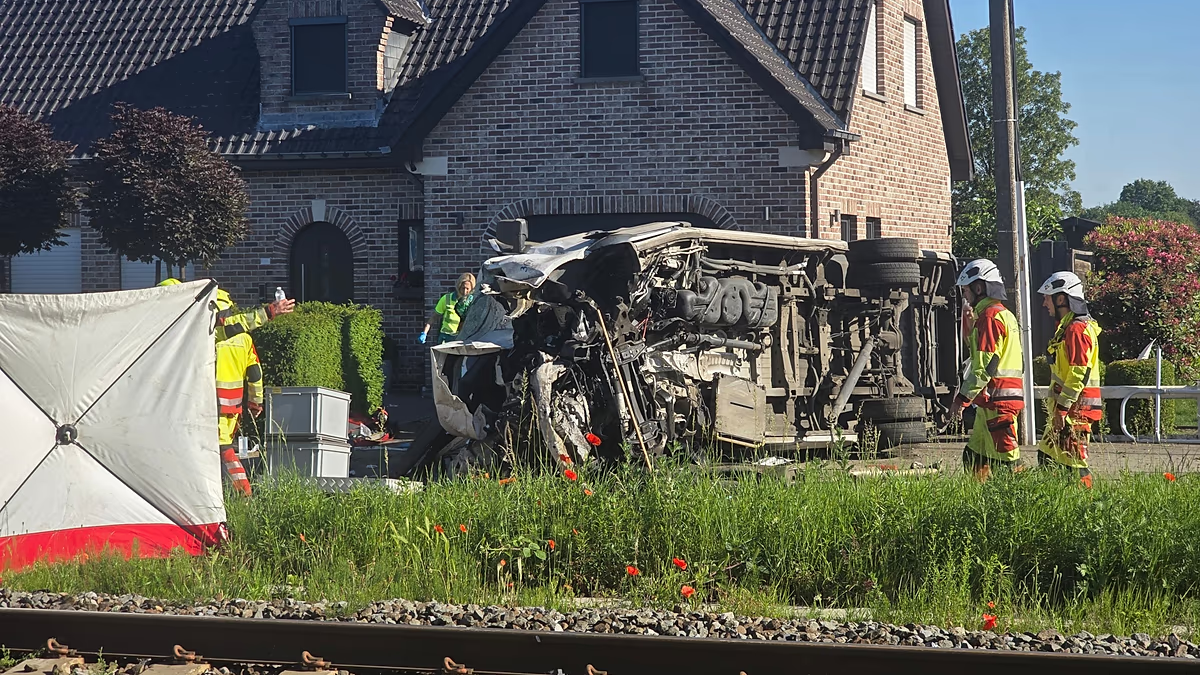
A crisp Belgian morning turned to tragedy shortly after 8 a.m. near the town of Buggenhout. A minibus, operated by the regional transport company De Lijn, was carrying a small group of seven schoolchildren, an accompanying adult, and their driver. As it approached a railway crossing just a kilometre from the local station, the vehicle entered the tracks. The ensuing collision with a passenger train was devastating. Initial reports from officials and local media conveyed a heartbreaking toll: at least four lives were lost, including two teenagers. In the immediate, chaotic aftermath, the focus turned to rescue and response, as prosecutors and forensic teams arrived to begin the solemn task of unraveling the precise circumstances of the disaster.
Paragraph 2
In the search for clarity, the rail infrastructure operator, Infrabel, provided a critical preliminary finding. They stated that at the moment of the collision, the crossing’s safety systems were fully engaged; the barriers were lowered and the warning lights were glowing red. The train driver, confronted with the unimaginable sight of the minibus on the tracks, reportedly pulled the emergency brake in a desperate attempt to avert catastrophe. However, the physics of a massive, moving train proved unforgiving, and the impact could not be prevented. This detail added a layer of profound sorrow to the event, highlighting the terrible finality of the moment.
Paragraph 3
The shockwaves of the collision extended far beyond the crossing itself. Approximately one hundred passengers aboard the train suddenly found themselves part of a nightmare. Though physically spared from the worst of the impact, they endured the trauma of the event and the subsequent emergency evacuation. One passenger required treatment for shock, a quiet testament to the psychological toll inflicted on all present. These individuals, who had begun their day with ordinary expectations, were now unwilling witnesses to a community’s sudden grief, their own journeys abruptly and violently interrupted.
Paragraph 4
As the emergency services converged on the scene, their rapid and coordinated response became a pillar of order amidst the chaos. Police, firefighters, and medical crews worked to secure the area, tend to the injured, and manage the heartbreaking logistics of the recovery. Belgian Interior Minister Bernard Quintin soon addressed the nation, his words heavy with sympathy. He extended the government’s deepest condolences to the families of the victims, recognizing the immeasurable loss they had just suffered. In the same breath, he publicly praised the emergency crews for their swift and professional intervention, a small note of gratitude for those who confront tragedy head-on.
Paragraph 5
The practical repercussions of the crash rippled through the region’s daily rhythms. To allow for a thorough and unimpeded investigation, rail services on the critical line between Dendermonde and Londerzeel were completely suspended. The familiar sight and sound of trains was replaced by an unnatural silence along the tracks, while replacement buses were hastily organized to transport stranded passengers. This logistical disruption served as a constant, mundane reminder of the abnormal tragedy that had occurred, affecting countless commuters and underscoring how a single, localized event can fracture the ordinary functioning of an entire community.
Paragraph 6
Ultimately, this incident is a profound human tragedy before it is a news story or a traffic statistic. It centers on a minibus carrying young people at the start of their day, on a train full of commuters, and on families who received news that would alter their lives forever. While the investigation will meticulously seek answers regarding technical details and sequences of events, the core of this story resides in the incalculable loss of life and the shattered innocence of a morning school run. The lowered barriers and red lights, the activated emergency brake, and the swift response of rescuers all frame a moment of irreversible sorrow, leaving a community in Buggenhout, and the nation of Belgium, to mourn and begin the long, difficult journey toward healing.