


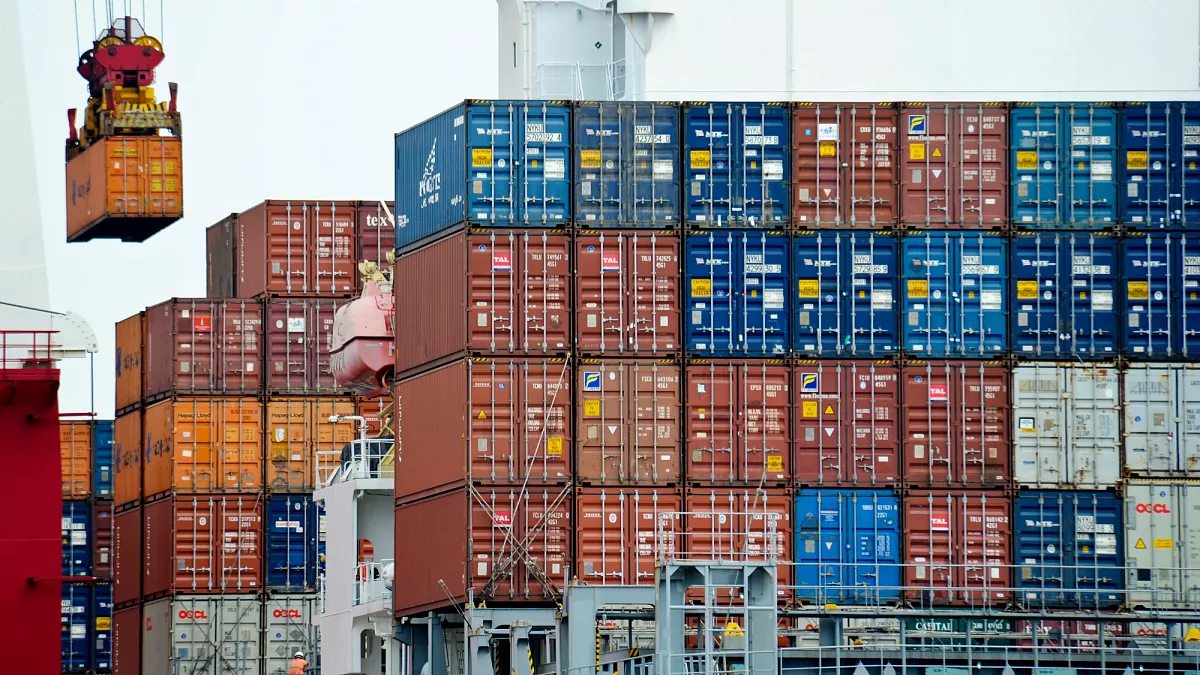
Europe’s economic relationship with China has reached a critical juncture, characterized by a deep and structural dependence that leaves the continent alarmingly vulnerable. This reliance is no longer just a matter of competitive imports but a fundamental integration into European supply chains, particularly for components and raw materials essential for finished goods. In 2025, the EU imported €559.4 billion worth of Chinese goods—nearly double the figure from a decade prior—resulting in a staggering trade deficit of €359.8 billion. What is most telling is that China supplies a staggering 47% of the EU’s “dependent products,” the crucial parts and materials needed for manufacturing, representing about half of the total import value in this category. This dependency is not mirrored elsewhere; the United States, the second-largest supplier, provides less than 10% of these critical items. This lopsided dynamic has been thrown into sharp relief by escalating global trade tensions, as Washington’s tariffs on Chinese goods have raised fears of a redirected flood of subsidized products into European markets, a scenario EU Commission President Ursula von der Leyen has starkly termed “a new China shock.”
Nowhere is this vulnerability more pronounced, or more paradoxical, than in the heart of Europe’s green transition. The continent’s ambitious shift toward renewable energy is being built on foundations it does not control. China accounted for 98% of all EU solar panel imports in 2024, with prices collapsing even as volumes remained high. Beyond finished products, the dependency runs deep into the supply chain: China supplies 88% of the EU’s lithium-ion batteries for electric vehicles, 98% of its rare-earth magnets (vital for EV motors and wind turbines), and 97% of its magnesium, a mineral key to next-generation battery technology. In essence, Europe’s clean energy future is overwhelmingly “Made in China,” from the raw materials to the final modules. This overwhelming single-source reliance has prompted the EU to classify these materials as critical and to push for domestic extraction and recycling, but building sovereign capacity is a task that will take years, if not decades, to achieve.
The story of industrial robotics reveals a similar pattern of dependency, but with a terrifying velocity that underscores the active displacement of European industry. Between early 2025 and early 2026, EU imports of industrial robots from China skyrocketed by 315%, while their average price fell by 29%. This surge is the direct result of China’s state-backed industrial strategy, which has nurtured a robotics sector that now produces more units than Germany, South Korea, Japan, and the United States combined. Faced with domestic overproduction, Chinese manufacturers are exporting robots at prices European competitors simply cannot match. This is not merely trade; it is the reshaping of the very automated backbone of European manufacturing, with long-term implications for innovation, jobs, and industrial sovereignty.
Beyond high-tech and green sectors, older, more traditional industries are also experiencing new depths of Chinese dominance. In chemicals, EU surveillance data has shown imports of specific compounds from China increasing 36-fold in a single year, with prices slashed by up to 95%, forcing the Commission to initiate emergency monitoring. In textiles and wood, long-established dependencies are intensifying or taking new forms. While some clothing production has shifted to Southeast Asia, China still supplies roughly a third of the EU’s non-domestic apparel and footwear by value. More startling is the recent tenfold surge in imports of Chinese assembled parquet flooring, with prices collapsing by 77%, which prompted the EU to impose defensive tariffs in mid-2025 to protect a €1.3 billion industry. These examples in chemicals, textiles, and wood illustrate how Chinese overcapacity, supported by state subsidies, can rapidly destabilize entire European sectors, threatening thousands of local jobs.
The European Commission’s response to this multifaceted crisis has been, by its own admission, largely reactive. Its primary tool has been the application of anti-subsidy or anti-dumping tariffs—as seen with wood flooring and decor paper—but these are deployed only after market damage has already occurred and European producers have suffered. This firefighting approach does little to address the root cause: the erosion of the EU’s own industrial base and its inability to compete with the scale and state support of Chinese manufacturing. The bloc is seeking to strengthen legislation to protect its markets, and officials like Industry Commissioner Stéphane Séjourné are urgently calling for supplier diversification, but credible, large-scale alternatives in sectors like solar or critical raw materials have largely vanished.
The fundamental question now hanging over Europe is whether it retains not only the industrial capacity but also the collective political will to build genuine, sovereign alternatives. The dependencies in solar energy, critical raw materials, robotics, chemicals, and textiles are so structurally embedded that untangling them would require a monumental, long-term commitment to industrial policy, investment, and innovation. Without such a strategic shift, Europe’s economic dependency risks becoming irreversible, transforming from a trade statistic into a potent geopolitical lever that Beijing could use to influence European policy. The continent stands at a crossroads: it must choose between managing a perpetual state of reactive trade defense and embarking on the arduous journey of rebuilding its industrial foundations for true strategic autonomy.