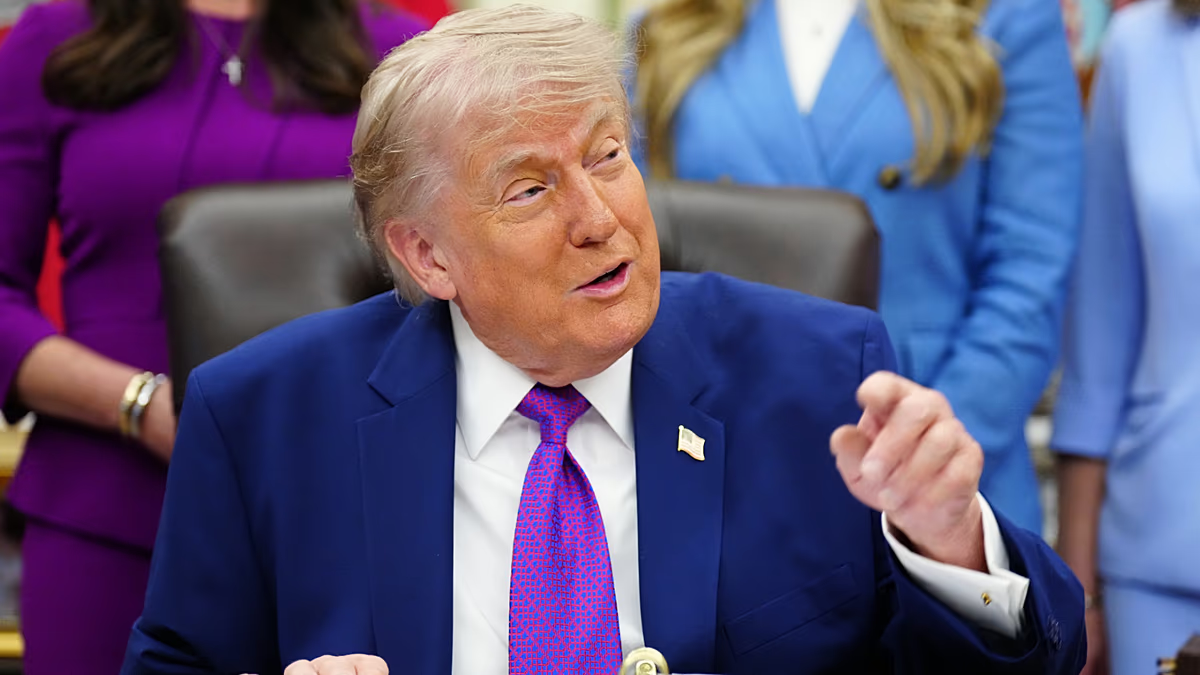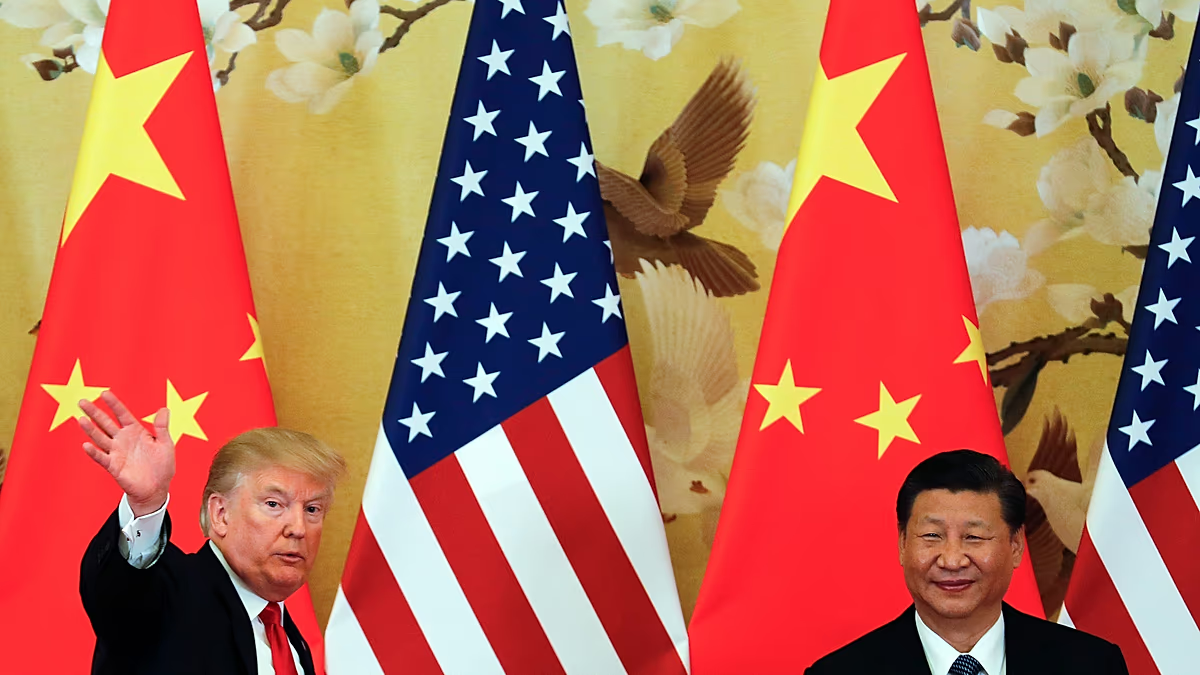




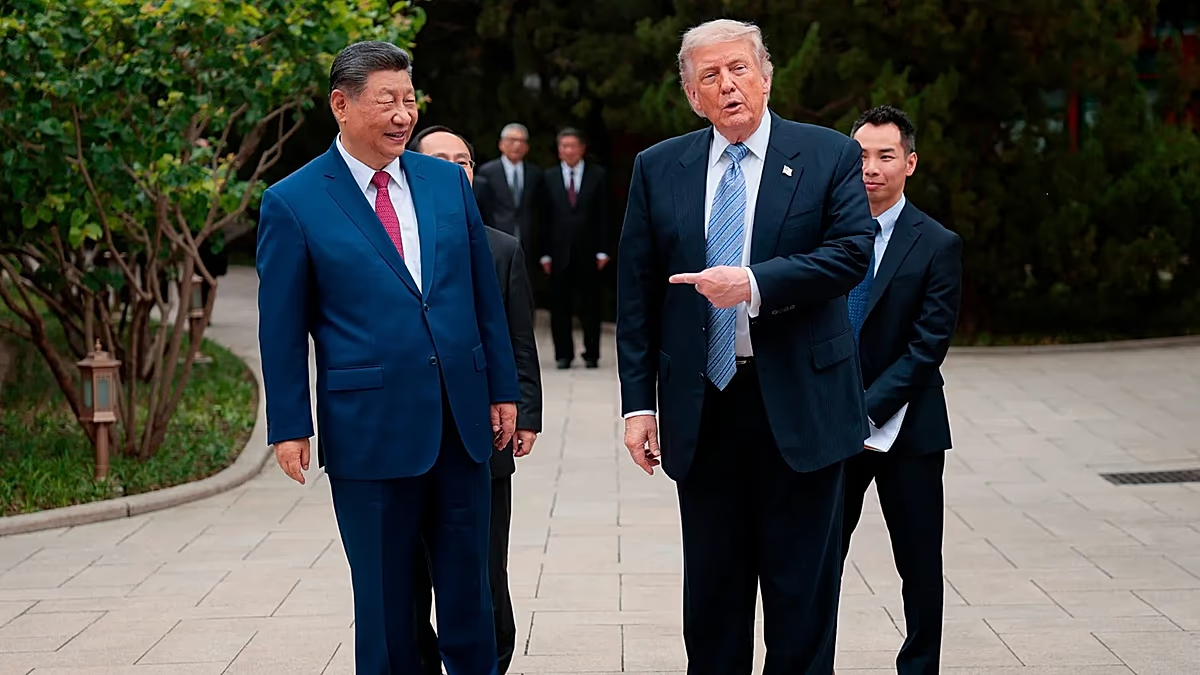
In a significant and welcome de-escalation of economic tensions, Beijing has announced a collaborative effort with Washington to mutually reduce tariffs affecting tens of billions of dollars in traded goods. This announcement, made by China’s commerce ministry, comes just days after a high-profile visit by U.S. President Donald Trump to China, signaling that the diplomatic engagement yielded concrete, albeit preliminary, results. The two economic superpowers, whose trade war dominated much of 2025, had previously established a fragile one-year truce following a summit between Trump and Chinese President Xi Jinping in South Korea the prior October. The latest developments suggest both nations are cautiously utilizing this breathing room to build a more stable framework for economic coexistence, moving from confrontation back to the negotiation table.
The mechanism for this progress is a newly established trade council, born from the leaders’ recent summit. Under its auspices, both sides have agreed in principle to negotiate a framework for reciprocal tariff reductions on products of an “equivalent scale.” According to an online statement from an unnamed Chinese commerce ministry official, these intended cuts would impact goods worth at least $30 billion on each side. While framing this as a positive step, the Chinese statement included a note of caution, expressing hope that the U.S. would honor the commitments made during negotiations and calling for an extension of the existing truce agreements. This underscores the lingering sense of fragility in the relationship, where actions are carefully scrutinized and trust remains under construction.
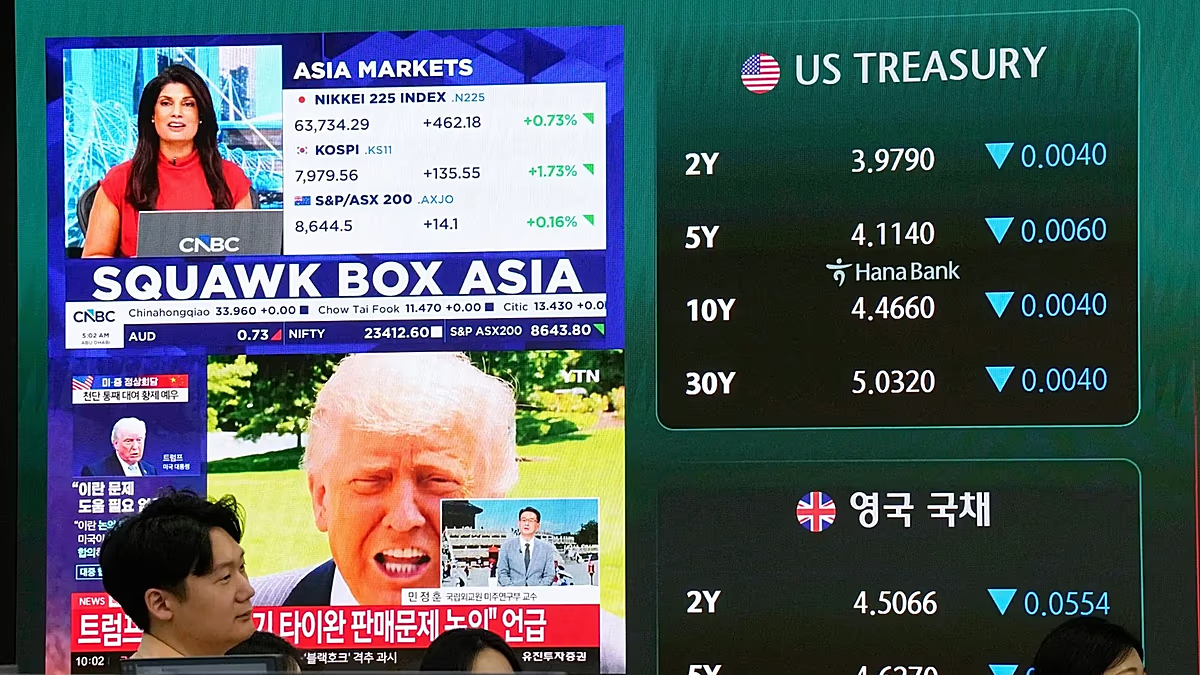
Economists have greeted the news with measured optimism. Analysts like Zhiwei Zhang of Pinpoint Asset Management noted that the scale of the proposed tariff relief is not substantial enough to materially alter broader GDP forecasts for either economy. The symbolic and directional significance, however, is considerable. “Nonetheless this is a positive step in the right direction,” Zhang observed. “As long as the two countries are talking to stabilise the bilateral relations, it is good news for global investors.” This sentiment captures a broader relief in international markets; the mere fact of continued dialogue and incremental progress helps reduce the acute uncertainty that has plagued global supply chains and investment decisions for years, offering a foundation for more confident long-term planning.
Beyond the tariff framework, the announcement confirmed several tangible outcomes from the Xi-Trump meeting, demonstrating a move from abstract promises to specific economic exchanges. In a boost for American agriculture, China will restore registrations for some U.S. beef exporters, whose approvals had lapsed during the peak of tensions. More substantially, the commerce ministry confirmed a major aircraft purchase, stating China would buy 200 aircraft from U.S. aerospace giant Boeing. While the statement did not specify models, this move aligns with earlier reports of a pending massive order potentially including hundreds of 737 MAX jets along with larger wide-body aircraft. Such a deal represents a significant economic and political win for a key U.S. industrial sector and helps address trade imbalances—a core demand of the U.S. throughout the conflict.
Notably absent, however, was detailed resolution on one of the most sensitive issues in the technological cold war: China’s dominance in rare earth elements. These critical minerals, essential for everything from electric vehicles to advanced military hardware, had been the target of biting Chinese export restrictions during the trade war’s height. The ministry’s statement on this front was deliberately vague, saying only that both sides would work to “study and resolve each other’s legitimate and lawful concerns.” This diplomatic language suggests the issue remains a potent strategic lever for China and a point of deep anxiety for the U.S., likely reserved for higher-stakes negotiations where it can be traded for major concessions on technology or other strategic priorities.
In summary, the post-summit announcements paint a picture of careful, transactional diplomacy. The world’s two largest economies are taking deliberate, if modest, steps to wind down the most disruptive aspects of their trade war, using a combination of tariff relief mechanisms and specific commercial purchases to rebuild a working relationship. The progress is real, offering relief to affected industries and global markets, but it is also incremental and hemmed with conditions. The unresolved matter of rare earths and the call for the U.S. to “honor its commitment” reveal the underlying tensions that persist. The path forward is no longer one of blatant escalation, but rather one of complex negotiation where every cooperative step is weighed against enduring strategic rivalries. The truce holds, and dialogue continues, but the fundamental competition for economic and technological supremacy remains the unchanging backdrop.