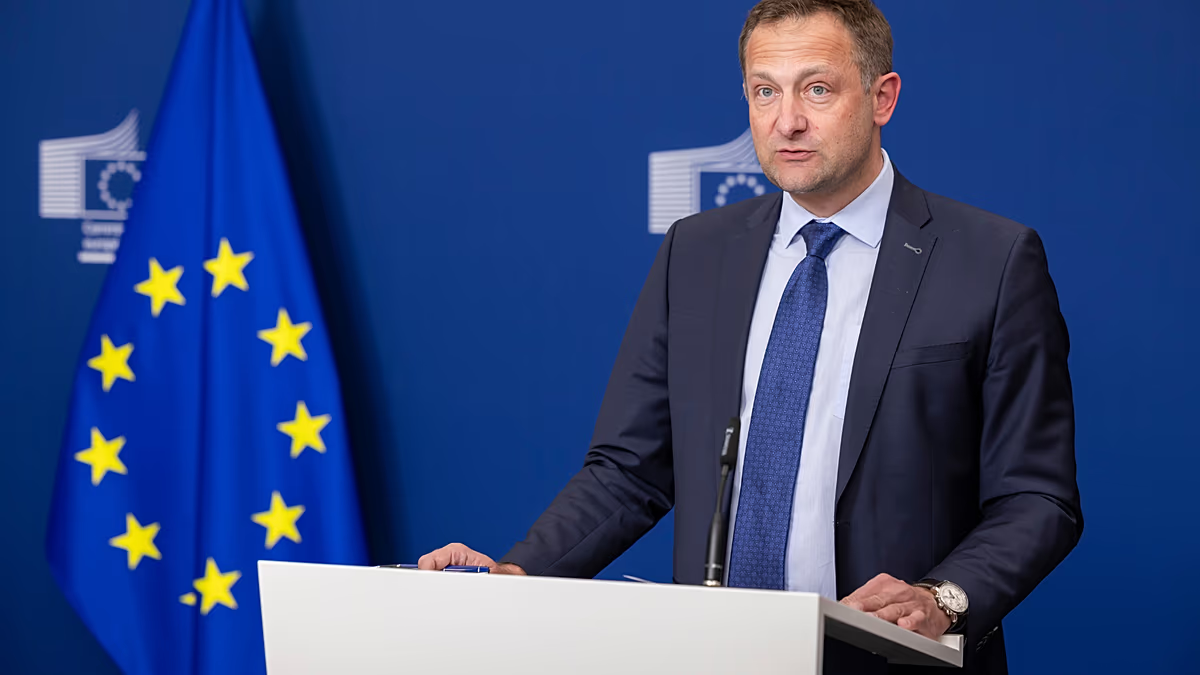

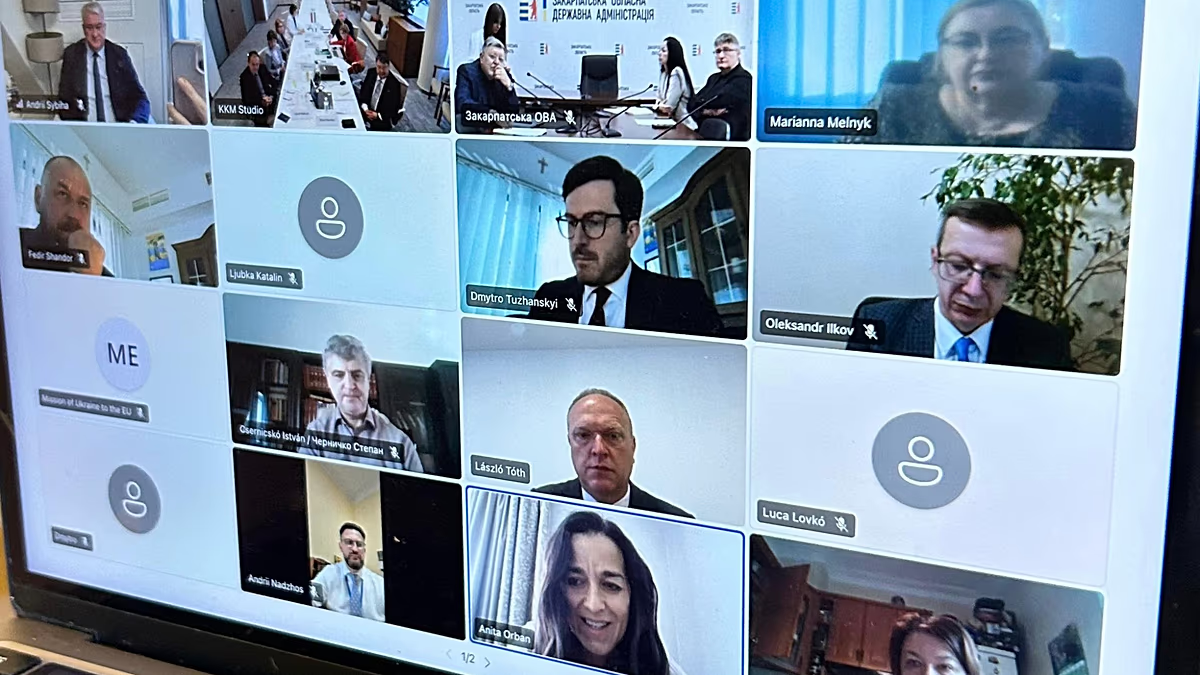


A tentative but potentially transformative dialogue has begun between Hungary and Ukraine, marking the first expert-level talks on minority rights since the new Hungarian government took office. Held on Wednesday, these consultations represent a cautious step toward mending a bilateral relationship long strained by deep-seated disagreements. Hungary’s Foreign Affairs Minister, Anita Orban, characterized the discussions, which included representatives of the Hungarian minority in Ukraine, as “important steps toward rebuilding our bilateral relations and strengthening future cooperation.” This move signals a deliberate shift from the contentious posture of the previous administration, acknowledging that the fate of the approximately 100,000 ethnic Hungarians living in Ukraine’s western Transcarpathia region remains a deeply resonant issue in Hungarian society. For Ukraine, the stakes of these talks extend far beyond bilateral diplomacy, touching directly on one of the most sensitive political obstacles in its arduous journey toward European Union membership.
The context of this dispute is rooted in Ukraine’s 2017 language law, a measure enacted to strengthen national unity and counter Russian influence following the 2014 annexation of Crimea. The law stipulated that from the fifth grade onward, at least 70% of education must be conducted in Ukrainian. While Kyiv defended this as essential for ensuring all citizens have proficiency in the state language, the government of former Hungarian Prime Minister Viktor Orbán condemned it as a discriminatory assault on the cultural rights of the ethnic Hungarian community in Transcarpathia. This disagreement became a cornerstone of Orbán’s often adversarial stance toward Ukraine, complicating EU solidarity and blocking progress on Ukraine’s integration aspirations. The recent political change in Budapest, where a new government replaced Orbán’s after 16 years, has created a critical window of opportunity to address this legacy with fresh perspective and political will.
Recognizing this momentum, Ukrainian Foreign Affairs Minister Andrii Sybiha outlined three “key issues on the agenda: bilateral relations, minority rights and Ukraine’s EU accession.” He expressed a clear desire to “open a new, mutually beneficial chapter in our bilateral relations based on trust.” The composition of the meeting underscored its seriousness, including not only diplomats but also a member of the Zakarpattia Regional Military Administration and representatives from Ukraine’s Ministry of Education and the Transcarpathian Hungarian College of Higher Education. This inclusion of educational experts at the inaugural expert talks strongly suggests that potential amendments to Ukraine’s legislation are on the table, moving the conversation from political rhetoric into the realm of practical policy reform.
Ukraine’s position is delicately balanced between honoring its international commitments and safeguarding its sovereignty. Minister Sybiha affirmed that “Ukraine takes national minority rights seriously and remains committed to ensuring them in accordance with European standards.” This commitment is not merely rhetorical; it is a prerequisite for EU membership. In 2023, the Ukrainian parliament passed amendments to the national minorities law, a direct response to one of the seven reform steps mandated by the European Commission. This revised legislation allows for the use of EU languages and minority languages in specific spheres like private education, minority media, and political advertising. However, the fundamental principle remains unaltered: the study of Ukrainian as the state language is mandatory in all institutions, even if instruction is delivered in another EU language.
Therefore, the current talks are navigating a path toward a sustainable compromise. The challenge is to find a formula that provides robust, legally guaranteed cultural and educational rights for the Hungarian community—rights that align with European norms and satisfy Budapest’s legitimate concerns—without undermining Ukraine’s sovereign right to promote proficiency in its official language as a tool for national cohesion and integration. Minister Anita Orban hinted at this delicate balance, noting that the Hungarian community is “a bridge between our nations,” and that “genuine progress requires open, honest, and professional dialogue built on clear legal guarantees.” The presence of minority representatives in the room is a vital step in ensuring that any future agreement is rooted in the lived reality of the community it seeks to protect.
In essence, these expert consultations, while technical in nature, carry profound symbolic and practical weight. They represent the first fragile bricks in rebuilding trust between two neighbors whose relationship has been marred by discord. For Hungary, it is an opportunity to secure tangible assurances for its kin abroad through diplomacy rather than confrontation. For Ukraine, successfully resolving this issue would remove a significant veto point in its EU accession process, demonstrating its capacity to implement complex, rights-based reforms even amid war. While significant hurdles remain, the mere convening of this dialogue marks a hopeful departure from the past, framing the Hungarian minority not as a permanent point of conflict, but as the very bridge to a more cooperative and stable European future for both nations.