


Navigating Climate Policy and Farming Realities: The EU’s Delicate Balancing Act
The European Commission, facing intense pressure from the agricultural sector, has opted to maintain its Carbon Border Adjustment Mechanism (CBAM) as part of a new plan to support struggling farmers. Announced in May 2026, this decision comes despite loud complaints that the bloc’s carbon pricing policies are contributing to soaring fertiliser costs, a burden exacerbated by global instability like the conflict in the Middle East. At its heart, this move underscores a profound and difficult tension: the EU’s unwavering commitment to its climate leadership ambitions versus the immediate economic survival of its farmers. The Commission is effectively trying to walk a tightrope, defending a cornerstone environmental policy while acknowledging that the financial weight of that policy is cascading down to the very foundations of Europe’s food system.
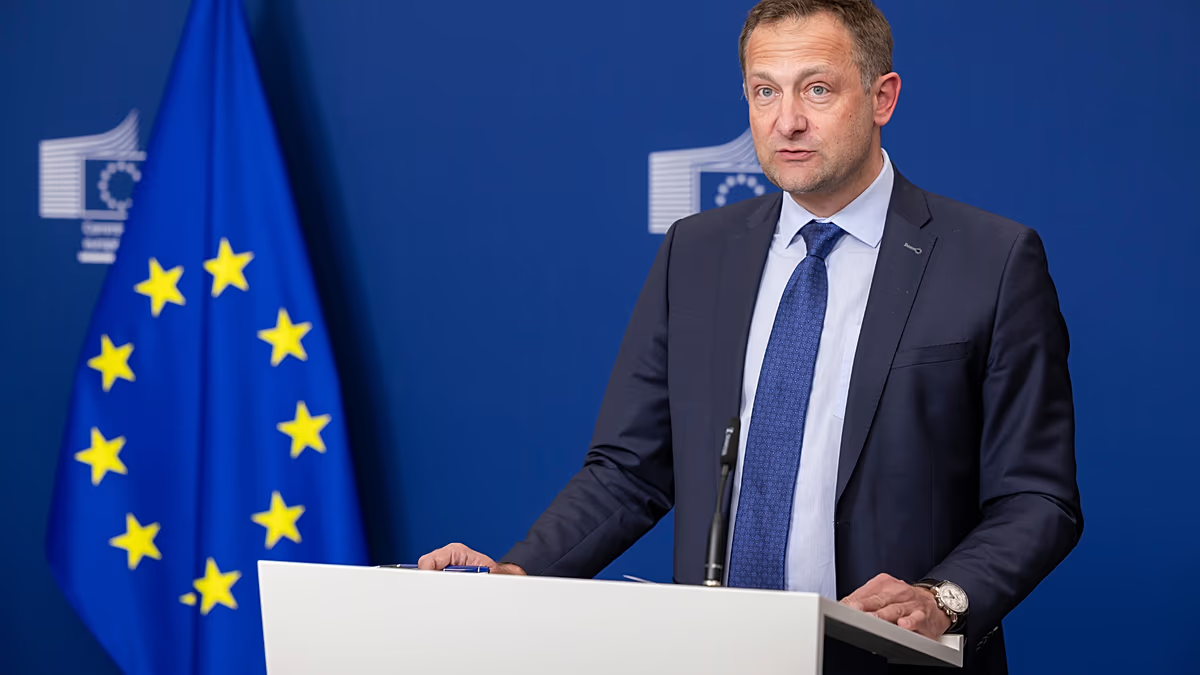
The core of the conflict lies in how carbon costs travel through the supply chain. Fertiliser producers argue that CBAM is essential for their survival, as it levels the playing field by imposing costs on cheaper imports from regions with laxer environmental rules. Without it, they contend, European industry could be undercut and face “unfair competition,” potentially leading to job losses and a reliance on foreign products. However, farmers on the ground experience this policy very differently. They see themselves indirectly footing the bill for industrial carbon costs through higher prices for essential inputs. As European Commissioner for Agriculture Christophe Hansen stated, simply scrapping CBAM would be a “false good idea,” yet he fully concedes that the fertiliser sector is uniquely sensitive because its cost increases directly inflate farm expenses and, ultimately, supermarket prices for consumers.
This acknowledgement has not led to a policy reversal but to a promise of greater scrutiny and complementary support. The EU executive is adamant that carbon pricing, through both the Emissions Trading System and CBAM, is non-negotiable for preventing “carbon leakage”—where companies move production to pollute elsewhere—and for maintaining global climate credibility. Instead of retreating, the Commission is now pledging a deep dive into how these climate costs are passed on from factory to farm to fork. The emerging strategy is one of pairing the stick of carbon pricing with the carrot of financial aid, suggesting a future where climate policy is buttressed by subsidies, state aid, and strategic investments specifically designed to shield vulnerable sectors like agriculture from the transition’s short-term shocks.
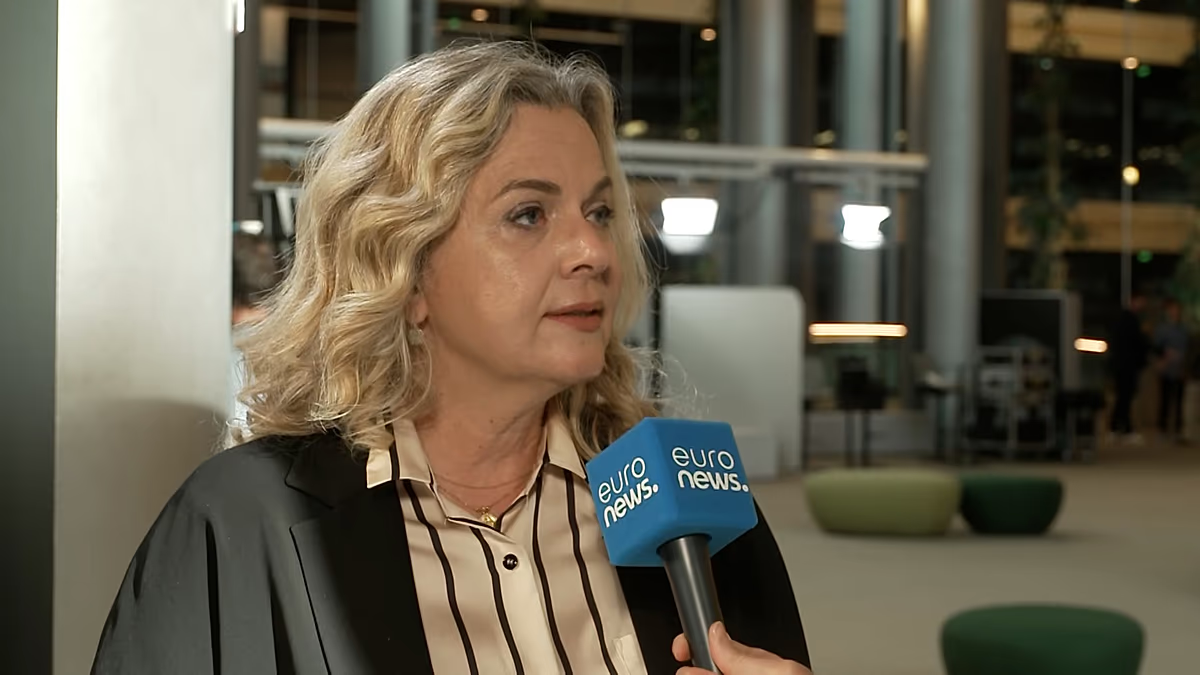
The political heat surrounding this issue was palpable in the European Parliament. Irish MEP Billy Kelleher voiced the acute frustrations of the farming community, calling for the suspension of CBAM and any measures adding burdens to fertiliser costs in the short term. He highlighted the immense pressure on farmers and the ripple effect on the cost of living through food inflation. This urgency is ticking against the calendar, as Commissioner Hansen noted the goal is to establish a “concrete financial instrument” before summer, when farmers make crucial planting decisions for the next season. This timeline underscores that for policymakers, this is not just an abstract economic debate but a matter of immediate livelihood and food security.
Amidst the farmer-focused debate, industry and environmental advocates breathed a sigh of relief at the Commission’s steadfastness. Leon de Graaf, representing a business coalition in favour of CBAM, called the decision a “relief,” arguing that weakening the mechanism is not the answer to farmers’ valid concerns. He emphasised that CBAM is the very instrument that ensures fair competition for European producers and importers, preventing a race to the bottom on environmental standards. This perspective frames the policy as a protective shield for domestic industry and a key driver for global climate action, suggesting that dismantling it would solve one problem by creating several larger, long-term ones.
Looking forward, the Commission’s plan includes mobilising financial support to soften the blow. Hansen pointed to €200 million remaining in the EU’s agricultural crisis reserve, with intentions to “at least double this amount.” Additional “exceptional support” for the hardest-hit farmers and boosted funding for agricultural research are also on the table. However, the final figures and specifics remain up in the air, pending tough negotiations between the European Parliament and the Council of the EU. The outcome will reveal whether the EU can successfully reconcile its green ambitions with the gritty realities of farm economics, crafting a path where climate responsibility and agricultural viability are not opponents, but partners in building a resilient future.