


Here is a summary and humanized expansion of the content, structured into six paragraphs as requested.
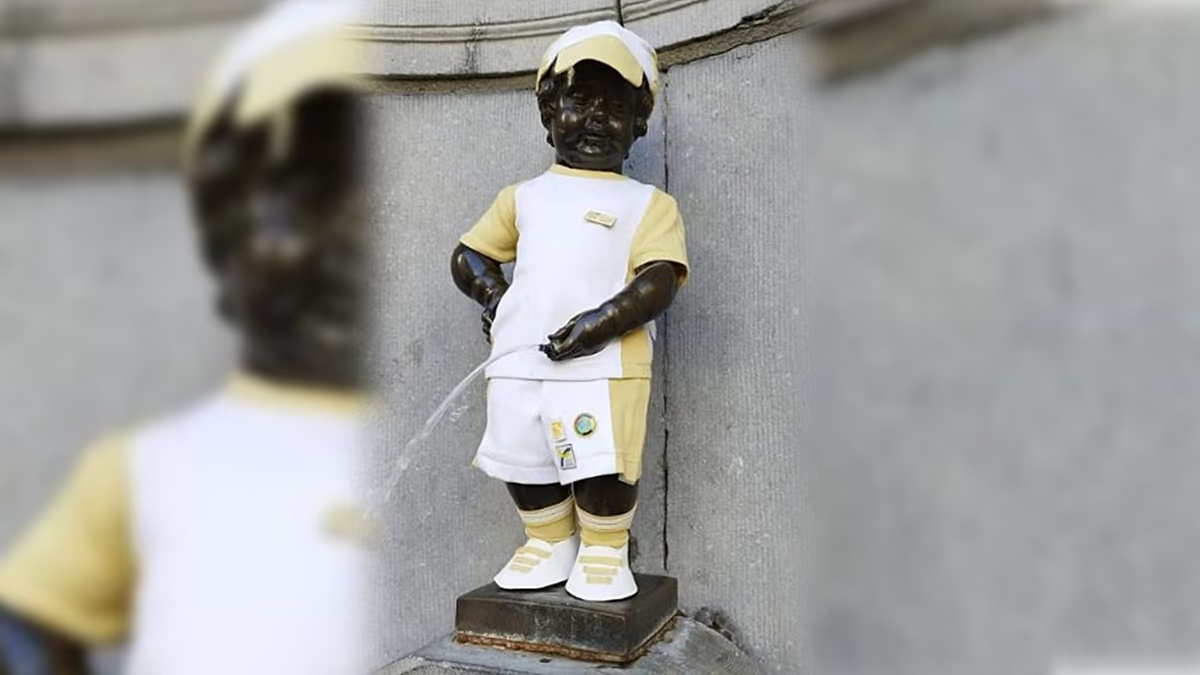
In the heart of Brussels, amidst the grand Baroque architecture and the constant hum of city life, stands a beloved and unassuming icon: the Manneken Pis. This small bronze statue of a mischievous little boy, perpetually in mid-stream, is more than just a tourist curiosity; it is the city’s most whimsical storyteller. For centuries, he has served as a playful canvas for the community, dressed in elaborate costumes hundreds of times a year to mark everything from national holidays to cultural celebrations. On a recent day, this tiny figure became the center of a powerful global message, receiving a symbolic makeover to honor the annual World Fair Play Day.
World Fair Play Day, observed every May 19th, is far more than a date on a sporting calendar. It is a worldwide call to action, championed by the International Fair Play Committee, to reaffirm the fundamental ethical principles that should underpin all athletic competition. The day transcends the pursuit of victory to spotlight the spirit of “fair play”—a concept encompassing respect for opponents, graciousness in both triumph and defeat, integrity in action, and solidarity within the sporting community. It’s a reminder that how we play the game matters profoundly, shaping character and defining legacy long after the final score is forgotten.
The choice to dress the Manneken Pis for this occasion was a masterstroke of symbolic communication. By adorning this universally recognized symbol of Belgian irreverence and charm in a special costume, the organizers created a poignant visual metaphor. The statue, often celebrated for its playful defiance, was transformed into an ambassador for sportsmanship, demonstrating that the values of fair play can—and should—be woven into the very fabric of our cultural expressions. This act bridged the gap between local tradition and global ideal, suggesting that the ethos of fair competition is as integral to our shared humanity as humor and art.
The specific costume bestowed upon the little statue was rich with meaning. While the original release did not detail its design, one can imagine attire reflecting the core tenets of the day: perhaps the colors of the Olympic rings symbolizing universal unity, or a simple sports uniform emphasizing purity of effort over commercial spectacle. The visual statement would have served as a silent but powerful sermon, inviting thousands of daily passersby and visitors to pause and reflect. In that moment, the Manneken Pis was no longer just a boy; he became every young athlete taking their first pledge to play by the rules, every veteran competitor who shakes an opponent’s hand, and a timeless guardian of the game’s true soul.
This celebration in Brussels is a microcosm of a larger, essential struggle in modern sports. In an era often dominated by staggering financial incentives, extreme political pressures, and a win-at-all-costs mentality, World Fair Play Day and actions like dressing the Manneken Pis serve as a crucial counterbalance. They are a grassroots assertion that the heart of sport is not found in record-breaking contracts or medal tallies, but in the unscripted hand offered to a fallen competitor, the honest admission of a fault line call, and the shared joy of participation. It champions the idea that these moments of integrity are the real victories, the ones that inspire future generations and restore faith in the games we love.
Ultimately, the image of Brussels’ cheerful little statue standing proud in its fair play regalia is a hopeful one. It reminds us that these principles are not archaic or naive, but vibrantly relevant and capable of being celebrated in the most public of squares. As the costume was eventually removed and the Manneken Pis returned to his usual state, the message lingered in the air: fair play is not a single-day event, but a continuous choice. It is a value to be worn, embodied, and practiced daily, both on the field of play and in the broader game of life, ensuring that respect and integrity remain the most enduring champions of all.