


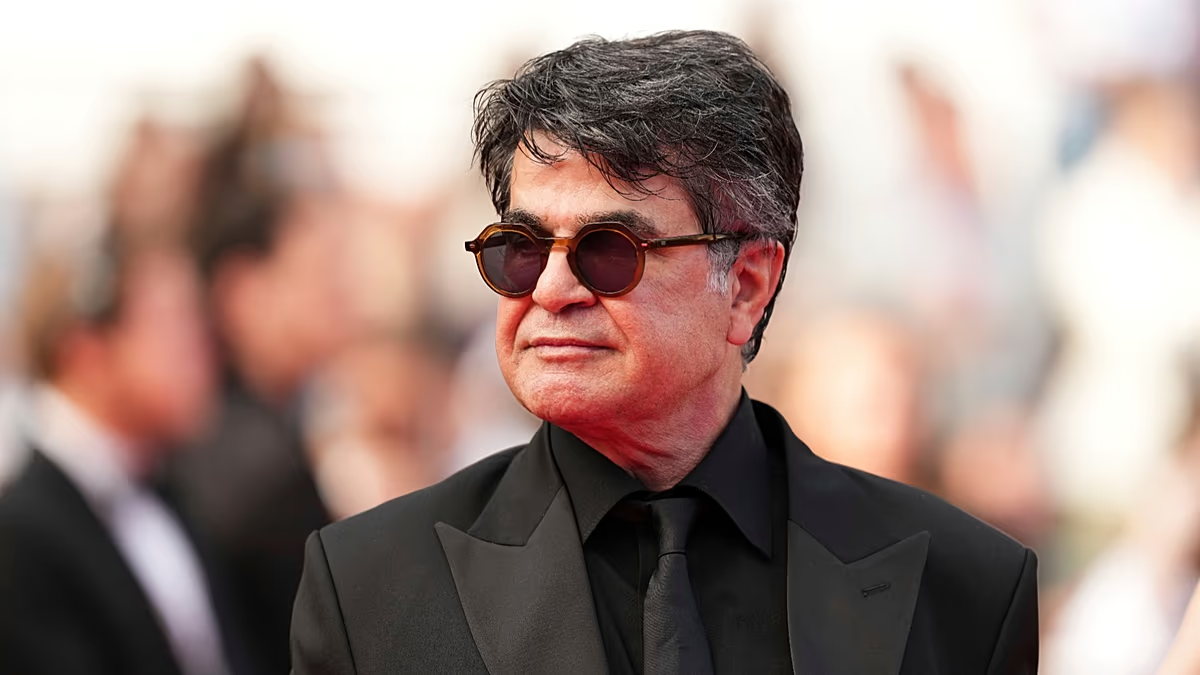
The ongoing struggle between artistic expression and state control finds a stark embodiment in the case of Iranian filmmaker Jafar Panahi. As recently as May 2026, the Oscar-nominated and Cannes-winning director was summoned for a new court hearing in Tehran, a retrial concerning charges of “propaganda activity against the regime.” This latest legal maneuver is part of a decades-long campaign by Iranian authorities to silence one of cinema’s most resilient voices. Panahi’s return to Iran in March 2026, following the Academy Award nomination for his film It Was Just An Accident, set the stage for this confrontation. The retrial itself, initiated by an appeal from his lawyers, revisits a prior sentence from late 2025 that condemned him to one year in prison and a two-year travel ban—a sentence handed down in absentia. The court overseeing the case further imposed a ban on his membership in any political or social groups, seeking to isolate him both physically and civically.
Panahi’s current legal battles are deeply intertwined with his recent artistic triumph. The film that earned him the Palme d’Or at Cannes in 2025 was born from profound personal suffering. He was jailed shortly before its production and was only released after undertaking a dangerous hunger strike. This ordeal was merely the latest chapter; he had already endured 86 days in Iran’s notorious Evin prison in 2022-2023 on charges related to anti-government activity and for protesting the imprisonment of his fellow filmmaker, Mohammad Rasoulof. It was within those prison walls that Panahi met activist Mehdi Mahmoudian, with whom he clandestinely collaborated on the screenplay for It Was Just An Accident. In a cruel twist, Mahmoudian was re-arrested earlier in 2026, accused of “insulting the Supreme Leader,” highlighting the perpetual risk faced by those who dare to dissent. The film is thus not merely a work of fiction but a testament forged in captivity.
This pattern of repression is not new for Panahi; it is the defining backdrop of his career. His clashes with authorities date back to 2003, resulting in two imprisonments and an official ban on filmmaking, levied against him for his “propaganda against the state.” Undeterred, he has continued to create defiant, celebrated works from the shadows, films like This Is Not a Film, Taxi Tehran, and No Bears. These works, often shot secretly and metaphorically rich, have garnered international acclaim, including the Golden Bear at the Berlin International Film Festival. While promoting It Was Just An Accident in the United States, Panahi won three Gotham Awards, using the platform to honor the quiet courage of marginalized artists everywhere. He dedicated his honor “to independent filmmakers in Iran and around the world… who keep the camera rolling in silence, without support, and at times by risking everything they have,” offering a “small tribute to all filmmakers who have been deprived of the right to see and to be seen.”
The power of Panahi’s cinema lies in its unflinching gaze at the human cost of despotism. It Was Just An Accident is a potent example: a tense thriller that follows a group of former prisoners as they grapple with the chance to take revenge on a man they believe to be their former jailer and torturer. More than a simple narrative, the film is a profound moral inquiry into cycles of violence, the lingering trauma of state-sanctioned abuse, and the possibility—or impossibility—of mercy. As noted in reviews, the film, shot without official permission, is a “taut, tense and tightly scripted drama” that masterfully explores whether fighting violence with violence ultimately dehumanizes the victim as well. It stands as a timeless commentary on the sins of repression, giving cinematic form to the psychological wounds inflicted by authoritarian systems.
Panahi’s story transcends individual biography; it symbolizes the relentless pressure exerted on civil society and intellectual freedom in Iran. Each arrest, each court summons, and each travel ban is a message intended to intimidate not just one man, but an entire community of artists, activists, and thinkers. Yet, his refusal to be silenced, even when barred from making films, demonstrates a profound commitment to the truth-telling power of art. His works serve as vital counter-narratives, smuggling realities of Iranian life onto the world stage and fostering global solidarity. The very fact that his latest legal summons made international news underscores how his personal struggle has become a benchmark for the state of creative freedom.
Ultimately, the saga of Jafar Panahi is a testament to the enduring clash between the human spirit’s need to create and testify, and a regime intent on controlling narrative and memory. As he faces another court hearing, his legacy is already secure: a body of work that courageously documents resistance, compassion, and complexity under duress. Whether inside a courtroom or through the lens of a hidden camera, Panahi continues to film, to testify, and to exist. His journey reminds us that in the face of oppression, the act of creation itself—the determination to “keep the camera rolling”—remains one of the most powerful forms of resilience and hope imaginable.