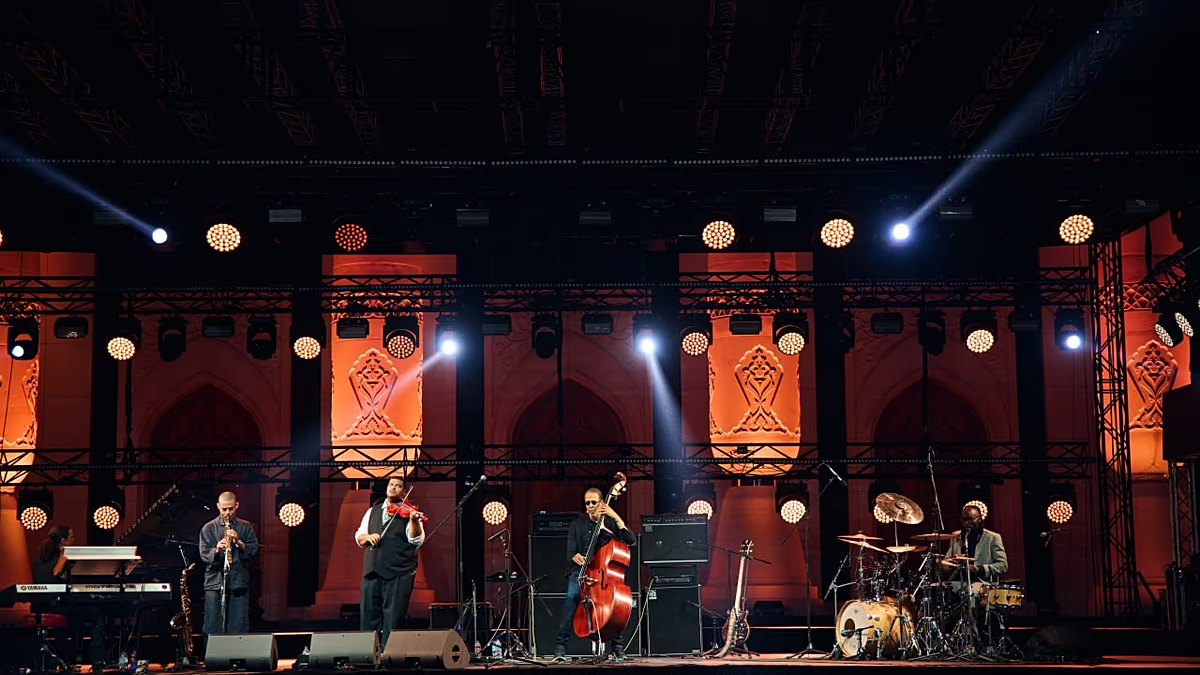



On a warm April evening in Tashkent, the air itself seemed to hum with anticipation. Thousands converged on the Palace of International Forums, transforming the grounds into a vibrant tapestry of shared experience for the opening of the International Jazz Festival. Friends and families spread out on the grass, while ardent fans pressed closer to the stage, all united under the twilight sky. On colossal screens flanking the performers, intimate close-ups revealed the profound absorption of the musicians—a silent communion between artist and art. This was a gathering that effortlessly bridged generations and backgrounds; seasoned jazz aficionados stood shoulder-to-shoulder with those encountering the genre’s rich language for the very first time. In that open space, separated only by age and familiarity, every eye was fixed on the same stage, marking the beginning of a celebration that was as much about community as it was about music.
The legendary bassist Stanley Clarke, a titan with four Grammy awards and a career spanning over fifty years alongside greats like Miles Davis, served as a living bridge between jazz’s storied past and its dynamic present. In the audience, Muhitdin Jalolov sat on the grass with his two grandsons, hoping to show them “what music for the soul sounds like.” Clarke, from the stage, echoed this sentiment of generational passage. Reflecting on his own youth learning from older masters, he now finds himself as the elder statesman mentoring brilliant young musicians who joined his band as teenagers. “That is how our music moves through time,” he noted, perfectly encapsulating the festival’s spirit. This year’s illustrious lineup, including groups like Incognito and GoGo Penguin, alongside artists from Romania and Israel, was curated by the Uzbekistan Art and Culture Development Foundation under UNESCO’s auspices. The event thoughtfully culminated with a closing night dedicated solely to Uzbek musicians, led by People’s Artist Mansur Tashmatov, honoring both the global and local roots of the art form.
The connection between performer and audience was powerfully affirmed one rainy night during a performance by Swedish multi-instrumentalist Gunhild Carling. As the rain fell, not a single person in the crowd departed. Watching from the audience, Incognito founder Bluey Maunick was deeply moved. “When I saw the crowd stay in the rain, I knew we would connect with Tashkent,” he recalled, understanding that this shared perseverance signaled a profound receptivity. In that damp crowd was Saga Almen, a tourist from Sweden whose trip to Uzbekistan’s historic cities was unexpectedly punctuated by this musical gift. A lifelong fan of Carling, Almen found it extraordinary to experience her compatriot’s performance so far from home. “It feels extraordinary that we met here in Tashkent,” she said, her personal story highlighting the festival’s magic in creating serendipitous, cross-cultural moments of joy.
For the international artists, Tashkent itself became a source of inspiration. For Bluey Maunick, it was a first, eye-opening visit, while Incognito vocalist Tony Momrelle was returning for a cherished third time. Momrelle praised the city’s soul, stating, “it is the people who make a city, and in Tashkent people have only shown love.” Maunick was equally impressed by the world-class production standards, from the crew to the equipment. But beyond the technical excellence, he articulated the core mission of their performance: “Every day, somewhere in the world, someone needs energy from music. This time it is Tashkent.” He described music as a force that entertains, heals, and teaches, emphasizing that such cultural exchanges provide the vital new experiences that fuel continued creativity for the artists themselves.
This energy has cultivated a loyal local community that returns year after year, embodying the festival’s deep roots in the city’s social fabric. Madina Azimova, a retired piano teacher living near the venue, has attended every edition since its inception. “In the first years I came alone, but now I come with friends I met here,” she explained, standing amid a group near the stage. For her and many others, the arrival of spring is now intrinsically linked to the festival’s rhythms. While she enjoys seeing renowned international acts, a special joy comes from discovering new local talent each year, witnessing the growth of Uzbekistan’s own jazz scene. The Foundation confirms this burgeoning appeal, noting steady growth in attendance and an increasing number of international visitors, proving the event has become a beloved annual ritual for both residents and global nomads.
Since its launch in 2016—a year that marked Uzbekistan’s broader opening to the world—the International Jazz Festival has consciously used a formula of free admission, open-air performances, and a diverse lineup to democratize access and foster genuine exchange. The Foundation notes that for artists, participation has evolved from being a simple concert engagement to being “a meaningful cultural event.” This elevated significance, coupled with the palpable warmth of the audience, has bolstered the festival’s international reputation. Consequently, its impact now extends beyond the final encore, contributing to a growing cultural tourism sector. From the shared silence during a complex solo to the collective decision to stay and dance in the rain, the festival has mastered the delicate alchemy of transforming a series of concerts into a lasting, shared memory for a city and its guests, proving that jazz, in its boundless conversation, remains a powerful universal dialect.