


In a groundbreaking move for the world’s most popular sport, FIFA has announced plans for its first-ever halftime show at the 2026 World Cup final this July. Set to take place at the MetLife Stadium in New Jersey, this spectacle marks a deliberate and ambitious effort to mirror the cultural and commercial phenomenon of the American Super Bowl. By bringing a major musical performance to the interval of its flagship event, football’s governing body aims to fuse athletic drama with global entertainment, creating a moment that transcends the sport itself. FIFA President Gianni Infantino framed the show as uniting “music and football on the biggest stage in sport for a very special cause,” signaling that this is more than just entertainment—it’s a calculated evolution of the World Cup spectacle designed to capture a global television audience in an entirely new way.
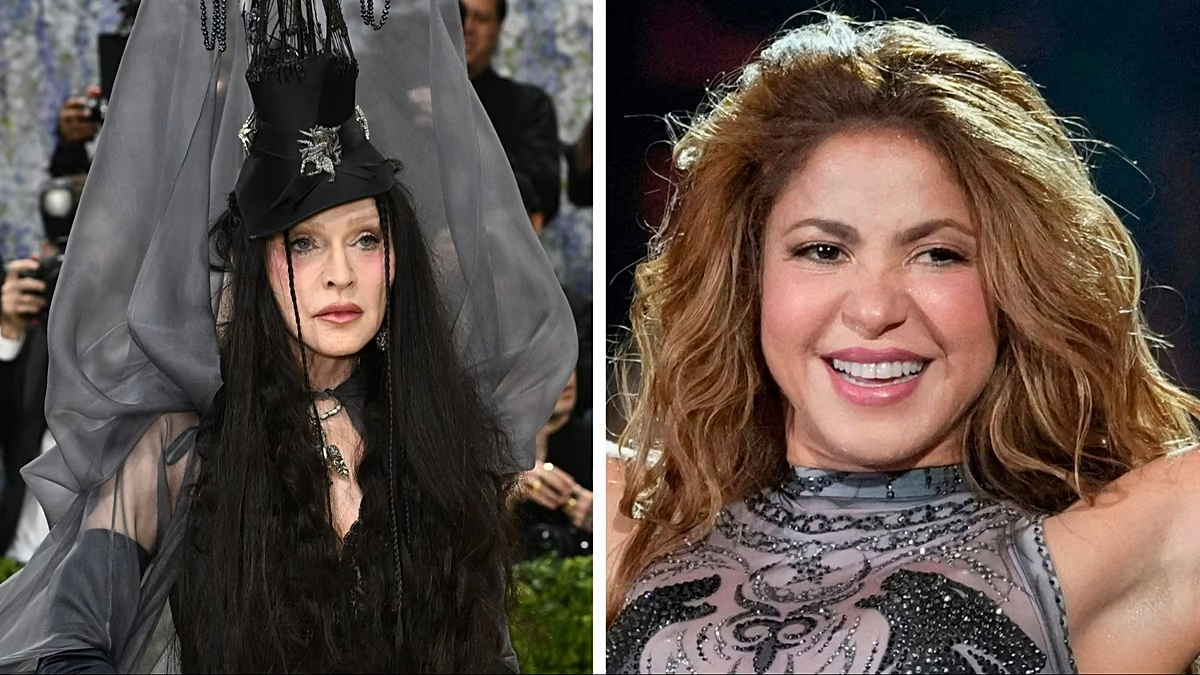
The lineup for this historic intermission is a testament to its intended worldwide appeal, featuring a truly iconic trio: Madonna, Shakira, and the South Korean supergroup BTS. Curated by Coldplay’s Chris Martin, this selection bridges generations, genres, and continents, ensuring something for every demographic. Shakira, a veteran of World Cup anthems, brings a familiar football energy, while Madonna represents pop music royalty, and BTS commands the fervent devotion of a global fanbase. This ensemble makes it clear that FIFA is not merely adding a musical act but is crafting a curated, must-see global event within the event, hoping the show becomes as talked-about as the match that follows it.
This strategic shift is directly inspired by the National Football League’s Super Bowl, whose halftime show has become an institution unto itself, featuring legends from Michael Jackson and Prince to recent stars like Rihanna and Bad Bunny. By adopting this model, FIFA seeks to amplify the World Cup final’s advertising pull and viewer engagement, extending its reach beyond dedicated football fans to casual observers drawn by the musical megastars. It represents a new chapter in the commercial and cultural presentation of the sport, acknowledging that in the modern media landscape, the biggest sporting moments are also grand entertainment festivals.
The musical theme of this expanded World Cup experience is already in motion with the recent release of the tournament’s official song, “Dai Dai.” This track itself symbolizes a blend of cultures, pairing Shakira with Nigerian Afrobeats giant Burna Boy. FIFA describes the song as a “vibrant celebration of football, culture and unity,” and importantly, has pledged that royalties will support the FIFA Global Citizen Education Fund. This link between the event’s entertainment and a philanthropic cause adds a layer of purpose to the festivities, aligning the celebratory noise with tangible social impact.
This halftime show is just one part of a World Cup that is historic on multiple fronts. The 2026 edition, kicking off next month, is the first to be co-hosted by three nations—the United States, Canada, and Mexico—dramatically expanding its geographical and cultural footprint across North America. Furthermore, it inaugurates a newly expanded tournament format featuring 48 teams, making it the largest and most inclusive World Cup in history. The halftime show, therefore, acts as the glittering centerpiece of a much broader ambition: to present a footballing extravaganza of unprecedented scale and spectacle.
Ultimately, the introduction of a Super Bowl-style halftime show at the World Cup final is a vivid sign of the times. It reflects the ever-growing convergence of sports, music, and global commercial power. While purists may debate the focus, there is no denying the potential of this fusion to create a singular, shared moment for billions. When the whistle blows for halftime in New Jersey this July, the world will witness more than a break in play; it will see the conscious reshaping of a classic sporting ritual into a multifaceted global celebration, where the beautiful game meets the universal language of music under the brightest lights imaginable.