




Paragraph 1: A Diplomatic Dispute Over Defense
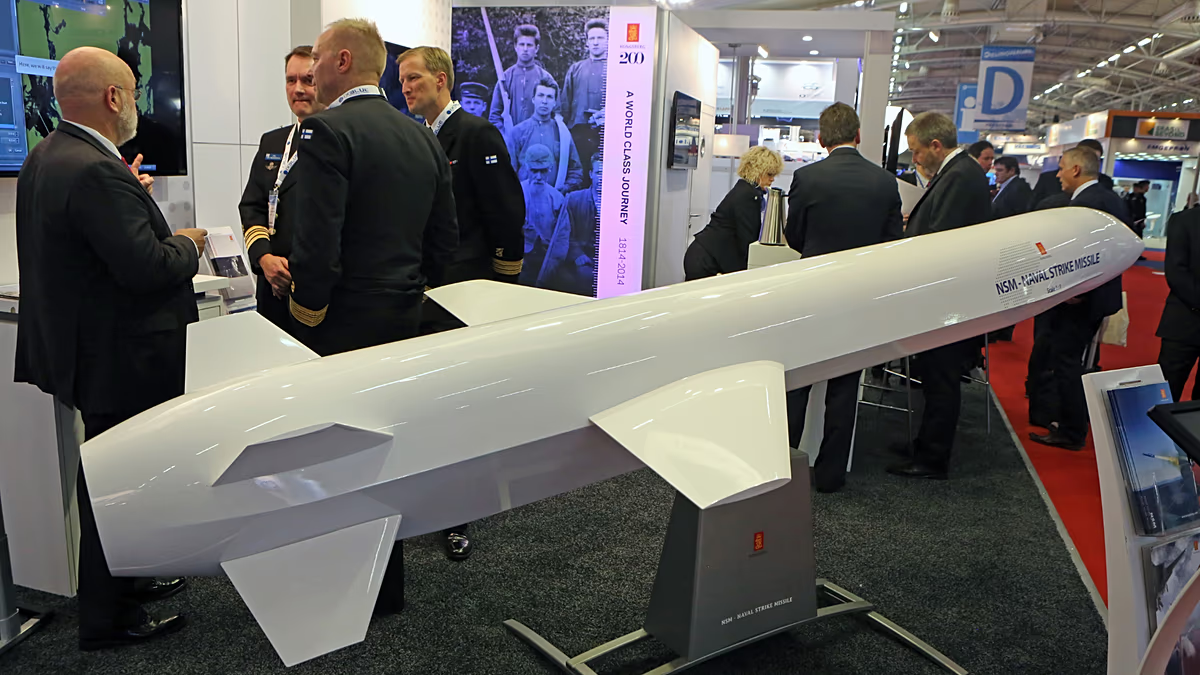
A recent decision by the Norwegian government has sparked a significant diplomatic and commercial dispute with Malaysia, casting a shadow over international arms agreements. Norway’s foreign ministry has revoked export licenses crucial for delivering a sophisticated Naval Strike Missile (NSM) system to Malaysia. This move effectively blocks the fulfillment of a 2018 contract between Malaysia and the Norwegian defense contractor Kongsberg, halting a key component of Malaysia’s naval modernization plans. The decision, framed by Oslo as a necessary step in tightening control over its “most sensitive” defense technology, restricts such exports to its “allies and closest partners.” While Norway expressed that it “greatly values its relationship with Malaysia,” the action has been met with sharp criticism from Kuala Lumpur, raising profound questions about reliability and trust in global defense partnerships.
Paragraph 2: Malaysia’s Frustration and Financial Commitment
The reaction from Malaysia has been one of profound disappointment and frustration, articulated forcefully by Prime Minister Anwar Ibrahim. He warned that Norway’s unilateral reversal severely undermines confidence in European defense suppliers and could directly hurt Malaysia’s military operational readiness. Anwar emphasized that international contracts are solemn commitments, stating they are “not confetti to be scattered in so capricious a manner.” He argued that if suppliers feel they can renege without consequence, their value as long-term strategic partners diminishes entirely. Adding weight to his argument, Malaysian Defense Minister Mohamed Khaled Nordin revealed that the government has already fulfilled approximately 95% of its financial obligations under the 2018 deal, having paid the vast majority of the contract value to Kongsberg. This highlights Malaysia’s view that it has acted in good faith and honored its commitments.
Paragraph 3: The Strategic Importance of the Blocked Deal
The blocked deal was not a minor procurement but a centerpiece of Malaysia’s strategy to bolster its maritime defenses. The NSM system and associated launcher components were destined for the country’s littoral combat ship program, a critical initiative to modernize its navy in a region marked by complex geopolitical tensions and competing maritime claims. The Naval Strike Missile is a highly capable, homegrown Norwegian weapon system described by Kongsberg as a subsonic missile capable of striking both sea and land targets. Its advanced features, including sea-skimming flight capabilities to evade radar and an “Autonomous Target Recognition” system, would have represented a substantial upgrade for Malaysia’s naval fleet. The revocation therefore strikes at the heart of a planned capability enhancement, leaving a gap in the nation’s defense planning.
Paragraph 4: The Clash Between Sovereignty and Partnership
At its core, this incident represents a clash between a nation’s sovereign right to control its military exports and the expectations of reliability inherent in a long-term buyer-seller relationship. Norway’s position reflects an increasingly cautious global landscape where nations are reassessing defense technology transfers based on shifting geopolitical alignments and security concerns. From Oslo’s perspective, it is exercising prudent oversight. However, from Malaysia’s vantage point, this is a breach of trust that treats a committed customer as an untrustworthy outsider, despite years of contractual fidelity. Anwar’s statement that “Malaysia has honoured every obligation under this contract since 2018: scrupulously, faithfully and without equivocation” underscores this sense of unfairness. The episode illustrates the delicate balance countries must strike between protecting their strategic technologies and maintaining their reputation as dependable partners in the global defense market.
Paragraph 5: Broader Implications for Global Defense Trade
The ramifications of this dispute extend far beyond the two nations directly involved. It sends a worrying signal to other middle-power nations around the world who rely on importing advanced defense technology from Western suppliers. If a contract signed in good faith, nearly fully paid for, and actively awaited for years can be nullified by a licensing change, it introduces a high degree of political risk into all such agreements. Potential buyers may begin to question the long-term security of their investments and seek more reliable partners or accelerate efforts toward domestic defense production. For European defense contractors like Kongsberg, which compete in a global market, such governmental interventions can inadvertently harm their commercial credibility, regardless of the strategic rationale behind them.
Paragraph 6: Seeking Resolution and a Path Forward
Moving forward, the path for both Norway and Malaysia involves navigating this rift without causing permanent damage to their broader bilateral relationship. Malaysia’s leadership has made its position and its grievances unmistakably clear, hoping to pressure Norway into reconsidering or to negotiate a suitable compensation package. Norway, for its part, must weigh the strategic rationale for its export controls against the tangible diplomatic and commercial costs of this action. A failure to reach an amicable resolution could push Malaysia and similar nations closer to alternative suppliers from other regions, such as South Korea, Turkey, or China, thereby reshaping future defense trade dynamics. Ultimately, this situation serves as a stark reminder that in international defense, business is not merely transactional; it is deeply intertwined with diplomacy, trust, and perceived mutual respect, all of which have been strained by this decision.