



A New Dawn in Budapest and a Regulatory Shift in Brussels
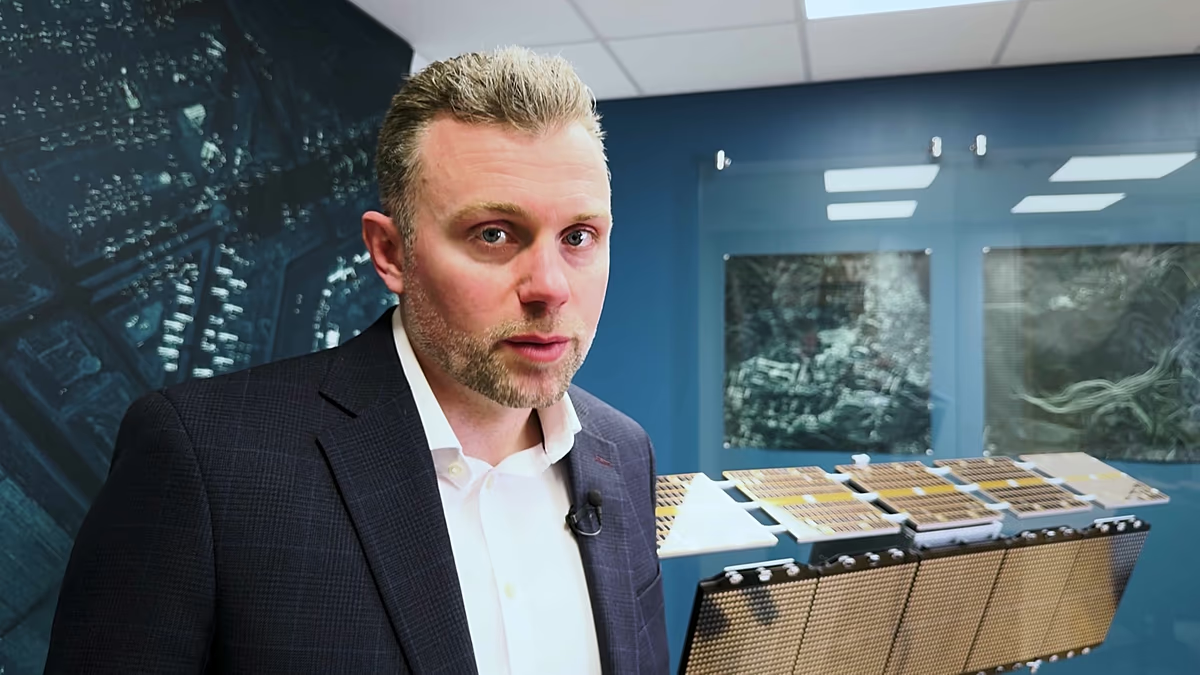
In a wave of optimism and celebration, Hungary has entered a new political era. Péter Magyar, leader of the centre-right, pro-European Tisza party, was sworn in as Prime Minister on May 9th, marking the end of Viktor Orbán’s 16-year rule. Crowds cheered the inauguration, sensing a profound shift for the nation. As Euronews’ Sandor Zsiros reported from the scene, having witnessed the remarkable transition firsthand, there is a palpable feeling that change will now come rapidly. He expressed astonishment at the speed with which Orbán’s political apparatus appears to be dissolving, noting that the former leader’s pervasive media influence, often criticized as a propaganda machine, has largely vanished. Magyar, a former member of Orbán’s own party, has staked his leadership on a clear platform: mending Hungary’s strained relationship with the European Union, unlocking billions in frozen EU funds, and pursuing accountability for corruption that flourished under his predecessor.
This dramatic change in leadership has captured the close attention of European observers. While acknowledging that Magyar may share some nationalist and populist tendencies with Orbán, commentators like Svenska Dagbladet’s Teresa Küchler suggest the substance of the relationship with Brussels could transform entirely. The crucial difference, she notes, is a commitment to abide by EU law, which would normalize Hungary’s standing among member states. Further signaling a break from the past, Zsiros highlighted the unique composition of Magyar’s new cabinet, which draws heavily from international business circles. These appointees, he suggests, bring a global perspective and a focus on governance rather than political profiteering, raising hopes for a more transparent and cooperative chapter in Hungary’s European journey.
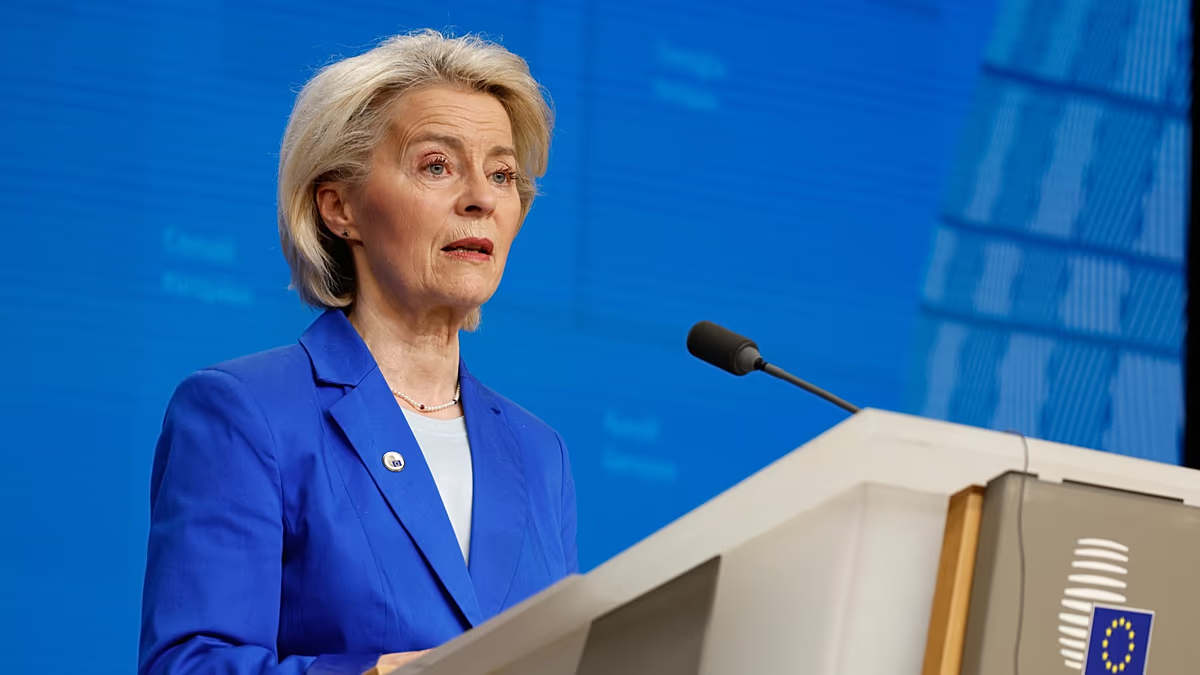
While Budapest celebrated its political renewal, policymakers in Brussels were finalizing a significant piece of legislation that will shape the continent’s technological future. In the early hours of May 7th, the European Parliament and the European Council reached a provisional agreement on the so-called “AI Omnibus.” This measure is designed to simplify and adjust the landmark AI Act, the EU’s pioneering effort to regulate artificial intelligence. The most consequential change introduced by the Omnibus is a delay in applying some of the Act’s most critical provisions, particularly the rigorous due diligence requirements for high-risk AI systems. This adjustment aims to give developers and companies more time to achieve compliance with the complex new rules.
However, this regulatory compromise has not been met with universal applause. As Euronews’ Luca Bertuzzi explained, trade unions and consumer protection advocates have voiced concerns that the revisions could create dangerous gaps in oversight. Critics argue that by softening rules for certain sectors, the legislation risks an arbitrary and inconsistent approach to managing the profound risks that arise from human interaction with advanced AI systems. The goal of creating a uniform, trustworthy framework for AI across Europe, they fear, could be undermined if some industries face lighter obligations than others, potentially leaving citizens vulnerable.
Simultaneously, the reaction from the technology industry itself has been lukewarm. According to Bertuzzi, while businesses sought clarity and support from the Omnibus, many feel the final agreement falls short of their hopes for a more ambitious overhaul. Industry representatives had pushed for broader changes to ease the regulatory burden and foster innovation, suggesting that the current revisions may not provide the significant regulatory simplification or competitive boost they desired. This places the European institutions in a challenging position, striving to balance the urgent need for robust safeguards with the practical realities of technological development and economic competitiveness on a global scale.
Thus, Europe finds itself at a dual inflection point. In Hungary, a nation long at odds with Brussels is experiencing a hopeful political reset that promises to reinvigorate its place within the European family. Concurrently, across the EU, the meticulous and contentious work of governing the digital age continues, as seen in the nuanced negotiations over the AI Omnibus. Both stories—one of political transformation and another of meticulous regulatory calibration—underscore the dynamic and often challenging process of building a united European future. For deeper insights, the full discussion is available on the Euronews weekly podcast, Brussels, My Love?