


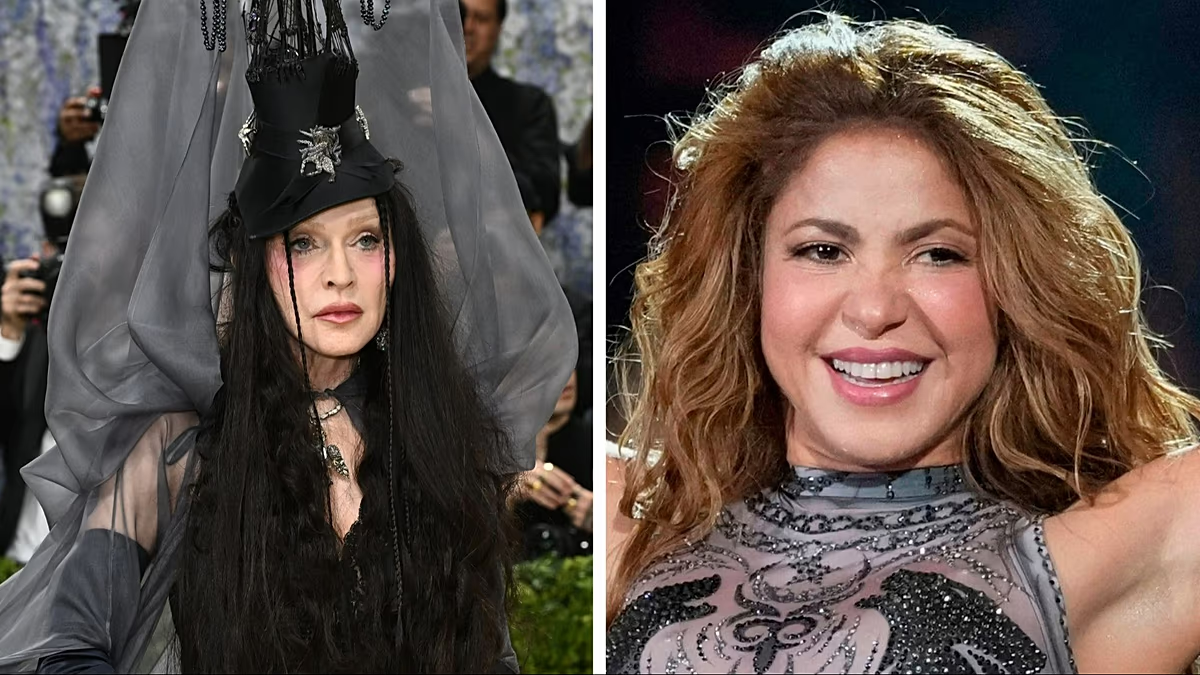
In a move that signals a bold new era for the world’s most-watched sporting event, FIFA has unveiled plans for its first-ever halftime show at this July’s World Cup final in New Jersey. This historic departure from tradition will see the iconic MetLife Stadium transform into a global concert stage during the break of the ultimate football match. The spectacle is designed not merely as an intermission, but as a centerpiece event, headlined by a monumental trio of superstars: the everlasting pop revolutionary Madonna, the electrifying global phenomenon Shakira, and the South Korean musical titans BTS. Curated by Coldplay’s Chris Martin, this unprecedented fusion of sport and spectacle marks a conscious effort to elevate the World Cup final into an experience that resonates far beyond the ninety minutes of play on the pitch.
This strategic shift is a clear nod to the cultural and commercial powerhouse that is the American Super Bowl, an event where the halftime show often becomes as discussed as the game itself. FIFA, keen to capture that same global audience and lucrative advertising appeal, is openly borrowing a page from the NFL’s successful playbook. By assembling a lineup of artists with fanbases spanning continents and generations, FIFA aims to create a must-see television moment that rivals the legendary Super Bowl performances of icons like Michael Jackson, Prince, and more recent sensations like Rihanna. As FIFA President Gianni Infantino stated, the goal is to bring together “music and football on the biggest stage in sport for a very special cause,” framing the entertainment within a broader mission.
The inclusion of Shakira provides a beautiful symbolic bridge between football’s past and its future. No stranger to the World Cup stage, having performed anthems at multiple opening and closing ceremonies, her presence honors the tournament’s rich history. Yet, her role here is entirely new. Furthermore, her recent collaboration with Nigerian Afrobeats superstar Burna Boy on “Dai Dai,” the tournament’s official song, underscores the truly globalized vision for this event. FIFA described the track as a “vibrant celebration of football, culture and unity,” a sentiment that will undoubtedly extend to the halftime show itself. Importantly, the initiative is linked to philanthropy, with royalties from the song supporting the FIFA Global Citizen Education Fund, adding a layer of social purpose to the celebration.
This groundbreaking show is set within an already historic edition of the World Cup. The 2026 tournament, co-hosted for the first time by three nations—the United States, Canada, and Mexico—will also be the first to feature an expanded field of 48 teams. The halftime show in New Jersey, therefore, is more than an isolated performance; it is the exclamation point on a month-long festival of football that aims to embrace the vast cultural diversity of the host continent and the wider world. It represents an acknowledgment that the beautiful game’s appeal is inextricably woven into the fabric of global pop culture, and that its biggest moment can be a platform for both athletic excellence and artistic expression.
Ultimately, this decision reflects the evolving nature of major sporting events in the 21st century. They are no longer just competitions; they are global cultural happenings, communal viewing experiences that demand a broader narrative. By integrating a superstar musical performance, FIFA is not only seeking to entertain the billions watching but is also crafting a shared memory, a conversation starter that will engage fans and non-fans alike. The vision is to create a singular, unified moment where the passion for sport and the power of music collide, offering something for everyone in a fragmented media landscape.
As the final whistle blows on the first half of the world championship match this July, the world’s attention will not waver. Instead, it will pivot to a stage where Madonna’s enduring iconography, Shakira’s infectious rhythms, and BTS’s groundbreaking artistry will take center field. This is more than just a show; it is FIFA’s ambitious attempt to write a new chapter in its own history, to meet the modern moment with a spectacle that matches the grandeur and global unity the World Cup final promises. When the players return for the second half, they will be following an act that aims to be just as unforgettable as the game-winning goal itself.