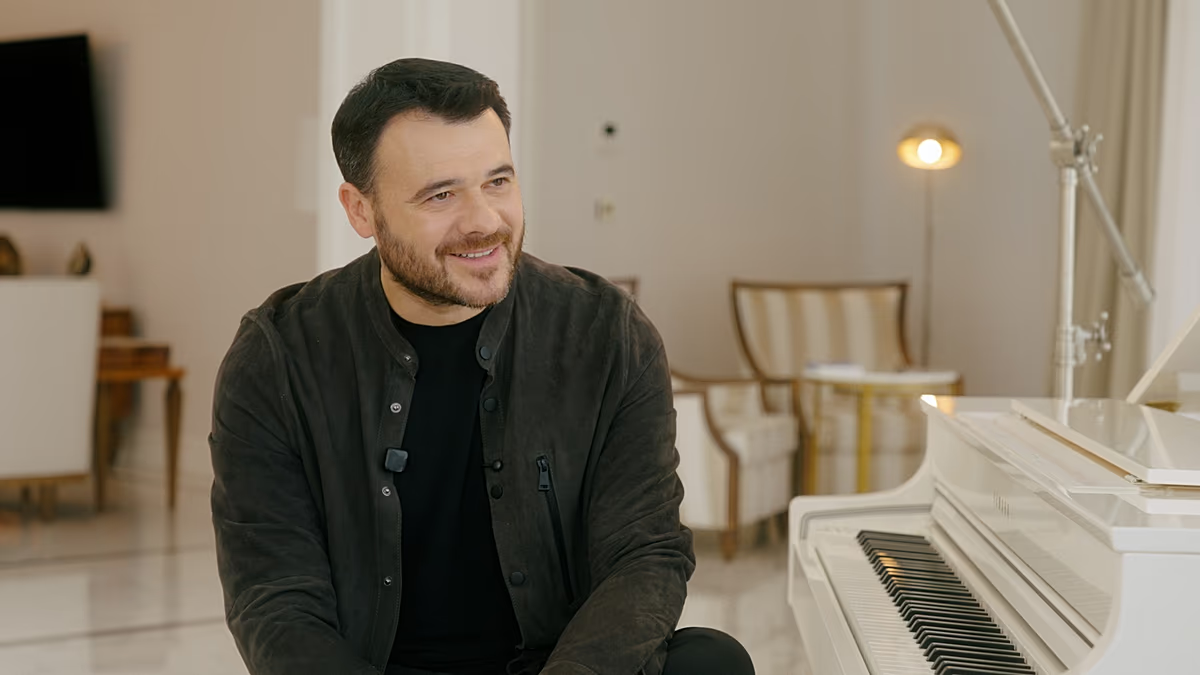


The ambiance was one of immediate familiarity, a sense of reunion rather than introduction. EMIN, overlooking the tranquil expanse of the Caspian Sea, exuded a warmth that dissolved any formal barriers. He was not a distant celebrity to be interviewed, but a gracious host, making the space feel like a living room rather than a studio. This innate openness became the foundation of our conversation, setting a tone of genuine reflection and shared passion rather than scripted inquiry.
Our dialogue naturally settled near his piano, the instrument a silent testament to his life’s work. The focus was his new album, Maybe Tomorrow, crafted with the legendary producer David Foster. Yet, it swiftly became evident that this collection is far more than a professional milestone; it is a personal archive of feeling. EMIN spoke of choosing “timeless” songs, compositions with a kind of immutable DNA that transcends the performer. “You hear the melody, you want to hear it. You want to hear more of it,” he explained, framing the album as a tribute to enduring emotional truth rather than fleeting trend.
This pursuit of timelessness led him back to the very root of his musical being: Elvis Presley. Recalling the first time he heard “That’s Alright Mama” at age thirteen, a flicker of deep emotion crossed his face. For a moment, the interview faded away, replaced by a man casually singing phrases, revisiting a cherished, personal chapter. His passion, however, isn’t just for the iconic hits; it’s for the deep cuts and rare live performances. With a laugh, he admitted to subjecting friends to lengthy dissections of Elvis’s artistry, saying, “It’s almost like a drug.” This isn’t mere idol worship; it’s the study of a foundational language, a touchstone that continues to shape his own artistic voice.
Returning to Maybe Tomorrow, the album features poignant duets, including one with Amanda Holden, an idea fostered by David Foster. EMIN emphasized Foster’s philosophy of “people before music,” a approach that has led to lasting friendships with collaborators. The process for “Something Stupid” was organic—a shared belief in the song’s magic, recording separately, then a warm meeting in London. In his studio, discussing these collaborations, one could see music transform him; his energy shifted, his passion became more visible. The atmosphere itself reflected this, with staff moving around him with easy smiles and clear affection, revealing a world where artistry is nurtured by authentic human connection.
A particular standout on the album is his rendition of “You Are So Beautiful,” which Foster considers EMIN’s finest vocal performance on the project. The song has a shared history, having been part of a televised concert with Foster years earlier. While EMIN humbly disagrees with Foster’s assessment, calling it an “easy vocal,” the story underscores their symbiotic relationship—a producer recognizing a moment of pure, unfiltered expression in his artist. This detail highlights that despite nearly two decades of international success, EMIN’s focus remains on the intimate craft of song and the trust between creator and collaborator.
What lingers most after our conversation is not the scale of his achievements, but the refreshing lightness and forward-looking enthusiasm he carries. When asked about a fantasy collaboration, he immediately names Sade, his admiration sincere and unpretentious. He speaks about music not as a conquered field, but as a endless frontier, with the eagerness of someone still discovering its wonders. This, perhaps, is the true spirit of Maybe Tomorrow. The title feels less like a placeholder and more like a gentle, optimistic promise—a commitment to the endless tomorrows of artistic exploration, shared connection, and the simple, enduring joy of singing.