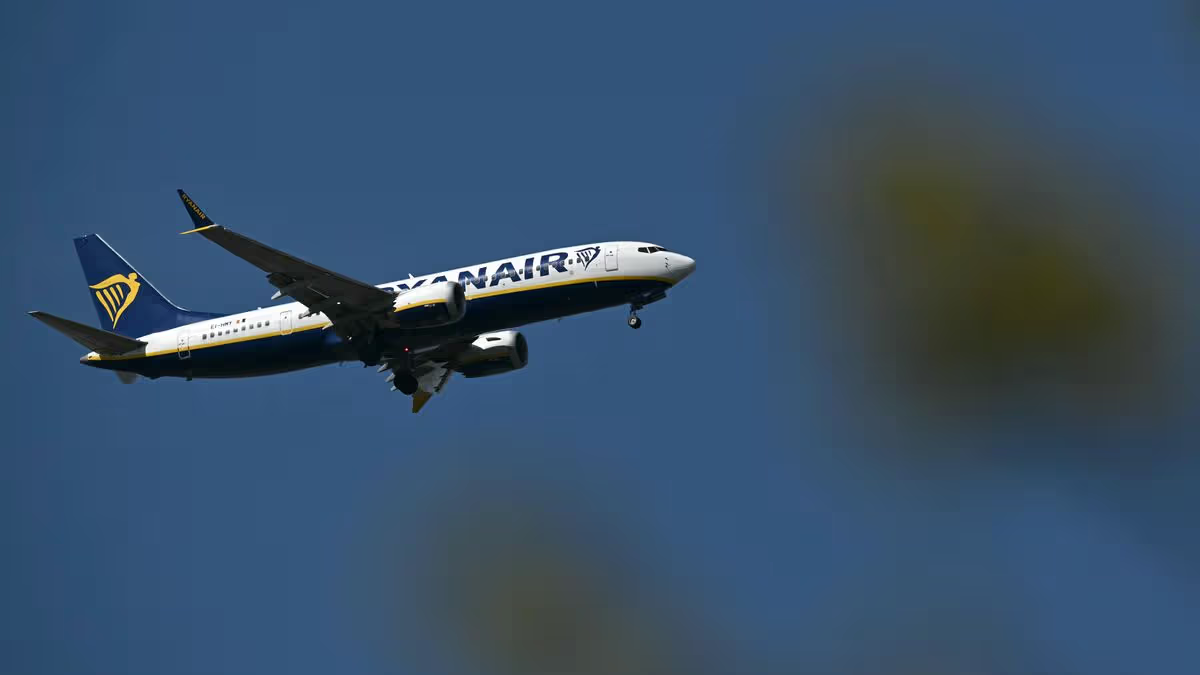




A Ryanair passenger jet bound for Spain was forced to declare an emergency and turn back to the United Kingdom this morning, cutting short a routine flight and undoubtedly causing a wave of anxiety for those on board. The aircraft, operating as flight FR7842, had departed Glasgow Prestwick Airport shortly after 7:30 AM, carrying travelers toward the sunshine and warmth of Murcia in southeastern Spain. The initial phase of the journey appeared normal as the Boeing 737 climbed to its cruising altitude of 35,000 feet, with passengers settling in for the approximately three-hour flight over the Bay of Biscay. The abrupt end to this ordinary travel plan underscores the unpredictable nature of air travel, where meticulous planning can be overturned in moments by unforeseen technical or medical issues, reminding us of the complex systems and human expertise that keep aviation safe.
The situation escalated roughly an hour into the flight, somewhere over the Irish Sea or the western reaches of the UK, when the flight crew made a critical decision. They transmitted a “Squawk 7700” code through their transponder, a move that instantly illuminated their aircraft on air traffic control screens as being in distress. This universal aviation code signals a general emergency, covering a wide range of potential problems from serious mechanical failures to a severe medical incident involving a passenger or crew member. The act of squawking 7700 is never taken lightly; it immediately prioritizes the aircraft, clearing its path and marshalling ground services for a potential urgent landing. For the passengers, this moment likely transitioned the flight from mundane to alarming, as the hum of the cabin was likely accompanied by concerned murmurs and the solemn, measured announcements from the cockpit.
Upon declaring the emergency, the pilots initiated a turn, diverting the aircraft from its southbound course toward Spain and back toward the UK. The specific reason for the emergency has not yet been disclosed by the airline or authorities, which is standard procedure while an investigation is underway. It could have been anything from a pressurization issue, an indication of a engine fault, or a serious health emergency requiring immediate medical attention that could not be dealt with adequately in the air. The decision to return to a familiar airport with full emergency services on standby, rather than continue or attempt a landing elsewhere, is a standard and prudent protocol, always erring on the side of extreme caution to ensure the absolute safety of everyone aboard.
The aircraft safely completed its return journey, landing back in the UK without further incident. While the exact landing location was not specified in the initial report, the professional handling of the situation by the Ryanair crew ensured a safe conclusion to what was a frightening experience. Emergency services on the ground would have been standing by as a precautionary measure as the plane touched down. Passengers were undoubtedly relieved to be back on solid ground, though now faced with the inconvenience and disruption of a cancelled journey—a minor frustration in the context of a potential crisis averted. The airline is now obligated to care for these passengers, providing updates, rebooking on alternative flights, and addressing any immediate needs stemming from the unexpected return.
This incident, while resolved safely, serves as a powerful reminder of the robust safety frameworks governing modern aviation. The Squawk 7700 system is a vital component of this, creating an immediate and unambiguous line of communication between a plane in trouble and the network of controllers on the ground. It triggers a pre-planned cascade of responses, ensuring the affected aircraft receives undivided attention and a clear path to safety. Today’s event over the UK skies demonstrates this system in action: a potential problem was identified, a procedure was followed without hesitation, and a positive outcome was achieved through coordinated expertise. The real story here is not one of disaster, but of a safety protocol working exactly as intended.
As the story broke, news outlets moved quickly to inform the public, noting the details of the flight path and the emergency signal. The passengers of FR7842 have now disembarked, left with a dramatic travel story but, most importantly, their safety intact. The aircraft will undergo thorough inspections by engineers to diagnose and rectify whatever prompted the emergency declaration. For Ryanair, operations will continue, but this event will be logged, reviewed, and learned from as part of the industry’s relentless pursuit of safety. For the rest of us, it’s a glimpse into the high-stakes world of airline operations, where routine is maintained through constant vigilance and where the professionalism of flight crews turns potential emergencies into stories of safe landings and swift, controlled responses.