


A New Chapter for Europe and Africa: Investment Over Aid, Partnership Over Paternalism
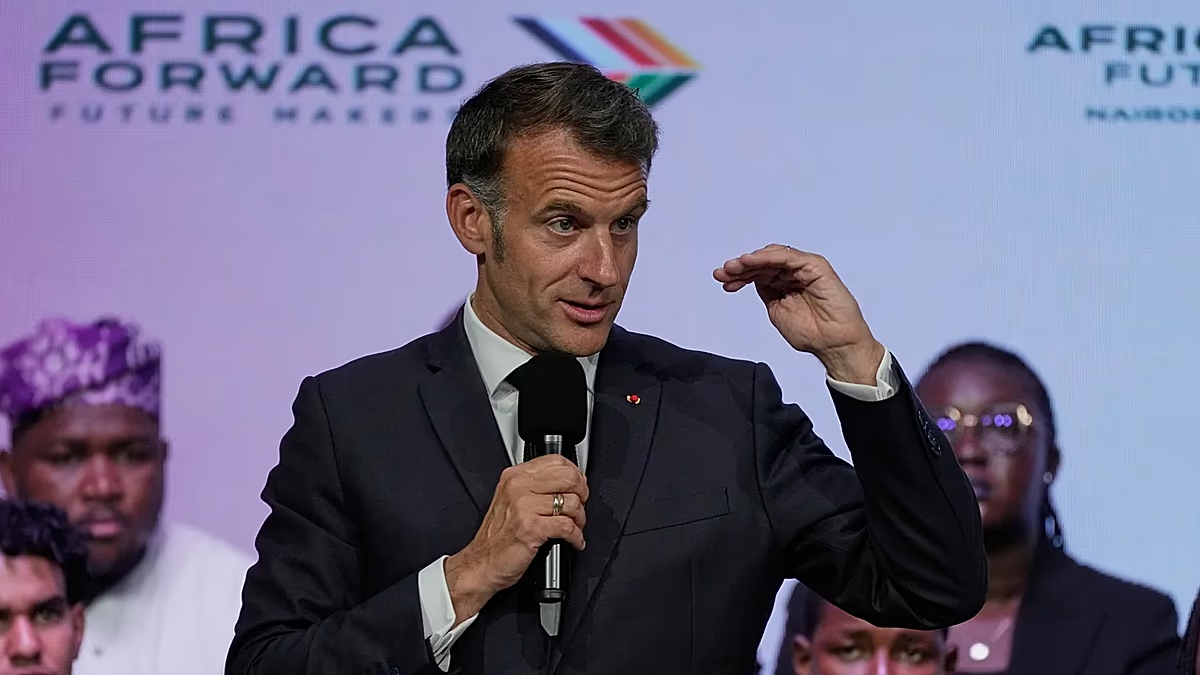
In a landmark address at the University of Nairobi, French President Emmanuel Macron articulated a vision for a fundamentally reshaped relationship between Europe and Africa, moving decisively away from the paradigms of the past. He declared that the continent’s paramount need is no longer aid, but investment—specifically, the kind of strategic capital that builds economic sovereignty and self-sufficiency. Acknowledging a history of European condescension, Macron stated that the era of European leaders lecturing their African counterparts on what they need is conclusively over. This shift, he suggested, is not only a moral imperative but a practical one, as Europe itself no longer possesses the limitless means to sustain an aid-based model. His speech, delivered as he co-hosted an economic summit in Kenya, served as a public cornerstone for his administration’s effort to renew France’s engagement with Africa after years of diplomatic strain with its former colonies.
Confronting History While Rejecting Simplistic Narratives
Macron’s attempt to reset ties involved a nuanced grappling with history. He reiterated his early and strong condemnation of colonialism, a stance he adopted upon taking office in 2017. However, he carefully steered the conversation toward the future by arguing that the colonial era cannot bear sole responsibility for the challenges persisting in Africa today. He called upon African leaders to likewise confront issues of post-independence governance, emphasizing that the decades following liberation carry their own share of accountability. This delicate balance—acknowledging historical trauma while challenging all parties to focus on present-day solutions—formed the philosophical bedrock of his proposed “new era.” It was an appeal for a mature partnership, freed from the endless cycle of blame and moving toward shared, practical objectives.
Positioning Europe as a Stabilizing Partner in a Multipolar World
A key element of Macron’s narrative was a deliberate effort to distinguish Europe’s role from that of other global powers actively engaged in Africa. He defended European nations, including former colonial powers like France and Britain, against the label of “predators of this century.” Instead, he portrayed Europe as a defender of a rules-based international order, multilateralism, and open trade. In implicit and explicit contrast, he pointed to the U.S.-China trade rivalry and, more pointedly, accused China of employing a “predatory logic” in its approach to Africa’s critical minerals and rare earths. By processing these resources exclusively at home, Macron argued, China creates unhealthy dependencies. Europe’s alternative, he proposed, is a “strategy of autonomy” designed to build resilient, independent economic ecosystems for both continents, suggesting a partnership based on mutual strength rather than extraction.
The Practical Pathway: Transforming International Finance
Beyond philosophical framing, Macron identified a concrete mechanism to catalyze this transformative investment: a major overhaul of the international financial system. His central proposal was the creation of a robust system of financial guarantees, orchestrated through multilateral development banks and other institutions, to de-risk and attract massive flows of private capital into African economies. The logic is clear: public funds alone are insufficient, but the perceived risk in many African markets deters private investors. By using strategic public guarantees to shield private capital from the most volatile risks, this model aims to unlock the trillions necessary for infrastructure, green energy, and industrialization. This focus on financial architecture shifted the conversation from vague promises to a specific, actionable policy tool that could fundamentally alter the investment landscape.
Navigating Political Realities: Coups, Troops, and Sovereignty
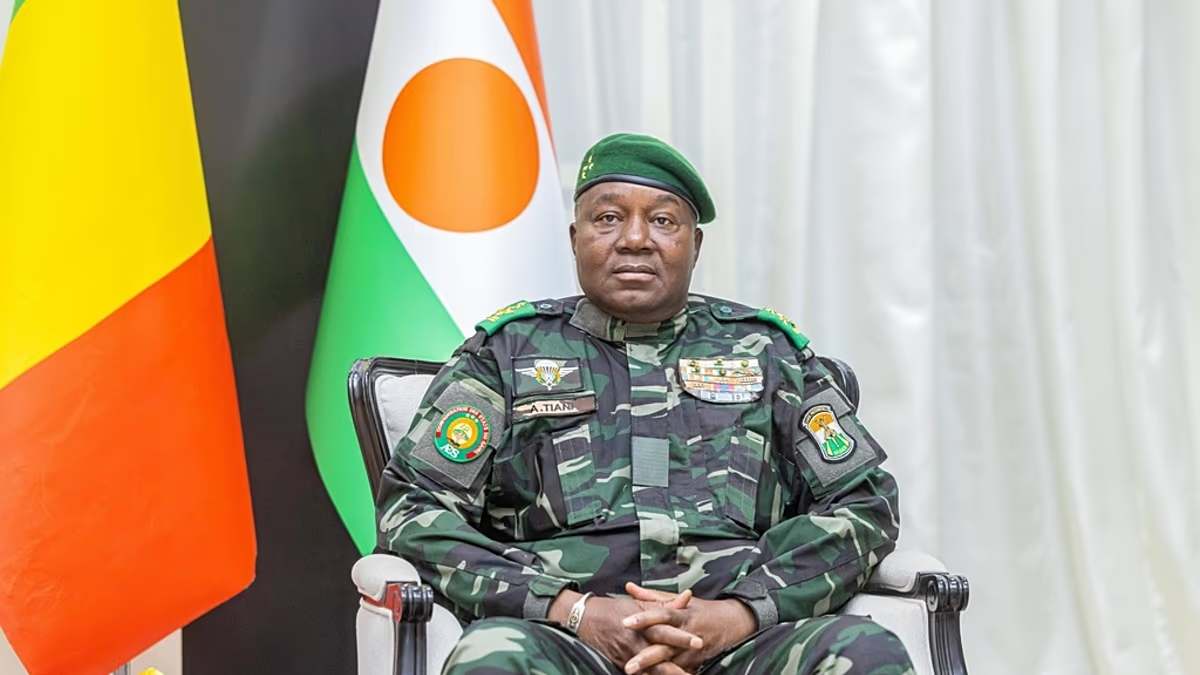
Macron’s vision was tested against the complex and often painful recent reality of France’s military disengagement from the Sahel region. Following coups in Mali, Burkina Faso, and Niger, French troops were withdrawn after years of counter-terrorism operations. Addressing this directly, Macron framed the withdrawals not as a defeat or humiliation, but as a “logical response” to the expressed wishes of the new juntas. He expressed a pragmatic conviction that these states, even under putschist leaders, must be allowed to chart their own course. Yet, he firmly defended the original intent of France’s military presence as a response to legitimate requests from prior governments to combat jihadist threats. Expressing a long-term hope, he predicted that the Sahel would eventually return to democratic governance under leaders who genuinely care for their people, positioning the current turmoil as a painful but temporary detour.
The Summit’s Promise: A Test of Tangible Action
The two-day economic summit in Nairobi, therefore, represented more than just a speech; it was a diplomatic gambit to translate this refined philosophy into tangible agreements. Macron’s rhetoric of partnership, investment, and mutual respect struck a markedly different tone from the paternalism of the past. However, its ultimate success will be judged not by words, but by whether the proposed financial mechanisms materialize, whether European investment follows in significant volume, and whether this “new era” can deliver concrete improvements in African economic sovereignty. The call has been issued: a future where Europe and Africa engage as autonomous partners, building shared prosperity through investment and reformed systems, leaving the dynamics of aid and accusation behind. The arduous work of building that future now begins.