

The Silence in the Sahel: Niger’s Media Crackdown and a Shifting Geopolitical Landscape
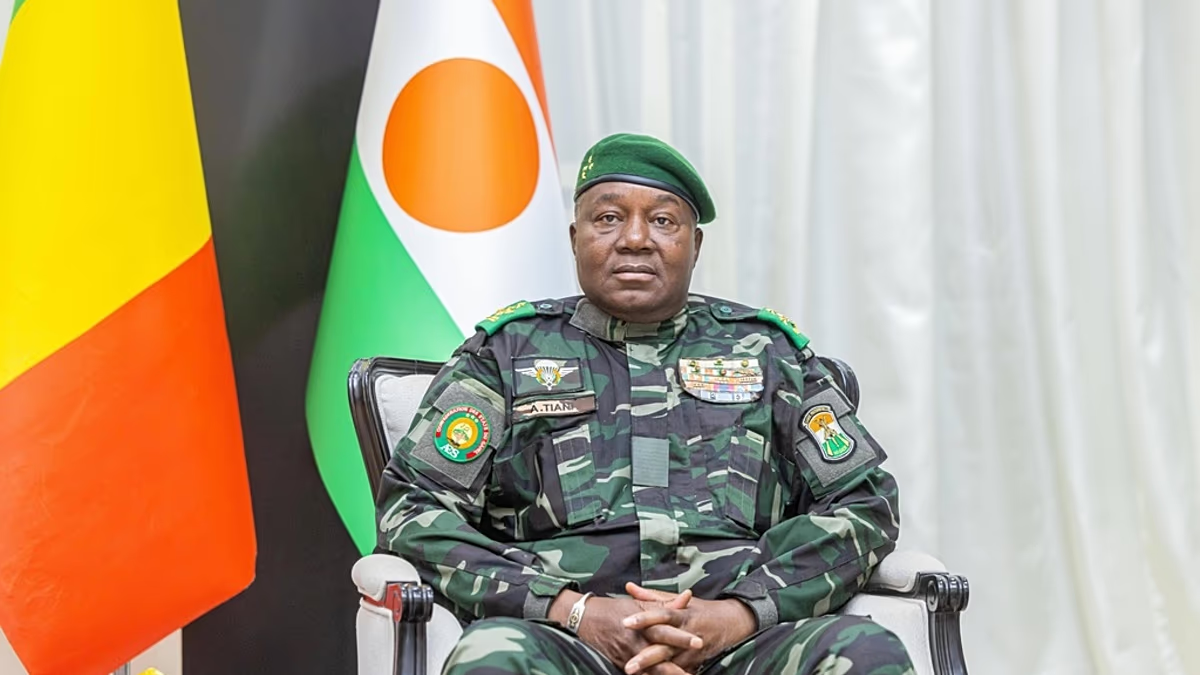
In a move that further isolates its people from international perspectives, Niger’s military junta has suspended nine prominent French media outlets, accusing them of endangering public order and national unity. The immediate ban, announced via state television, targets giants like France 24, Radio France Internationale, and Agence France-Presse, blocking their access through satellite, digital platforms, and mobile apps. This decision is not an isolated incident but the latest step in a systematic crackdown that began after the 2023 coup, which ousted a pro-Western government. For years, these media organizations served as vital sources of news for Nigeriens, offering both local reporting and global context. Now, their sudden silencing underscores the junta’s determination to control the narrative amid growing domestic unrest and international pressure.
A Regional Pattern of Censorship and Sovereignty
Niger’s actions mirror a troubling trend across the Sahel, where military-led governments in Burkina Faso and Mali—allies within the Alliance of Sahel States—have similarly banned French media. Just days earlier, Burkina Faso prohibited TV5 Monde, accusing it of “disinformation” and sympathizing with terrorism in its coverage of jihadist violence. These governments, united by their antipathy toward former colonial powers, justify such bans as defensive measures to protect national sovereignty. However, press freedom advocates like Reporters Without Borders condemn the moves as opaque and politically motivated, aimed at stifling dissent and independent journalism. This regional shift away from Western influence is unfolding against a backdrop of heightened anti-French sentiment, as many citizens view France’s historical role through a lens of exploitation and failed security partnerships.
The Human Cost: Journalists in the Crosshairs
Behind the headlines about media suspensions lies a grim reality for local journalists, who face intimidation, imprisonment, and censorship. In Niger alone, at least six reporters remain detained on charges like “plotting against the state,” including Gazali Abdou and Hassane Zada, who were recently released after months in prison. The UN reported 13 journalist arrests in 2025, highlighting a systematic assault on press freedom. These individuals are not just names on a list; they are fathers, mothers, and community members who risk their safety to inform the public. Their plight reflects a broader climate of fear, where even regional newspapers and international correspondents operate under constant threat. As one Nigerien journalist anonymously shared, “We are now writing in the shadows, knowing any word could be used against us.”
A Geopolitical Pivot: From Paris to Moscow and Beijing
Niger’s media crackdown coincides with a strategic realignment away from Western allies and toward powers like Russia and China. Since the coup, the junta has expelled French troops, denounced “imperialism,” and welcomed Russian military instructors and economic partnerships. This pivot is partly driven by practical concerns—such as combating jihadist insurgents—and partly by a desire for autonomy after decades of French influence. The timing of the latest bans, just before a France-Africa summit in Kenya, sends a clear message: Niger and its AES allies are carving out an independent path. Yet, this shift raises questions about the trade-offs involved. While some citizens celebrate the departure of colonial legacies, others worry about exchanging one form of influence for another, with fewer guarantees for human rights or press freedom.
The Legal and Social Framework: Criminalizing Dissent
To solidify its control, the junta has enacted laws that criminalize free speech under the guise of maintaining order. A 2024 statute punishes the online dissemination of “information likely to disturb public order,” a vague provision that allows authorities to target critics at will. In 2025, the government suspended nearly 3,000 NGOs, accusing them of supporting terrorism—a move that further shrinks civic space. These measures have dire consequences for everyday Nigeriens: families struggle to access reliable news, communities lose vital humanitarian aid, and public discourse grows increasingly polarized. The decline in Niger’s press freedom ranking—plummeting 37 places to 120th globally—illustrates how quickly freedoms can erode. As a local activist noted, “When information becomes a crime, silence becomes the new normal.”
Looking Ahead: The Struggle for Truth and Stability
The silencing of French media is more than a diplomatic rift; it is a symptom of deeper struggles over truth, power, and identity in the Sahel. For Nigeriens, the loss of independent news sources compounds existing challenges—from jihadist violence to economic hardship—making it harder to separate fact from propaganda. International organizations like Amnesty International warn that these restrictions could exacerbate conflict by fostering misinformation. Yet, amid the darkness, resilience endures. Underground networks, diaspora journalists, and brave local reporters continue to share stories, clinging to the belief that transparency is essential for lasting peace. As the world watches this region transform, the fate of Niger’s press freedom will serve as a barometer for its future: one of isolation and repression, or one where diverse voices can contribute to rebuilding a nation.