


The Dawn of a New Era: Péter Magyar’s Historic Ascension
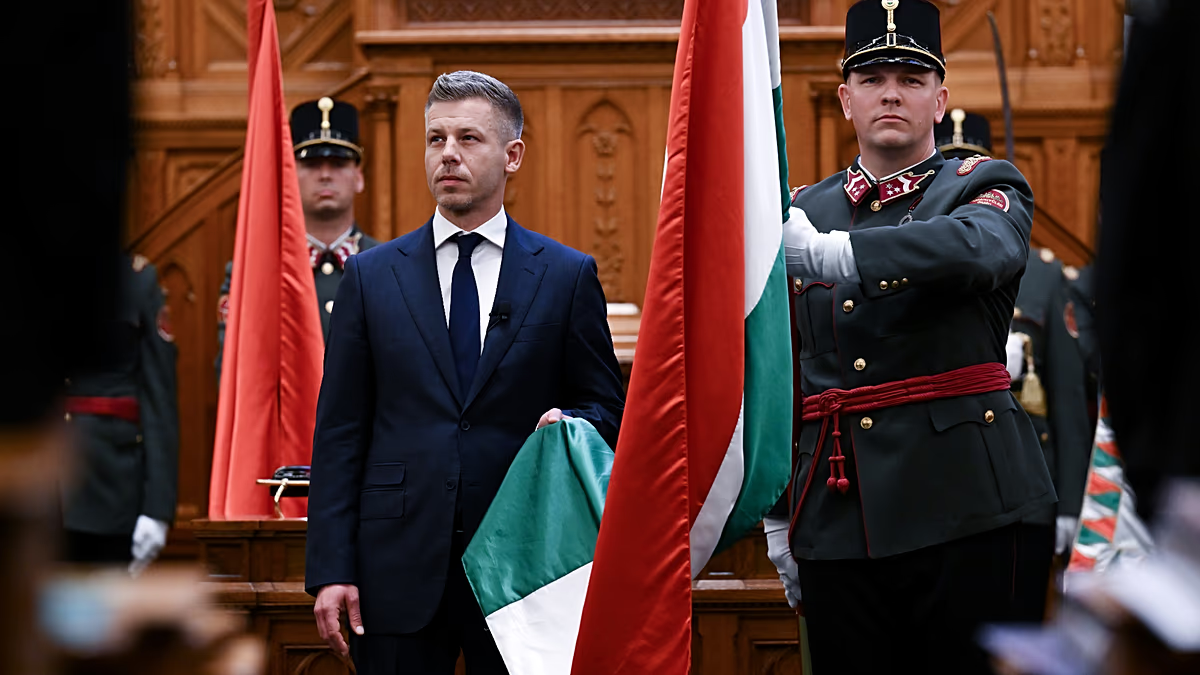
A profound and historic shift has occurred in the heart of Central Europe. On a brisk Saturday morning, within the venerable chambers of the Hungarian National Assembly, Péter Magyar was sworn in as the nation’s new Prime Minister. This moment marked not merely a change in administration, but the definitive conclusion of Viktor Orbán’s sixteen-year rule, a period that deeply shaped Hungary’s political and social landscape. Magyar’s ascent cemented the landslide victory his Tisza party achieved in the April elections, a result that resonated as a clear demand for change from the Hungarian electorate. The ceremonial oath-taking was thus more than a formality; it was the symbolic crossing of a threshold, closing one chapter of history and nervously, yet hopefully, opening another.
A Commanding Mandate for Systemic Change
The scale of the electoral victory underscores the magnitude of the public’s expectation. The Tisza party secured a commanding 141 seats in the 199-seat parliament, an outright majority that provides a solid foundation for governance. The formerly dominant Fidesz party of Viktor Orbán was reduced to 44 seats, with its former ally, the KDNP, holding 8, and the Mi Hazánk party 6. In the inaugural parliamentary session, Magyar’s appointment was formally confirmed with 140 votes in favour, signaling strong support within the new assembly itself. Immediately following his oath, the new Prime Minister articulated the weight of this mandate. He framed it not as a simple task of governing, but as a mission to lead “a new chapter in the country’s history,” aiming to change “not only the government but the system as well.” His declaration, “I will not rule over Hungary, I will serve my homeland,” set a tone of service contrasting with the often perceived authoritarian style of his predecessor, while his call for reconciliation and justice laid out the philosophical pillars of his approach.
Immediate Actions and a Stark Departure from Tradition
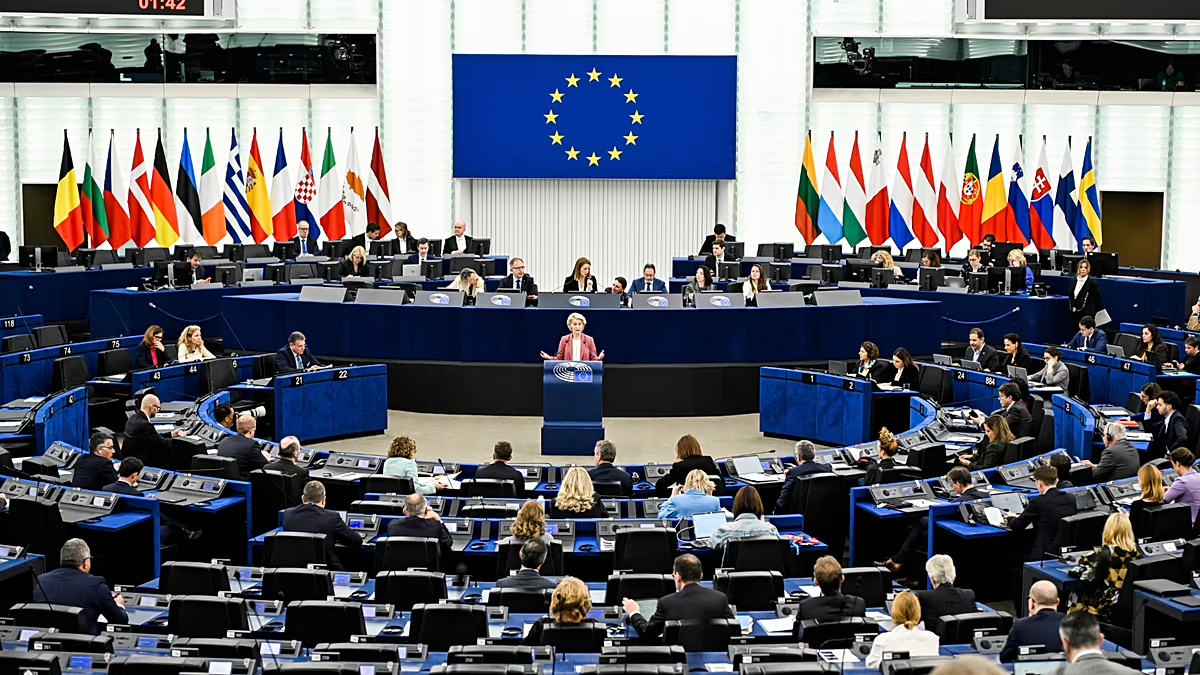
Magyar moved swiftly from philosophy to direct action, making a bold and unprecedented demand. He publicly called on high public office holders who were “servants of the previous system” to resign, setting a deadline of 31 May, and explicitly stated that President Tamás Sulyok should be the first to do so. This immediate challenge to the entrenched establishment highlights his intent for a clean break. The day itself was marked by a stark departure from tradition. Breaking 36 years of protocol, former Prime Minister Viktor Orbán was neither present at the session nor delivered a customary speech, a silent but potent acknowledgment of his diminished role. Furthermore, the new parliament acted with remarkable speed. Ágnes Forsthoffer, Vice President of the Tisza Party, was elected as the new Speaker and promptly announced her first symbolic act: the reinstalling of the European Union flag on the parliament building, ending its roughly twelve-year absence—a visual and political reaffirmation of Hungary’s commitment to the European community.
Transforming Protocol into Popular Celebration
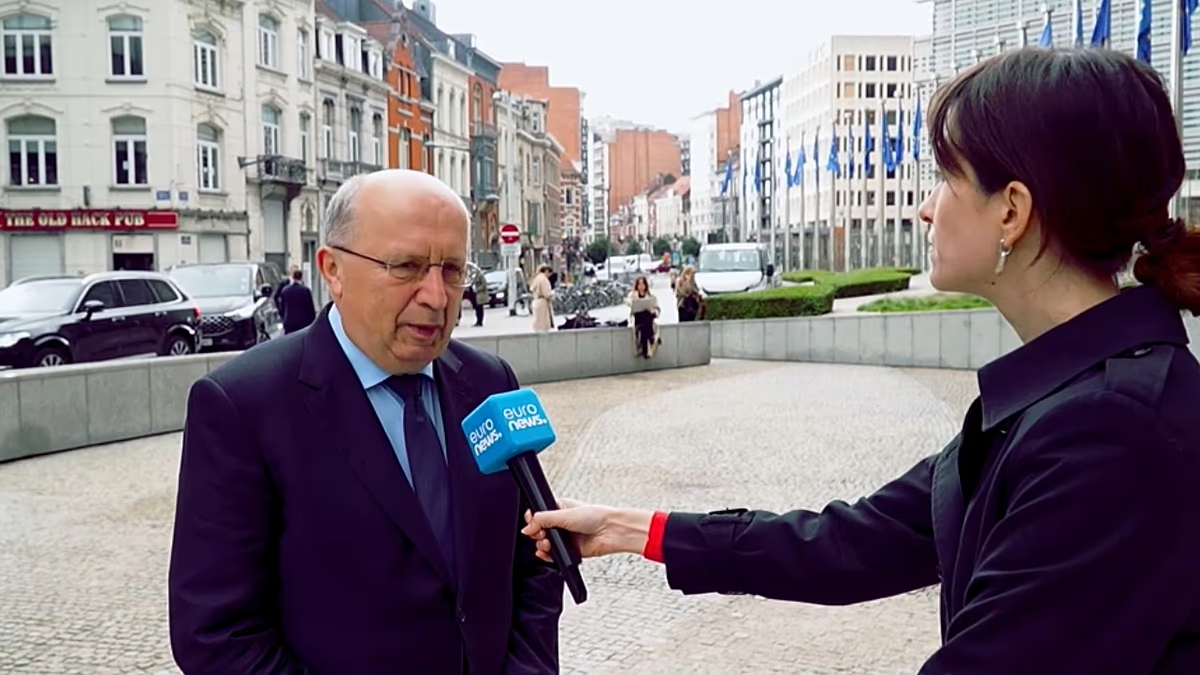
The political events were seamlessly woven into a public celebration, reflecting a conscious effort to reconnect the government with the people. The Tisza Party organized an all-day “system-changing people’s festival” on Kossuth Square in front of the parliament. By early afternoon, the square was filled with citizens, transforming a day of political procedure into a shared, joyous community experience. As noted by Euronews’ correspondent Rita Kónya, this approach broke with tradition in another practical way: by electing the Prime Minister during the inaugural sitting itself, rather than days later, the transition period was shortened, enabling a quicker formation of the new government. This fusion of efficient protocol with public festivity served to humanize the momentous change, making it feel less like a distant bureaucratic shift and more like a national occasion owned by the populace.
The Road Ahead: Reconciliation, Justice, and Service
The path Magyar has outlined is ambitious and fraught with complexity. His core message balanced the promise of a new beginning with the sober necessities of reconciliation and justice. He recognizes that a nation cannot heal and move forward without addressing the wounds and grievances of the past system. His call for the resignation of officials linked to that system is the first concrete step in that process, aiming to clear space for a new administrative culture built on service rather than rule. The reinstalled EU flag is another step, signaling a reorientation in foreign policy and international relations. However, these are initial gestures. The true challenge lies in the months and years ahead: translating the electoral mandate and the celebratory momentum into tangible policies that improve lives, restore institutional integrity, and redefine Hungary’s place both domestically and within Europe.
A Nation at a Crossroads
Hungary now stands at a significant crossroads. The swearing-in of Péter Magyar represents the culmination of a powerful electoral rejection of a long-standing political order. It is a moment charged with hope for systemic renewal, a desire for greater integration with Europe, and a demand for a government that serves. Yet, it is also a moment of immense challenge. The new Prime Minister has set a high bar, promising not just new policies but a new system of governance rooted in service, justice, and reconciliation. The celebrations in front of parliament captured the optimism of this fresh start. How this optimism will be translated into the hard work of legislation, reform, and national healing is the unanswered question that now defines Hungary’s future. The sixteen-year era of Viktor Orbán has closed; the era of Péter Magyar has begun, with its ultimate character and success yet to be written by the actions of the new government and the response of the Hungarian people.