




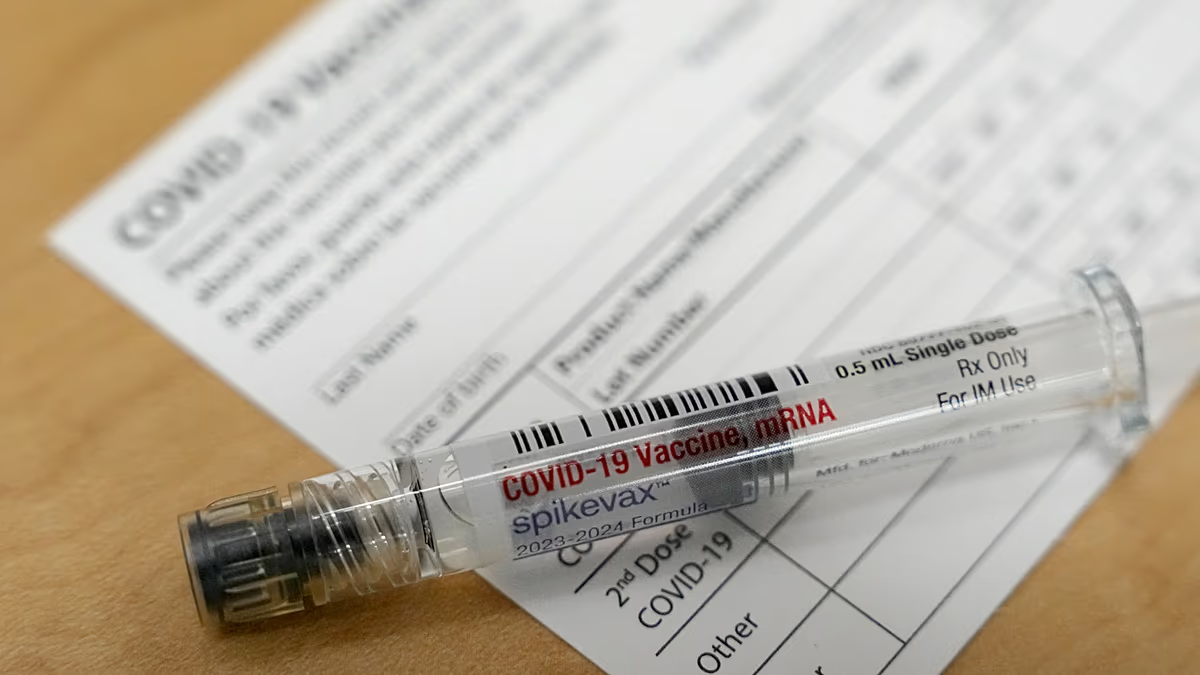
In the spring of 2026, a concerning report emerged from The New York Times, casting a shadow over the integrity of American public health science. The report, citing a senior official within the U.S. Department of Health and Human Services (HHS), revealed that the Food and Drug Administration (FDA) had blocked the publication of several government-funded studies affirming vaccine safety. This action was not a minor bureaucratic delay but a direct intervention involving two major, taxpayer-funded research projects. These studies had meticulously analyzed the medical records of millions of patients to assess the safety of Covid-19 vaccines, ultimately concluding that serious side effects were extremely rare. The decision to halt their publication, after scientific journals had already accepted them, sent shockwaves through medical and research communities, raising urgent questions about political interference in the sanctity of scientific process.
The official response from HHS spokesperson Andrew Nixon framed the move as a matter of scientific rigor. In an email, Nixon stated the studies were withdrawn because their authors had drawn “general conclusions that are not supported by the underlying data.” He emphasized that the FDA’s action was taken to “protect the integrity of the scientific process.” However, to many independent observers and scientists familiar with the peer-review system, this justification rang hollow. The implication that high-profile, data-intensive studies could pass rigorous journal review only to be deemed unsupportable by political appointees at the last minute suggested a pretext. The timing and nature of the intervention seemed less about data and more about aligning government messaging with a growing political agenda skeptical of established vaccine science.
This agenda had been building steadily within the Trump administration, which saw a marked rise in the influence of anti-vaccine rhetoric following the Covid-19 pandemic. During his 2024 campaign, President Trump pledged a prominent role for the prominent anti-vaccine activist Robert F. Kennedy Jr., a figure known for promoting long-debunked claims linking vaccines to autism and endorsing conspiracy theories like “chemtrails.” True to his word, following his electoral victory, Trump nominated Kennedy to the pivotal role of Secretary of Health and Human Services. The nomination ignited fierce opposition, with over 75 Nobel laureates and approximately 17,000 doctors publicly condemning it, citing Kennedy’s rejection of scientific consensus and his propagation of medical misinformation as grave threats to public health.
Despite this unprecedented outcry from the global scientific community, Kennedy’s nomination was narrowly confirmed by the U.S. Senate in a starkly partisan vote. Once installed, he embarked on a swift and sweeping transformation of U.S. vaccine policy that critics described as an ideological purge of public health institutions. In early 2025, he forced the Centers for Disease Control and Prevention (CDC) to cease its public campaigns promoting influenza vaccination. Subsequently, an advisory committee he largely stocked with like-minded appointees voted to rescind the CDC’s longstanding recommendation that all newborns receive the hepatitis B vaccine—a critical tool in preventing a potentially fatal liver disease.
The most dramatic and norm-shattering move came when Kennedy dismissed the entire membership of the CDC’s Advisory Committee on Immunization Practices (ACIP). This independent body of external experts has for decades been the gold standard for developing non-political, evidence-based vaccine recommendations in the United States. Its wholesale dismissal was perceived not as a reform but as an outright seizure of scientific authority. Dr. Georges Benjamin, executive director of the American Public Health Association, captured the profound alarm within the health community, calling the action a “coup against health institutions.” He warned, “This is not how democracies work, and it is not good for the health of the nation,” highlighting the dangerous politicization of health decision-making.
The convergence of these events—the suppression of supportive vaccine safety studies and the systematic dismantling of independent scientific advisory structures under Kennedy’s leadership—paints a deeply troubling picture. It suggests a coordinated effort to undermine public trust in vaccines by marginalizing science and empowering misinformation. The consequences extend far beyond political controversy; they risk eroding decades of public health progress, increasing vulnerability to preventable diseases, and setting a dangerous precedent where ideology dictates medical fact. The integrity of the nation’s health infrastructure, once a global beacon, now faces a fundamental test of its resilience against the subordination of science to political dogma.