



A significant portion of the British electorate holds a decidedly negative view of the impact of Donald Trump’s return to the White House on the United Kingdom, according to a recent poll. The survey, conducted by Deltapoll, reveals a stark landscape of public opinion, with a commanding 58% of voters believing Trump’s second presidency has been detrimental to British interests. A mere 11% perceived any benefit, underscoring a profound and widespread scepticism towards the current American administration’s global role and its implications for the UK. This sentiment forms a crucial backdrop to the public’s assessment of Prime Minister Keir Starmer’s diplomatic approach, setting the stage for a clear demand from voters for a more robust stance in dealing with the transatlantic ally.
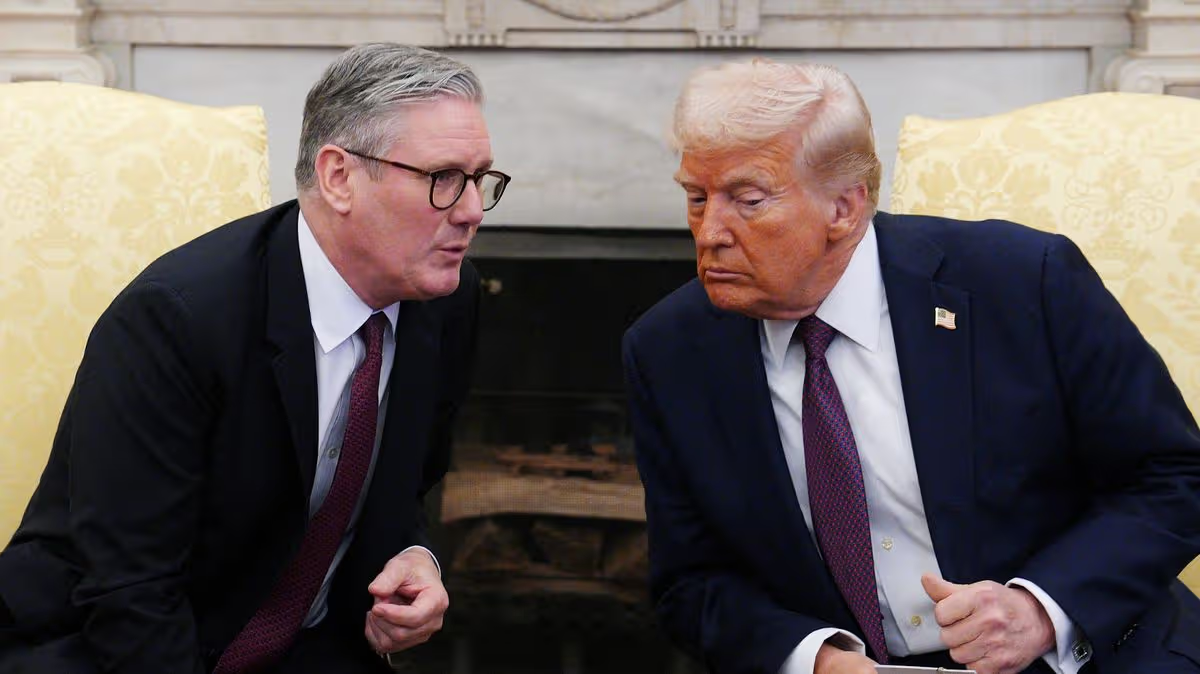
Consequently, the British public is delivering stern advice to Prime Minister Starmer regarding his strategy towards the United States. The largest share of those polled, 41%, assert that the Labour leader should adopt a more critical posture towards President Trump. Notably, more than half within this group believe he should be significantly more critical. This public sentiment stands in contrast to the surprisingly cordial relations that have characterised the first year of Starmer’s premiership alongside Trump’s term. Only 16% of voters advocated for a softer approach, while less than a quarter felt the Prime Minister had struck the correct balance. This data indicates a clear electoral pressure for a recalibration of tone and policy, suggesting the public views steadfastness as a virtue in this particular international relationship.
This call for greater firmness appears to be validated, in the eyes of many, by Starmer’s most significant rupture with Trump to date: his refusal to involve British military assets in the US President’s campaign in the Middle East. The Prime Minister’s decision to deny the use of UK soil as a launchpad for bombing raids ignited a diplomatic spat, prompting Trump’s dismissive jab that Starmer was “no Winston Churchill.” Ironically, this very act of defiance was previously identified by voters as one of Starmer’s most successful moves since entering Downing Street, demonstrating that principled opposition to Trump’s foreign policy initiatives resonates powerfully with the British public, even amidst an otherwise careful diplomatic rapport.
Despite the clear directive for tougher criticism, the poll reveals a nuanced public response to the Prime Minister’s handling of the relationship. Nearly half of respondents (43%) stated that their overall opinion of Keir Starmer remained unchanged by his stance on Trump and the contentious issue of the Iran war. This suggests that while voters desire a stronger line, they may compartmentalise foreign policy within their broader assessment of his leadership. However, any complacency is countered by Trump’s own pointed political advice, issued during the King’s recent visit to Washington. The President suggested Starmer could recover politically only by dramatically reversing key Labour policies, specifically by re-opening the North Sea for oil drilling and adopting stringent immigration controls—demands that strike at the heart of the governing party’s agenda.
The methodology of the survey, which interviewed over 3,300 British adults with robust weighting to ensure national representativeness, lends considerable weight to these findings. They paint a picture of an electorate that is acutely aware of the international landscape and holds defined expectations for its government’s conduct within it. The British public, it seems, is less interested in diplomatic niceties and more concerned with clear, critical defence of national interests and values when they perceive them to be at odds with the direction of a key ally.
In conclusion, the poll delivers a dual message to the Prime Minister. First, the British people are overwhelmingly convinced that Trump’s presidency is a negative force for the UK. Second, they explicitly mandate a tougher, more critical approach from their own leader in response. While Starmer’s existing defiance on military matters has won approval, the overarching public verdict is that this needs to be the rule, not the exception. As Trump continues to offer unsolicited and politically toxic advice on domestic UK policy, the pressure on Starmer will be to navigate this high-stakes relationship with a firmness that aligns with the clear will of the voters, without sacrificing the UK’s essential diplomatic channels. The path forward demands a careful yet courageous balance, tilted decisively towards British sovereignty and public sentiment.