


The Changing Face of Our High Streets: Cancer Research UK’s Difficult Transition
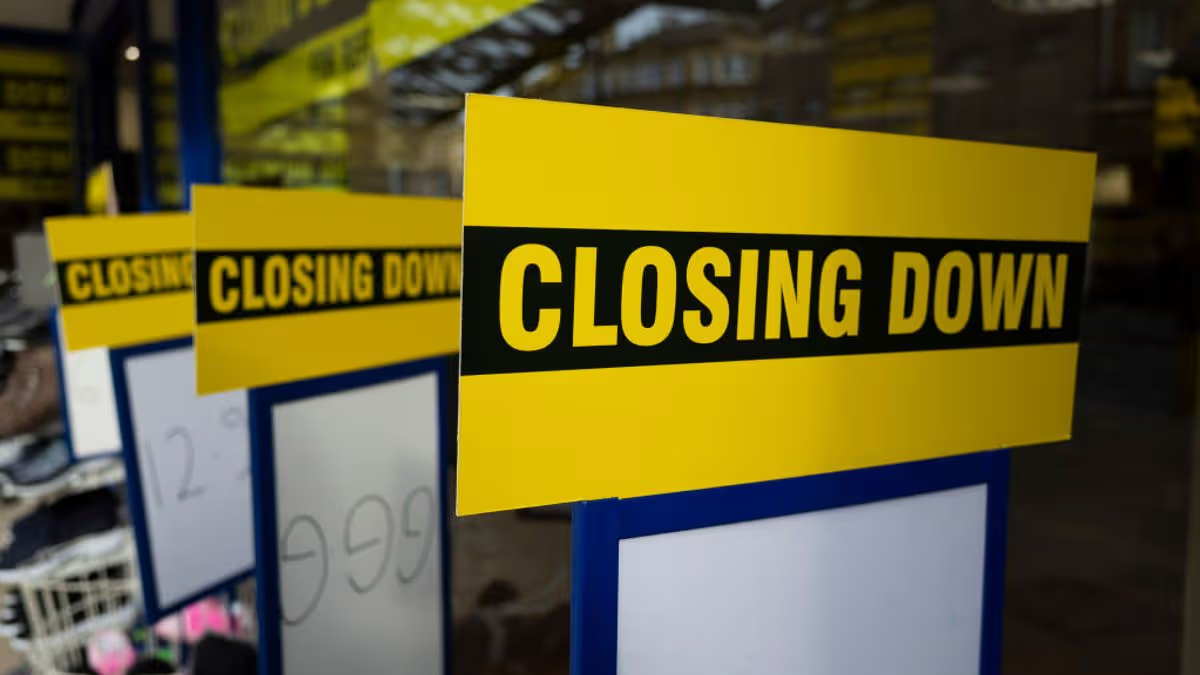
A profound transformation is unfolding across the British high street, marked not by grand openings but by quiet closures. One of the nation’s most trusted and visible charities, Cancer Research UK, has made the difficult decision to close 190 of its shops by 2027, with an initial wave of 90 closures set to be completed this month. Since its first shop opened in 1982, the charity’s distinctive storefronts have become fixtures in our communities, places where donating old clothes or buying a second-hand book felt like a direct contribution to a vital cause. The announcement, therefore, feels like more than a retail contraction; it signifies the end of an era for charitable giving and community engagement, driven by a perfect storm of economic pressures and shifting consumer habits that even the most beloved institutions cannot weather unchanged.
The reasons behind this large-scale restructuring are multifaceted and reflect the broader challenges crippling the retail sector. Cancer Research UK has cited relentless rises in operational costs, from energy bills to business rates, exacerbated by persistent inflation, which have squeezed profitability to breaking point. Simultaneously, the charity points to a fundamental shift in how people shop, with declining footfall on traditional high streets and intense competition from online resale platforms like Vinted and Depop. These digital marketplaces have captured the public’s desire for pre-owned bargains, often in a more convenient format. In a telling move, the charity also closed its own online marketplace earlier this year, signalling a strategic retreat from the digital resale arena entirely. This is not a failure of one organisation but a response to what it calls an “evolving external and retail environment,” a landscape where the old models of charitable retail are becoming unsustainable.
While the scale of the closures is significant, affecting communities from Aberdeen to Yeovil, this is a strategic restructuring rather than a full retreat. The plan is to emerge with a leaner, more resilient network of 320 higher-performing shops. Furthermore, the charity is pivoting towards an out-of-town retail model, with plans to open 12 new “superstores.” These larger, value-focused spaces are aimed at meeting modern shopping preferences for convenience and destination visits. The financial imperative is clear: the charity states that without these painful closures, many more shops would become unprofitable. The restructured operation is projected to generate an additional £12.4 million for life-saving research over the next five years, ensuring that every pound saved from the struggling shops is redirected to its core mission.
The human impact of these closures cannot be overstated. Chief Executive Michelle Mitchell has openly acknowledged the profound effect on dedicated staff, the army of volunteers who are the lifeblood of these shops, and the local communities that lose a familiar and purposeful hub. For many volunteers, the shop provided structure, social connection, and a profound sense of contributing to a fight that touches almost every family. The closure of a local Cancer Research UK shop leaves a void that extends beyond the physical premises; it diminishes a point of communal solidarity and a visible, everyday reminder of the fight against cancer.
Despite this contraction, Cancer Research UK emphatically states its commitment to maintaining a prominent high street presence. Its shops have been phenomenally successful fundraisers, delivering over £225 million to the charity’s work in the past decade alone. This retail contribution has directly funded breakthroughs that have improved survival rates for millions. The charity remains on track to spend at least £1.5 billion on research between 2021/22 and 2025/26, with £403 million invested in the last reported year. The difficult choice to close shops is framed as a necessary step to protect this immense research budget, ensuring that the ultimate goal—beating cancer—remains firmly in focus and adequately funded.
Ultimately, the story of Cancer Research UK’s shop closures is a microcosm of the challenges facing our high streets and traditional forms of civic participation. It illustrates how economic realities and new technologies are reshaping even the most altruistic sectors. As we witness these familiar storefronts disappear, it prompts a broader reflection on how communities will connect with and support charitable causes in the future. The charity’s path forward—a smaller, more efficient physical network supplemented by new retail formats—may chart a course for others to follow. It is a stark reminder that adaptability is essential for survival, and that sometimes, preserving the mission for the future requires making heart-wrenching changes in the present.