
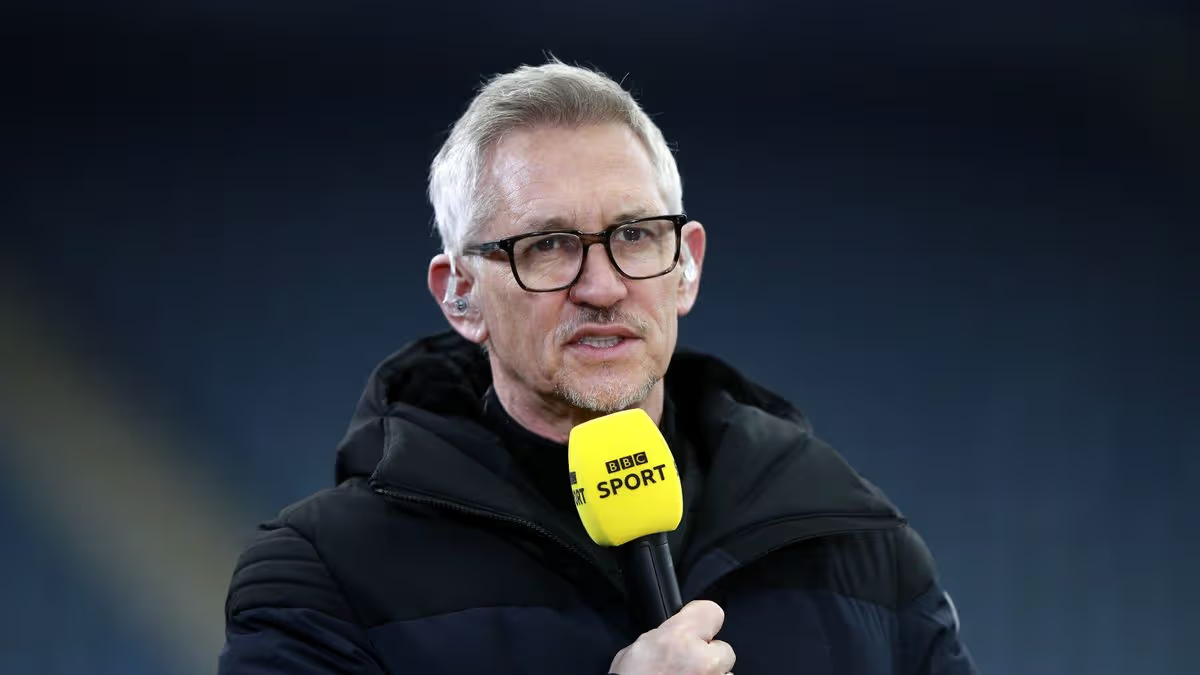


Nearly a year has passed since Gary Lineker concluded his long-standing tenure with the BBC and Match of the Day. The legendary football pundit has remained in the public eye and deeply engaged with the sport, though his perspective has shifted. Recently, Lineker directed pointed criticism toward his former employer regarding its plans for the 2026 FIFA World Cup coverage. The BBC, in a cost-cutting measure, intends to operate its primary coverage from its base in Salford, Greater Manchester, with pundits and presenters appearing from a “green box” studio rather than being on-site in North America. Only from the quarter-finals onward would personnel be dispatched to the host nations—the United States, Mexico, and Canada. In contrast, Lineker, speaking at the launch of Netflix’s Sports Club, highlighted his own upcoming role, noting he will be broadcasting from New York City overlooking Times Square with live guests. This juxtaposition underscores a broader debate in sports broadcasting about authenticity, viewer engagement, and the value of presence at major events.
Lineker’s departure from the BBC last year marked the end of a 26-year association. While he had already planned to step back from Match of the Day, his exit was accelerated by controversy. He faced scrutiny after sharing a video online that contained a rat emoji, a symbol historically used in anti-Semitic tropes. Lineker promptly apologized, stating he had not seen the emoji before sharing and would never knowingly promote antisemitism, acknowledging his mistake and the upset caused. He concluded that stepping away was the responsible course, a decision mutually agreed upon with BBC Director-General Tim Davie, who thanked Lineker for his immense contribution to the corporation’s sports journalism. This episode highlighted the intense scrutiny public figures face on social media and the fine line between personal expression and professional accountability.
Despite the high-profile exit, Lineker has not stepped away from the limelight. He swiftly announced a new venture with ITV: hosting a game show titled The Box, scheduled for 2026. The program promises a unique format where celebrity contestants are placed in yellow boxes and transported to unknown locations to face various challenges. Lineker expressed excitement about the role, drawing a playful parallel to his footballing days, stating he has always felt at home “in the box” on the pitch. This move into entertainment television demonstrates his versatility and enduring appeal beyond sports punditry, showcasing a willingness to embrace new challenges in broadcasting.
Lineker’s primary focus, however, remains firmly on football. He continues to co-host the highly popular podcast The Rest Is Football alongside former colleagues Alan Shearer and Micah Richards. The podcast’s success was recently cemented by a lucrative deal with Netflix, reportedly worth around £14 million, which will see the trio produce a daily live show throughout the 2026 World Cup from North America. This venture directly contrasts the BBC’s remote coverage plan, positioning Lineker and his co-hosts at the heart of the action. Lineker emphasized their approach as fans first, committed to honest, sometimes blunt analysis—a philosophy he illustrated by referencing his past criticism of England’s performances. This commitment to candid commentary continues to define his post-BBC brand.
The transition over the past year reflects a significant shift in the sports media landscape. Lineker’s criticism of the BBC’s remote broadcasting plan touches on a larger industry tension between budgetary constraints and the desire for immersive, authentic coverage. Audiences increasingly expect the atmosphere and immediacy that only on-location reporting can provide. By securing a deal with Netflix to broadcast from the World Cup host cities, Lineker and his team are betting on this very premise. His activities underscore how top-tier talent can leverage digital platforms and streaming services to reach global audiences directly, outside traditional broadcast structures.
Looking ahead, Gary Lineker’s career exemplifies adaptation and resilience. From a controversial departure to forging new paths in entertainment and consolidating his position in digital sports media, he has maintained his relevance and influence. His comments on the BBC’s 2026 plans are more than mere critique; they represent a veteran broadcaster’s advocacy for the craft he helped define. As he prepares for the World Cup from New York, flanked by Shearer and Richards, Lineker remains a central, vocal figure in football culture, proving that even after leaving one of broadcasting’s most iconic chairs, the game—and the conversation around it—continues to be his home.