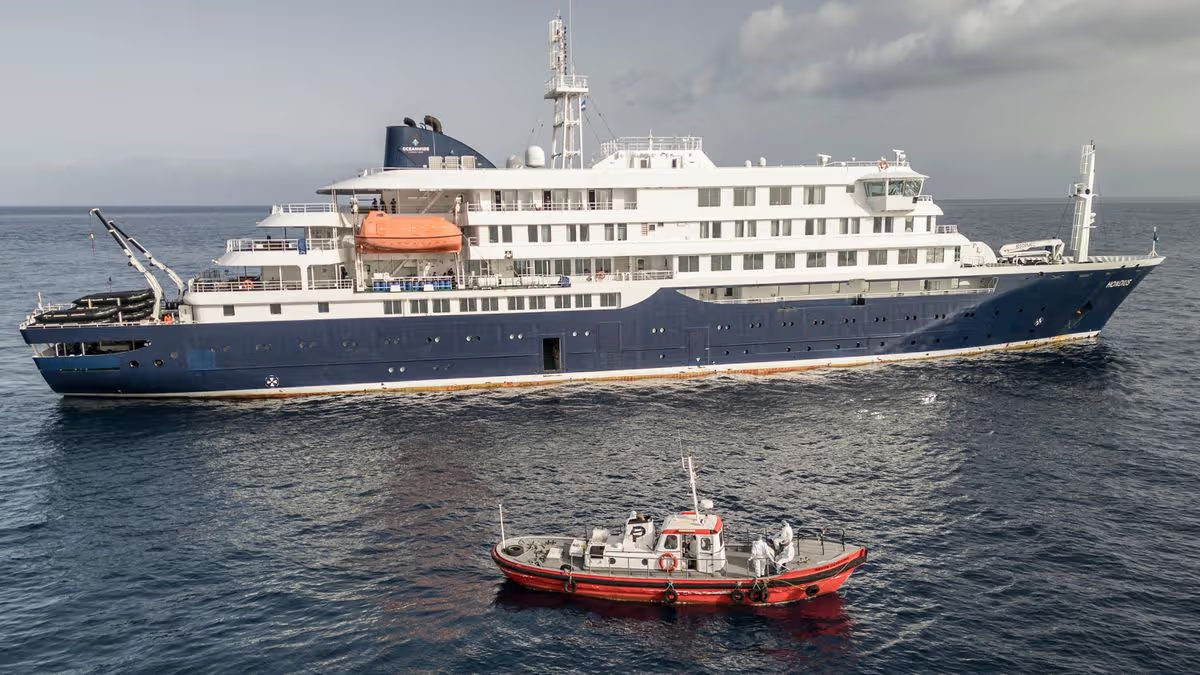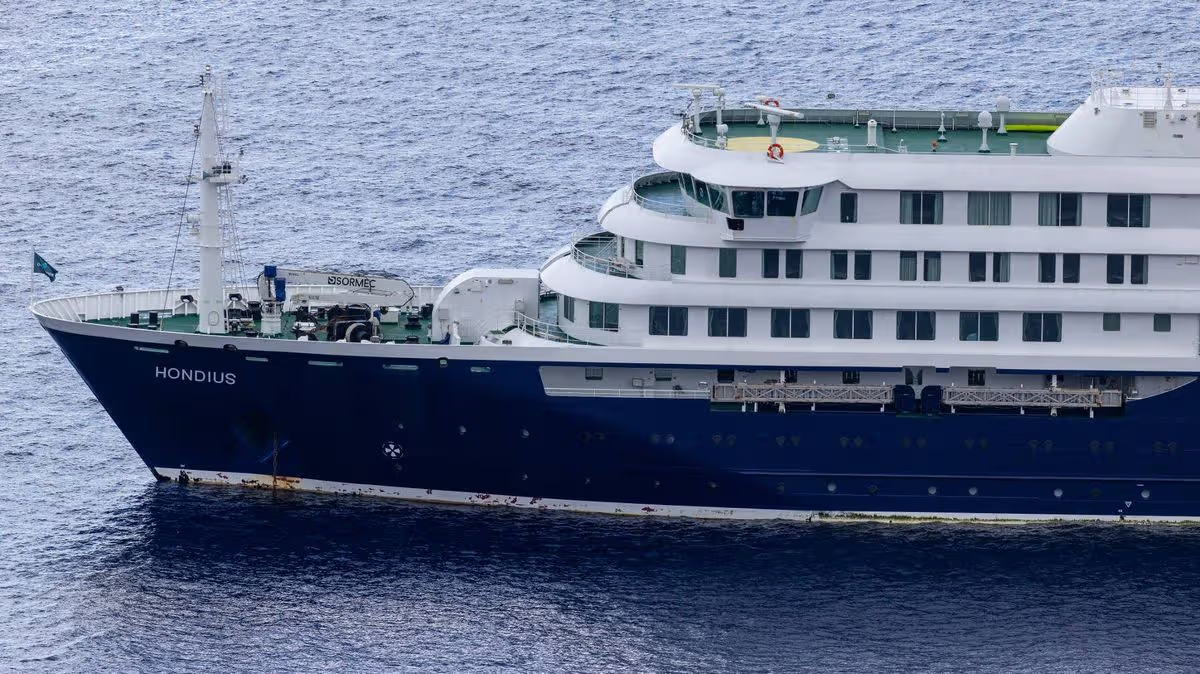



The unfolding situation aboard the MV Hondius cruise ship, now linked to a deadly hantavirus outbreak, has led to a complex international response to repatriate passengers and contain the rare disease. A third British national is now suspected of having contracted the virus, connected to the ship’s outbreak. This individual had stayed on Tristan da Cunha, a remote Atlantic island where the vessel made a stop in mid-April. The Dutch-flagged expedition ship, carrying approximately 140 passengers and crew, is currently en route to the Canary Islands, where it is expected to dock under strict isolation protocols. This development underscores the global reach and logistical challenges of managing a health crisis originating in the remote South Atlantic, now involving governments across Europe and the Americas.
In preparation for the return of the remaining twenty-two British nationals aboard the vessel, the UK Government has chartered a special flight equipped with medical supplies, including testing kits and oxygen, as a precautionary measure. These passengers will be required to self-isolate upon their return to the UK, either at home or in provided accommodation. A government spokesperson confirmed continuous consular contact, providing daily updates to those still on the ship. This organised repatriation effort highlights the careful planning underway to ensure a safe return, even as officials stress that none of the remaining Britons are currently showing symptoms. Similarly, the United States is arranging a flight for its seventeen citizens onboard, while two Irish passengers are reported to be safe and well.
The response in the Canary Islands, the ship’s designated port, will be one of absolute containment. Spanish emergency services head, Virginia Barcones, has assured the local population that the vessel will be held in a completely isolated and cordoned-off area, with no possibility of contact with the community. This firm stance is crucial for public reassurance, as the ship heads towards a populated region. The global health community, including the World Health Organization (WHO), has been actively monitoring the situation. WHO spokesman Christian Lindmeier has emphasized that the overall public health risk remains low, differentiating this outbreak from the COVID-19 pandemic. To date, five confirmed cases of hantavirus have been linked to the ship, including one of the three passengers who have tragically died.
The origins of the outbreak are believed to trace back to rats in Argentina during a bird-watching excursion in April. Hantavirus, which is typically spread to humans through inhalation of contaminated rodent droppings, is not usually easily transmitted between people. However, the specific Andes virus strain implicated in this outbreak may, in rare cases, spread from person to person. The timeline reveals a critical challenge: the virus was not confirmed in a passenger until May 2, nearly two weeks after the first death onboard and after a group of 29 guests from various nations—including seven Britons—had already disembarked at St. Helena on April 24. This has triggered extensive international contact tracing across four continents for those who left the ship earlier in the voyage.
One of the most concerning episodes in this event involved commercial air travel. A Dutch woman, whose husband died on the cruise ship, was evacuated on a KLM flight from Johannesburg to Amsterdam on April 25 but became too ill to continue and was removed in Johannesburg, where she later died. A flight attendant on that plane subsequently fell ill and was isolated, causing significant alarm. However, testing confirmed the attendant did not have hantavirus. The Dutch public health service is now conducting contact tracing for passengers who may have been exposed before the ill woman disembarked. This incident illustrates the potential for such outbreaks to ripple into global transport networks, even as initial fears subsided with the negative test result.
Amidst this response, individual stories highlight the human dimension of the crisis. British expedition guide Martin Anstee, 56, was among those evacuated to the Netherlands for medical care and has reported being “fine.” Other British passengers who disembarked earlier are voluntarily self-isolating at home for an extended period as a precaution, despite having no symptoms. The operator, Oceanwide Expeditions, and health authorities worldwide continue to monitor all involved. The situation aboard the MV Hondius serves as a stark reminder of the unpredictable nature of zoonotic diseases and the intricate international cooperation required to manage their fallout, even when the direct risk to the wider public is assessed as low.