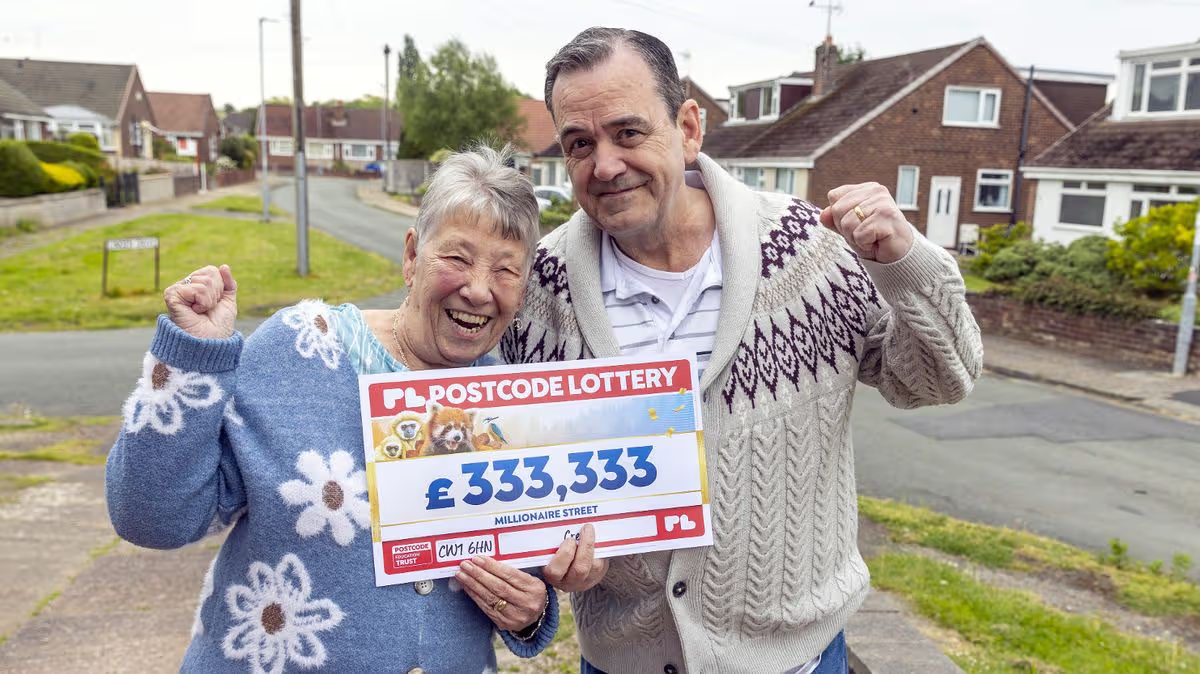


In a twist of fate that seems plucked from a storybook, 80-year-old Nancy Barkley of Crewe has won a life-changing sum on the Postcode Lottery, taking home a third of a £1 million prize. For Nancy and her husband Colin, this means the dream of owning their own bungalow, after years of renting, is finally within reach. Yet, amid the joy and disbelief, Nancy’s thoughts instantly turned to a profound and painful chapter from her past—the memory of her brother, David Whitby, a victim of the infamous 1963 Great Train Robbery. For her, this windfall is more than just financial security; it is an opportunity to ensure her brother’s story is remembered not as a footnote to a sensational crime, but as a life of dignity that was tragically cut short.
The shadow of the Great Train Robbery has loomed large over Nancy’s life for more than six decades. On that August night, her 25-year-old brother David was working as a fireman aboard the targeted Royal Mail train. When the gang tampered with the signals, David went to investigate, unknowingly walking into the arms of the robbers. He was assaulted, handcuffed to the train driver, Jack Mills, and forced to witness Mills being brutally beaten. While the robbers, like Ronnie Biggs, became notorious anti-heroes glamorised in films and folklore, the victims were largely forgotten. Both David and Jack Mills died within a decade of the robbery, their deaths widely believed by their families to be hastened by the physical and psychological trauma of that night.
For years, Nancy harboured a quiet resentment towards the narrative that celebrated the criminals. “They spent 50 years glamourising them,” she reflects, recalling how the cultural focus was always “Ronnie Biggs this and Ronnie Biggs that.” The real human cost—the shattered health of two ordinary railwaymen—was overlooked. It was only through the dedicated efforts of railway historians and community advocates that David Whitby and Jack Mills finally received public recognition. Memorial plaques were installed at Crewe Station, and local roads were named in their honour, small but significant gestures that meant the world to Nancy. Every time she passes “David Whitby Way,” she offers a silent greeting to her brother.
Now, this lottery win feels like a new chapter of recognition and healing. Nancy and Colin, both in their later years and grappling with health challenges, see the prize as a miraculous gift. Nancy recently overcame a battle with breast cancer, an ordeal that left her hospitalised and frail. The security that comes with this financial blessing means not only a stable home but also peace of mind and the ability to support their close-knit family—four daughters, six grandchildren, and two great-grandchildren. Colin, with a touch of humour, admits he put the ticket in Nancy’s name believing she was the luckier of the two—a belief this win has spectacularly confirmed.
The couple are determined to remain grounded despite their new fortune. Self-described as simple people who enjoy modest lunches and small trips, they have no plans for a lavish lifestyle. Their history hints at a penchant for rare, wonderful luck—back in 1995, Colin won a luxury cruise, their first-ever trip abroad—but their values have stayed constant. The true richness for them lies in family and stability. This win, arriving in a month packed with family birthdays, feels like a beacon of light and a turn in their fortunes after difficult years.
Ultimately, Nancy Barkley’s story is one of resilience, memory, and quiet justice. The lottery cheque is not just a ticket to a new home; it is a symbol of a life that has come full circle. From the darkness of a historic crime to the long-overdue memorials for its victims, and now to this unexpected joy in her eighth decade, Nancy’s journey underscores a powerful truth: while history may initially amplify the names of the wrongdoers, it is the legacy of the victims and the resilience of their families that endures. With this win, she ensures her brother David is remembered not for the violence he endured, but for the loving brother he was, whose spirit, she feels, might just be looking down on her with a smile.