

An Electoral Earthquake
The results of the recent local elections are an undeniable catastrophe for the Labour Party. Their traditional dominance has been shattered, with Wales—a heartland held for generations—lost entirely. Across the UK, Labour relinquished nearly 700 council seats and control of fifteen councils. The scale of the defeat is staggering, a political bloodbath that marks a profound shift in the landscape.
Farage’s Moment, But Not a Total Victory
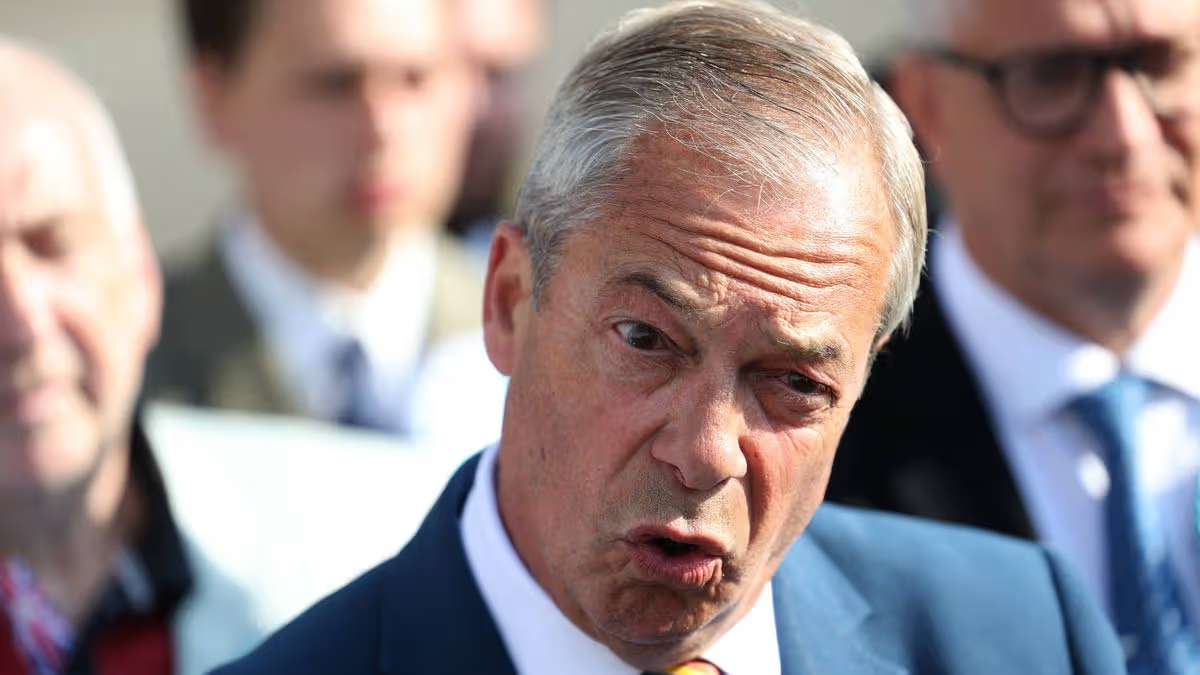
Nigel Farage will undoubtedly claim this as a historic, seismic victory for his Reform party, positioning himself as the voice of a new political dawn. Reform did make significant gains, securing almost 700 seats and taking outright control of several councils like Sunderland and Thurrock. However, the narrative of an unstoppable national sweep is misleading. For all their noise and confidence, Reform failed to achieve outright control in more councils than they conquered, with many ending the night in a hung position. In Wales, despite Labour’s collapse, it was Plaid Cymru that emerged as the largest party, not Reform. This result shows a party with momentum, but one that still has much to prove on the ground.
The Real Test Begins: Governing
The celebration for Reform is about to meet the sobering reality of governance. The true challenge begins now: they must balance impossible budgets, make agonizing decisions about elderly care homes, prioritize which potholes to fix, and explain their choices to anxious residents. Their performance in these practical, everyday matters will be scrutinized forensically. The transition from campaigning to administering is where promises meet the hard constraints of reality, and it is a test they have yet to pass.
Unanswered Questions and Internal Scrutiny
Amid the confetti, critical questions about Reform remain urgent and unanswered. Who is truly funding this party that claims to speak for ordinary British people? Significant support comes from wealthy donors, often overseas—what is their interest in British local government, and what do they expect in return? Furthermore, the party’s recent record includes serious scandals: candidates exposed for racist views, a Nazi salute, offensive remarks about Grenfell Tower, and suspensions for comments about Jewish communities. These are not ancient issues; they are problems from the very recent past that raise deep concerns about the party’s culture and vetting.
The Source of the Anger: A Nation’s Frustration
This electoral shift does not absolve the Labour Party of its failures. The result is fundamentally a reflection of legitimate public anger. Millions of people feel ignored, overlooked, and let down by the political establishment. Their vote was not primarily an endorsement of Farage or Reform’s full agenda; it was a profound expression of frustration that has been building for years. The country did not “fall for” Farage; it lost its temper. This distinction is crucial for understanding what truly happened.
The Path Forward: Recognition and Response
What happens next depends entirely on whether the political establishment, particularly Keir Starmer and the current government, is smart enough to recognize this difference. They must understand that the vote was a cry of distress from communities feeling left behind. The task is to address the root causes of this anger—the neglect, the economic pressures, the sense of disconnection—with genuine policy and engagement. The future political stability of the UK hinges on this ability to listen and respond meaningfully, rather than merely viewing the results as a victory for one side or a defeat for another.