




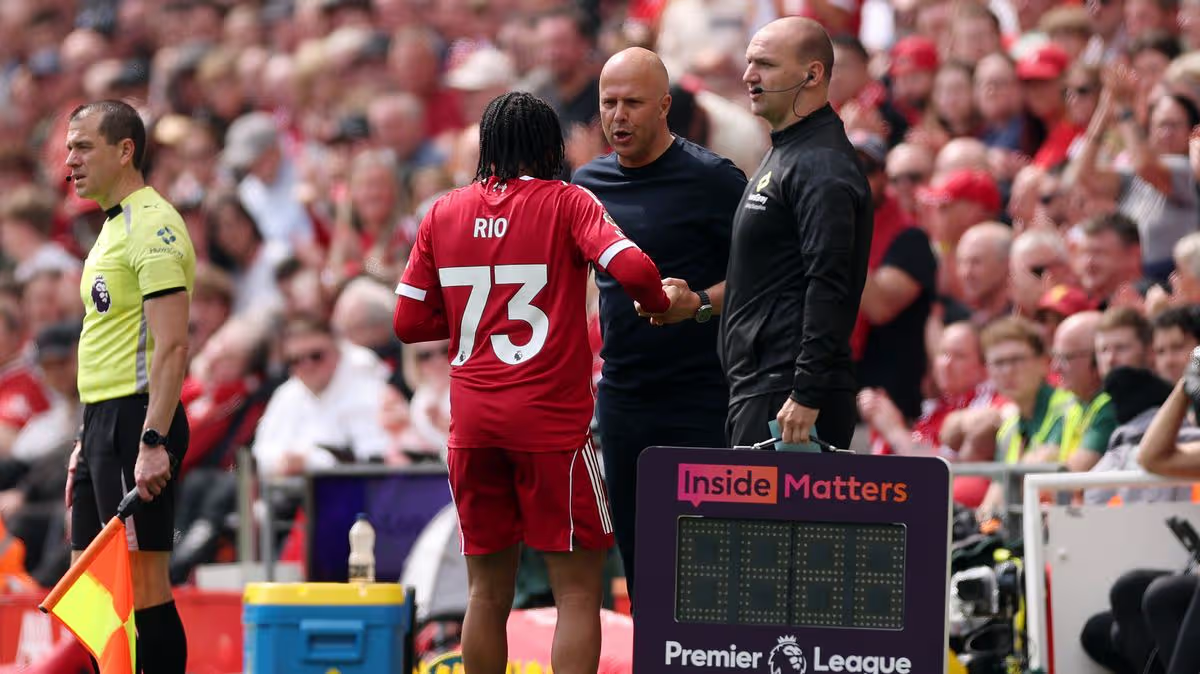
The atmosphere at Anfield is a unique and powerful force, a sacred trust between a team and its supporters. It is rarely a place of overt dissent; the collective voice is typically one of unwavering encouragement. However, on a particular afternoon in May of 2026, that trust was momentarily fractured. With Liverpool locked at 1-1 against a struggling Chelsea side, manager Arne Slot made a tactical decision that provoked an immediate and visceral reaction from the home crowd. The substitution, replacing the exciting 17-year-old winger Rio Ngumoha with the established, big-money signing Alexander Isak, was met with a chorus of boos—a sound that commentator Ally McCoist noted you don’t often hear in that stadium. The fans’ frustration was palpable, born from a game that was not going as planned against a team on a six-match losing streak, and crystallized by a change that seemed to remove their brightest spark.
That spark was Ngumoha himself, a player who had become a symbol of both hope and contention throughout the season. For the supporters, his rare but dazzling appearances offered thrilling glimpses of a special talent—a winger with the old-school, almost mythical ability to dominate one-on-one situations and produce a finish reminiscent of a club legend like Mohamed Salah. Slot himself had publicly marvelled at Ngumoha’s growing power and end product, acknowledging his “special quality which you don’t see a lot in football anymore.” Yet, the manager’s cautious approach to managing the teenager’s minutes, balancing his development against the physical demands of the Premier League, had created an underlying tension. The fans saw a potential game-changer; Slot saw a precious talent needing careful stewardship. This moment, with the game in the balance, brought that tension to the forefront.
The reaction was not merely about one substitution; it was a manifestation of broader emotions. The crowd’s irritation had been simmering due to the team’s performance against a supposedly vulnerable opponent. Ryan Gravenberch’s early curling strike had promised control, but Enzo Fernandez’s equalizing free-kick had eroded it. In this context, removing Ngumoha—the player who embodied youthful dynamism and direct threat—felt like a retreat, a move towards conservatism with Isak, rather than a push for victory with the fearless teenager. McCoist’s observation that he expected a swap for Cody Gakpo instead highlighted how the decision seemed incongruous to observers as well. The boos were a raw, collective critique of a strategic choice that, in the fans’ view, misread the momentum and spirit of the match.
Slot’s subsequent comments revealed a manager navigating the complex dual pressures of immediate results and long-term asset management. He expressed clear delight at Ngumoha’s recent contributions, including a goal at Anfield, and outlined a logical progression in his integration into the team. His philosophy was one of gradual empowerment, ensuring the young winger gained the strength and consistency to survive against “the best defenders in the world.” This calculated patience, however, sits in a natural conflict with the immediate, passionate desires of a matchday crowd. The fans operate in the present, in the emotion of a single, unresolved contest; the manager must also operate for the future, protecting a player’s career trajectory. The substitution was a point where these two timelines collided.
The episode serves as a poignant case study in the modern football manager’s dilemma, especially at a club with Liverpool’s history and expectations. It underscores the delicate balance between fostering emerging talent and deploying proven experience, between respecting the emotional pulse of the supporter base and executing a cold, long-term vision. The Anfield crowd, known for its profound connection with players who show heart and flair, had invested its hope in Ngumoha’s unpredictable brilliance. Seeing that hope withdrawn, even for a reputable player like Isak, felt like a betrayal of the moment’s potential. It was a reminder that in football, logic and emotion are constantly in dialogue, and sometimes in direct conflict.
Ultimately, such moments are woven into the fabric of a season. They reflect the living, breathing relationship between a manager, his squad, and the people who fill the stands. The boos were a rare but clear message from the Anfield faithful—a demand for ambition and a celebration of their emerging hero. Slot’s challenge, moving forward, will be to continue nurturing Ngumoha’s undeniable talent while also maintaining the trust of a support base that cherishes such players. It is a dance between patience and passion, between the clinical eye of a coach and the beating heart of a club, where every substitution can become a story.