


Of course. Here is the summary, humanized and expanded into six paragraphs, capturing the emotional and physical journey described in the content.
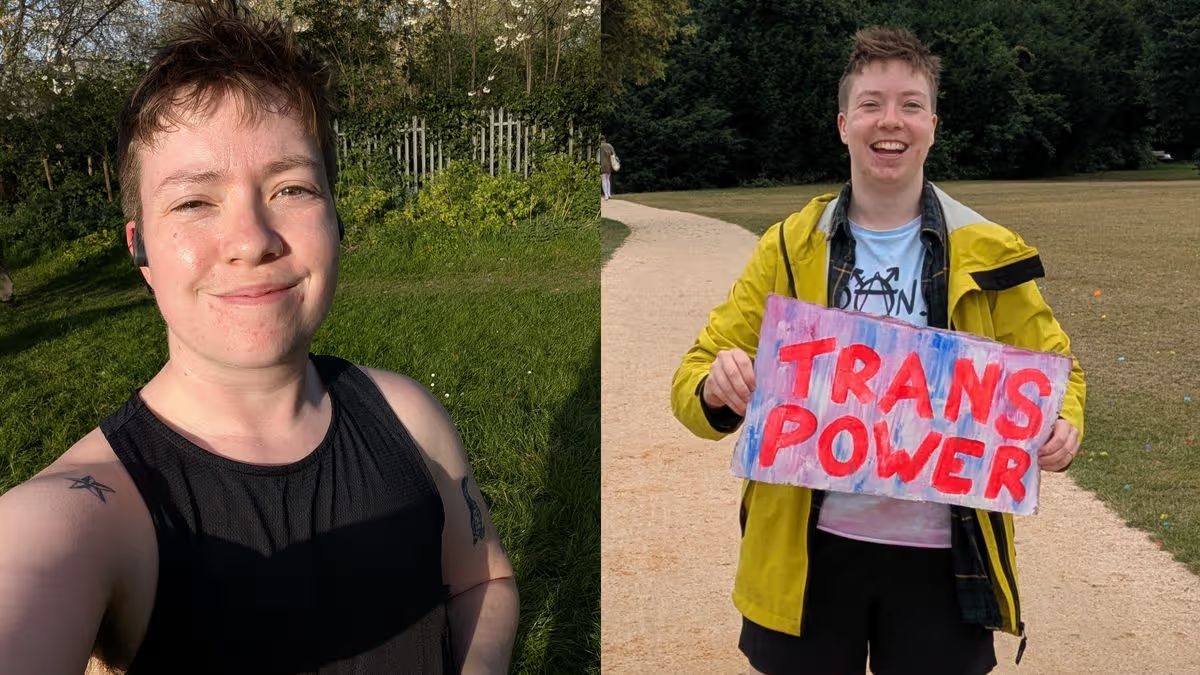
For many, running is a simple act of putting one foot in front of the other. But for 30-year-old Emma Stevenson, known as Em, it became a profound symbol of self-alignment and joy—a joy that only became possible after a transformative journey to feel at home in their own body. As a non-binary individual who uses they/them pronouns, Em spent years feeling disconnected from physical activity, where attempts to run “never really stuck.” The barrier, as they now understand it, was a fundamental dissonance between their inner identity and their physical form. Exercise felt less like empowerment and more like a fraught effort to alter a body that didn’t yet feel like their own. This changed dramatically at age 27, following a private top surgery—a procedure to remove breast tissue and reshape the chest to align with their gender identity. That decision marked the beginning of a new chapter, one where running shifted from a chore to a source of euphoria and community.
Em’s path to this point was layered with self-discovery. Growing up in Oxford and now based in London, they always felt “different” from peers, coming out as bisexual at 18 and later understanding their identity as non-binary—an experience of gender that exists beyond the binary of man or woman. While supported by family and friends, Em grappled with their relationship with their body. They recognized that hormones weren’t the right path for them, but after deep reflection, they concluded that top surgery was essential for their wellbeing. Faced with NHS waiting lists that can stretch for years, Em made the difficult decision to pursue the surgery privately, a significant financial commitment of £10,500 that they framed as an investment in their mental and physical health. It was, as they described, a “huge mental load,” but one that became a crucial turning point.
The surgery in September 2023 was, in Em’s words, “groundbreaking.” The recovery process involved navigating natural post-operative anxiety and the initial shock of seeing a changed reflection. However, as they healed over six weeks, a profound sense of rightness settled in. “Every day, I could look at myself in the mirror and I wasn’t averting my eyes any more,” they shared. This newfound comfort evolved into a powerful and sustained feeling of euphoria. With their body now in harmony with their identity, the obstacle to physical activity dissolved. They returned to weightlifting with Pecs Education, a trans-inclusive gym group, and it was here that the door to running finally opened. Through the community, they connected with the Queer Running Club, finding a space where the act of movement was intrinsically linked to belonging.
This sense of community became the catalyst for Em’s running journey. In early 2025, they began running with the club and soon enrolled in “Transcend,” Hackney’s first queer and trans-only running and walking event. Joining a dedicated 16-week beginner’s programme called Transcenders gave them structure and a tangible goal. The event itself in July 2025 was a celebration—a vibrant atmosphere filled with music, cheering, and the solidarity of running alongside a new friend from the training. Completing the 10km was less about athleticism and more about shared triumph, culminating in a festival with drag performers and music. This positive experience reframed running entirely for Em; it was no longer a solitary struggle but a collective, joyful expression.
Emboldened by this success, Em took a bold next step. In December 2025, upon seeing an offer for free places in the HOKA Hackney Half Marathon through the Queer Running Club, they felt a resonant pull. “If there’s any time in my life and my journey, I feel like now’s a good time,” they recalled thinking. Now training consistently for the May event, they anticipate a mix of nerves and excitement. For Em, this race represents more than a personal achievement; it is an act of visibility and hope. They are driven by a desire to inspire others who, like they once did, feel they don’t “quite fit the box” or struggle with their relationship with their body and exercise.
Ultimately, Em’s story is a powerful testament to how accessing gender-affirming care can unlock holistic wellbeing, transforming one’s relationship with their body and the world around them. They hope that by sharing their journey—from aversion to euphoria, from isolation to community—they can offer encouragement. “It’s not all about the people who are running the fastest,” Em emphasizes. “It’s just about the average person on their own journey.” In embracing running, Em has not only found a sport that finally “sticks,” but has also discovered a powerful way to inhabit their truth fully, aiming to light the path for others in the LGBTQ+ community seeking their own form of freedom, one step at a time.