


A New Dawn for Coventry: From Historic Airport to Green Energy Hub
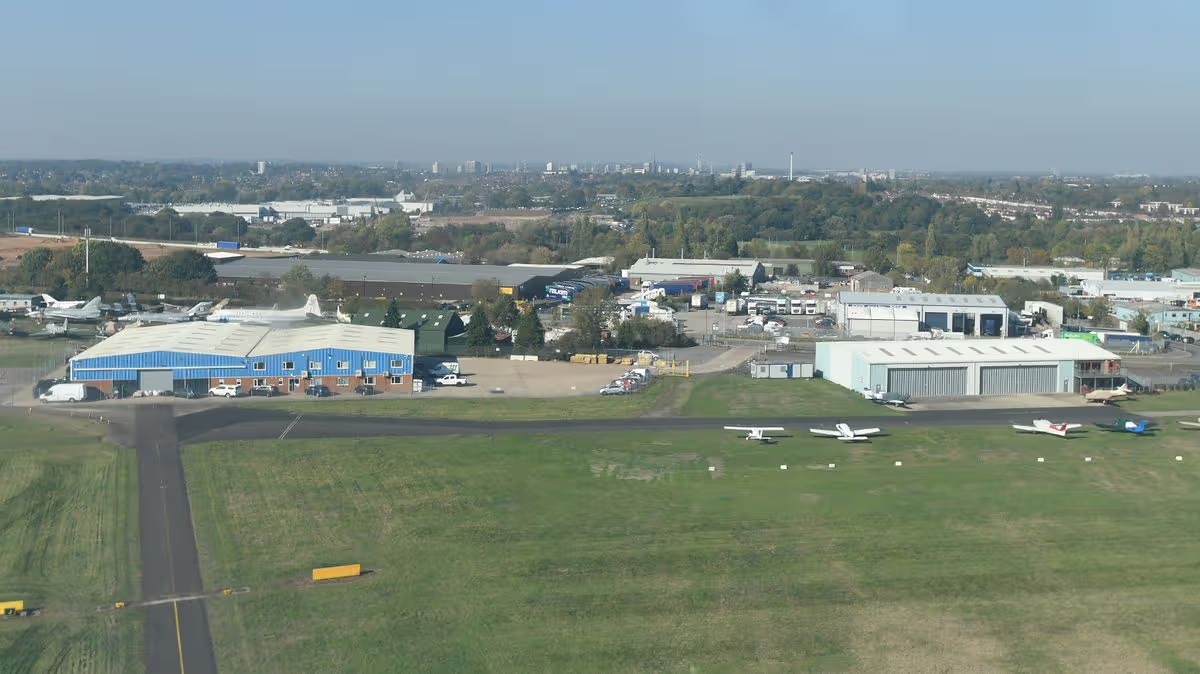
Coventry Airport, an 88-year-old landmark woven into the fabric of Britain’s aviation and wartime history, is preparing for its final chapter. After serving generations as a vital local airfield, the UK Civil Aviation Authority has confirmed the airport will cease all operations permanently on June 11, 2026, with all flights officially ending as of May 9 of that year. For many, this marks the end of an era—a quiet farewell to a site that began in 1936 as Baginton Aerodrome and later played a crucial role as RAF Baginton during the Second World War. Over the decades, it adapted to peacetime, supporting freight, small aircraft, and even commercial passenger flights, becoming a familiar and fondly regarded part of the West Midlands landscape. Its closure signifies more than the loss of an airport; it closes a living archive of local memory, from wartime service to papal visits and community travel.
From Papal Visit to Passenger Flights: A Community Touchstone
Beyond its operational roles, Coventry Airport earned a special place in the hearts of local residents through moments of historic and communal significance. In 1982, it gained national prominence when Pope John Paul II visited during his tour of the UK, drawing an estimated 350,000 people to its grounds—a day still vividly remembered by many. In subsequent years, it facilitated leisure and connectivity for the region, with Hards Travel operating package holiday flights to European destinations in the 1990s, followed by Thomsonfly launching jet passenger services in 2004. Though scheduled passenger flights ceased after 2008, the airport remained active in other capacities, serving as a base for private aviation, freight, and training. Its pending closure has sparked reflection and conversation among locals, who share memories of its bustling terminals, employment opportunities, and its symbolic presence as a gateway to the world.
Economic Evolution: The Greenpower Park Vision
The conclusion of Coventry Airport’s aviation story opens the door to a transformative new beginning aimed at fueling the future—both economically and environmentally. The site is slated for redevelopment into Greenpower Park, a multi-billion-pound green energy plant focused on vehicle battery production, recycling, and clean technology innovation. Positioned within the West Midlands Investment Zone—a government-led initiative to bolster advanced manufacturing—the project promises substantial long-term benefits. Estimates suggest it could create over 30,000 jobs and attract around £5.5 billion in private investment, offering a significant boost to the regional economy. This shift from aviation to green technology mirrors a broader national commitment to sustainable industry, positioning the West Midlands at the forefront of the UK’s transition to a low-carbon economy.
Balancing Progress with Nostalgia: Community Reactions
While the economic potential of Greenpower Park is widely acknowledged, the airport’s closure has elicited mixed emotions within the community. Longtime residents, aviation enthusiasts, and business owners who relied on the airport’s operations have expressed sadness and nostalgia, recalling personal and family histories linked to the airfield. For some, it represents the loss of a local employer and a convenient aviation facility; for others, it symbolizes the steady erosion of Coventry’s tangible heritage. Yet, many also recognize the necessity of change and the importance of forward-looking investment, especially in a region eager for regeneration. The challenge lies in honoring the airport’s legacy while embracing a future built on innovation, sustainability, and job creation—a balance that local leaders and developers will need to navigate with sensitivity.
From Past to Future: The Wider Significance
Coventry Airport’s transformation is more than a local story—it reflects wider trends in post-industrial Britain, where infrastructure is increasingly repurposed to meet contemporary environmental and economic priorities. The move from an airfield to a green energy hub underscores a national pivot toward renewable technology and strategic manufacturing, aligning with the UK’s net-zero ambitions. It also highlights the evolving nature of regional airports in an era of concentrated air travel and environmental reconsideration. As one of several UK airports to face closure or redevelopment in recent years, Coventry’s journey offers a case study in adaptation, illustrating how sites of historical and operational value can be reimagined to serve future generations in new, meaningful ways.
Looking Ahead: A Legacy of Resilience and Renewal
As the final flights depart and the hangars fall silent, Coventry Airport leaves behind a legacy defined by service, memory, and community. Its story—from wartime base to leisure travel hub to green energy pioneer—embodies resilience and reinvention. The coming years will see Baginton’s fields transition from runways to research and production facilities, symbolizing hope for sustainable growth and renewed regional pride. While the control tower may no longer guide airplanes, the site will soon power the vehicles of tomorrow, ensuring that its contributions to Coventry and the UK continue in a new, purposeful form. In this way, the airport’s spirit of connection and progress lives on, not in the skies above, but in the green innovations that will shape our collective future.